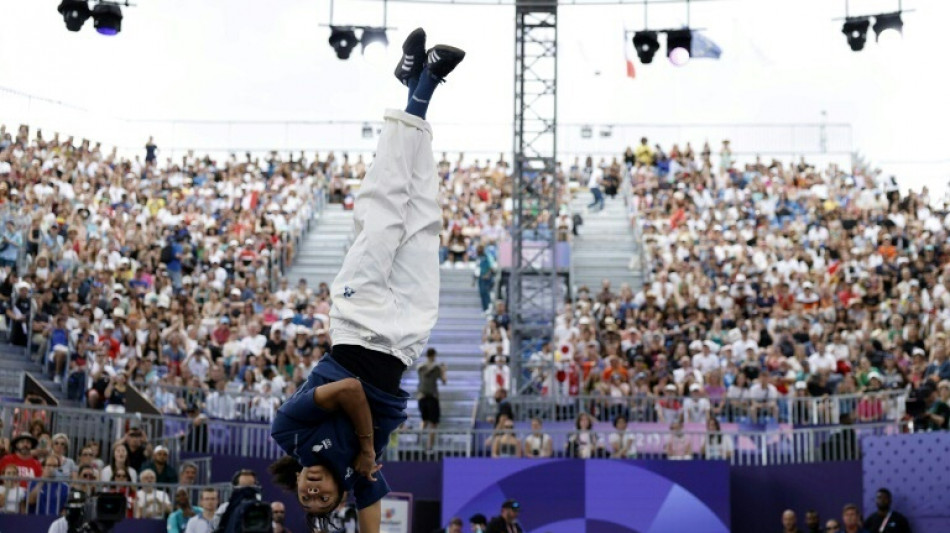
Breaking makes high-energy Olympic debut in Paris / Photo: © AFP

 Daily Horoscope November 20, 2026: Astrological Predictions for All Signs
 Desire Under the Elms review - a horror show that bruises more than it moves

 Saudi PIF Retains Top Sovereign Wealth Fund Brand Title for Third Year

 Phoenix Weekend Guide: Sangria Socials, Pie Markets, and New Brunch Spots

 Trent Perry’s Late Heroics Lift No. 7 UCLA Past Cal State Fullerton

 2027 Hyundai Elantra Review: Brutalist Design and Expanded Dimensions
The urban sport of breaking spun its way onto the Olympic stage on Friday for the first and possibly last time, amid the grand elegance of Paris' Place de la Concorde.
Breaking, better known as breakdancing, made its Games debut with the women's competition, featuring 17 dancers known as B-Girls going head-to-head in a series of battles to crown the inaugural champion.
The sport's appearance at the Olympics could be a fleeting one however, having already been dropped from the Los Angeles 2028 programme and no guarantees it will return in the future.
Organisers ensured it made the most of its time in the spotlight in Paris, pumping up the volume for an excited crowd that included rapper Snoop Dogg.
The first contest of the day was between India Sardjoe of the Netherlands, known by her B-Girl name India, and Refugee Olympic Team competitor Talash,
Talash, whose real name is Manizha Talash, left Taliban-controlled Afghanistan to live in Spain two years ago and danced wearing a blue cape with "Free Afghan Women" printed on it.
Breaking originated as part of hip hop culture in New York in the 1970s.
What began in the block parties of the Bronx has reached the fountains and classical facades of one of Paris' most opulent public spaces, overseen by the International Olympic Committee.
Each battle sees B-Girls take turns to lay down their dance moves over a set number of rounds, with a panel of judges determining the winner.
The competition opens with a pool stage featuring four groups of four B-Girls, before moving onto the knockout stage.
The B-Girls perform on a circular stage, accompanied by a DJ pumping out hip-hop classics.
B-Girls in the women's event come from countries as diverse as Japan, Lithuania, Morocco and Australia.
The reigning women's world champion is Lithuania's Dominika Banevic, while the men's champion is Victor Montalvo of the United States.
M.Vogt--VB