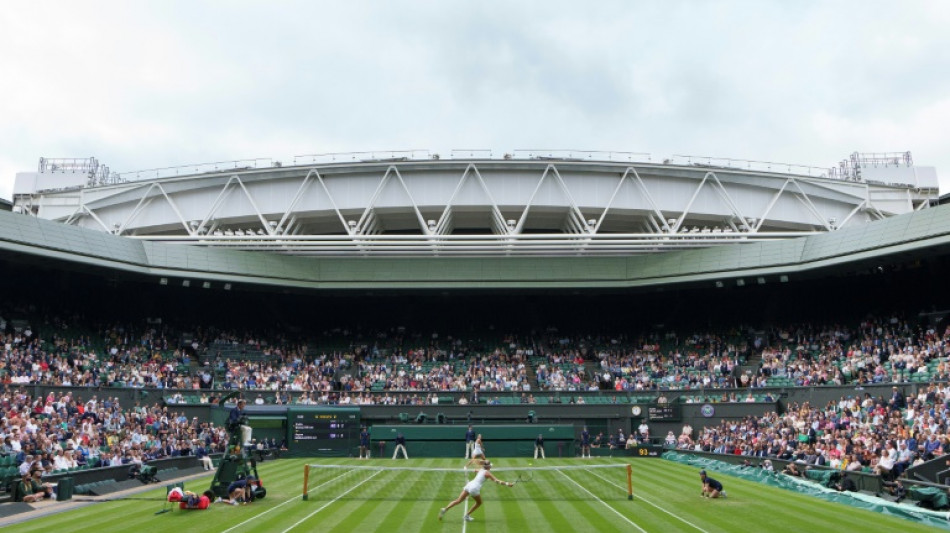
Tennis Grand Slams to all trial final-set tie-breaks / Photo: ©

 Jimmy Carr Confirms 25-Year Estrangement From Father Amid Podcast Reflections

 Arizona Superintendent Tom Horne to Leave Office, Plans Law Practice and Charter School

 Japan and Peru Mark 150 Years of Diplomatic Ties Amidst Trade and Investment Talks

 Ian Jackson Scores Game-High 22 Points After Rick Pitino's Prank Suspension

 Khan Welcomes Milburn’s Youth Employment Reforms Amid High NEET Rates

Tennis' Grand Slam tournaments will all trial using a first-to-10 tie-break in final sets this year, the four competitions announced on Wednesday.
Until now, the major events all employed different rules on how to end a match which reaches 6-6 in a deciding set.
The Australian Open already uses a first-to-10 breaker, while the US Open has opted for a traditional first-to-seven tie-break at 6-6 for over 50 years.
The French Open has still not used a final-set tie-break, although Wimbledon introduced a first-to-seven breaker at 12-12 in 2019.
"The Grand Slam Board are pleased to announce the joint decision to play a 10-point tie-break at all Grand Slams, to be played when the score reaches six games all in the final set," the organisers of the Grand Slams said in a statement.
"The Grand Slam Board's decision is based on a strong desire to create greater consistency in the rules of the game at the Grand Slams."
With the exception of the US Open, the Grand Slams had no final-set tie-breaks until three years ago.
But there were calls for change after John Isner's famous match against Nicolas Mahut at Wimbledon in 2010, which the American won 70-68 in a fifth set after more than 11 hours of play.
The Grand Slam Board added they would review the trial before "applying for any permanent rule change".
Spain's Rafael Nadal, who won a 21st Grand Slam title at the Australian Open in January, said he didn't have strong feelings either way about the change, which he doesn't think will "make a big difference."
"I read that everyone going to be the same. In some way that's positive," Nadal said.
"I don't think in Roland Garros makes a big impact," added the 13-time French Open champion. "My opinion the biggest impact is going to be in Wimbledon. Sometimes it's so difficult to break, so the matches become very long.
"I don't feel in Roland Garros you going to go normally 22-20. In Wimbledon that can happen."
H.Seidel--BTB

