Russia's Paris participation gives IOC moral, political and legal headache / Photo: © AFP/File

 The growing protests against India's poll body - and PM Modi

 Stocks fall further as oil spike fans fresh inflation worries
 Bad COP, worse COP? EU tempers hopes for UN climate summit

 Rookie Henry named in Wallabies midfield to face All Blacks
 Housing crisis set to dominate Spain's snap election
 Gas, health care, utilities: high costs squeeze US midterm voters

 New Zealand Rugby seeks injunction over PNG Chiefs name
 Samsung expects 780% quarterly operating profit jump on AI boom
 Guardians survive with 9-3 win over White Sox

 Saudi Arabia says 3 dead at airports after Houthis claim attacks
 Stocks slide as oil sees volatile trading day over Iran war fears
 Microsoft pushes AI vision with new, expensive Surface laptop

 Five children among 28 killed in Russian strikes on Ukraine

 Odell Beckham Jr signs with Minnesota Vikings
 Saudi Arabia says three dead at airports after Houthis claim attacks
 Trump plans to turn Florida golf course into presidential retreat
 WHO says cannot conduct full risk assessment on Russia plague reports
 After botched execution, US woman is awake and shackled to bed
 New Zealand fly-half Mo'unga ruled out of Australia Tests
 Protests in major Turkish city after mayor defects to Erdogan party
 Climate change strips island's title of largest penguin colony: study
 Rubio says West must choose between national power or decline

 Russia's plague scare: What we know
 French luxury giant to fund redevelopment of two Paris streets: city hall
 Trump wants to turn Florida golf course into presidential retreat
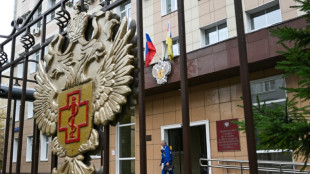
The issue of Russian and Belarusian participation at the 2024 Paris Olympics has provoked polarised debate in the last week and raised questions about whether it might blight the Games.
Russia and its ally Belarus, which allowed its territory to be used as a launchpad when Moscow invaded Ukraine last February, have been banned from most Olympic sports at the recommendation of the International Olympic Committee (IOC) since the conflict began.
After the IOC said it was examining a "pathway" for athletes from the two countries to compete in Paris, perhaps under a neutral flag, Ukraine, supported by the Baltic nations and Poland, demanded their total exclusion.
The IOC has said it wants to "protect the integrity" of the competition and allow athletes to compete, as long as they have not "actively supported the war in Ukraine".
On Tuesday, Stanislav Pozdnyakov, the head of Russia's Olympic Committee, tried to turn the "pathway" into total access, saying "Russians must participate exactly on the same conditions as all other athletes."
The IOC promptly responded that "the sanctions against the Russian and Belarusian state and governments are not negotiable."
With the IOC attempting to find a solution that satisfies two seemingly irreconcilable sides, it leaves a cloud over preparations for the Paris Olympics.
Before the opening ceremony on July 26, 2024, "we are going to be in a haze for a long time", Jean-Loup Chappelet, an Olympics specialist at the University of Lausanne, told AFP.
- Court could decide -
The French organisers say the IOC will decide. The IOC, for its part, says the individual international sports federations (IFs) are "the only authorities" governing their competitions.
"It's a whole process," said Chappelet. "The IOC entrusts the IFs with the task of selecting individual athletes, and therefore of verifying that the criteria of non-support for war are fulfilled."
Yet the IOC faces a potential problem in the courts.
"Legally, the principle of non-discrimination" against athletes according to their passport "appears in the Olympic Charter", said Chappelet.
Thomas Bach, the German president of the IOC, is a lawyer.
"He knows that if the Russians go to the Court of Arbitration for Sport (CAS), the IOC may lose," said Chappelet.
Political leaders could also play a role.
Ukrainian President Volodymyr Zelensky appealed to his French counterpart Emmanuel Macron to ban the Russians.
So far there has been no response, but Macron said last year of the World Cup in Qatar that he did not want "to politicise sport".
One deadline is approaching.
"The IOC traditionally sends its invitations to the national Olympic committees one year before the Games, with great pomp," said Chappelet. "Although it can defer or temporise".
The Russian doping scandal posed problems for sports bodies over their Olympic participation.
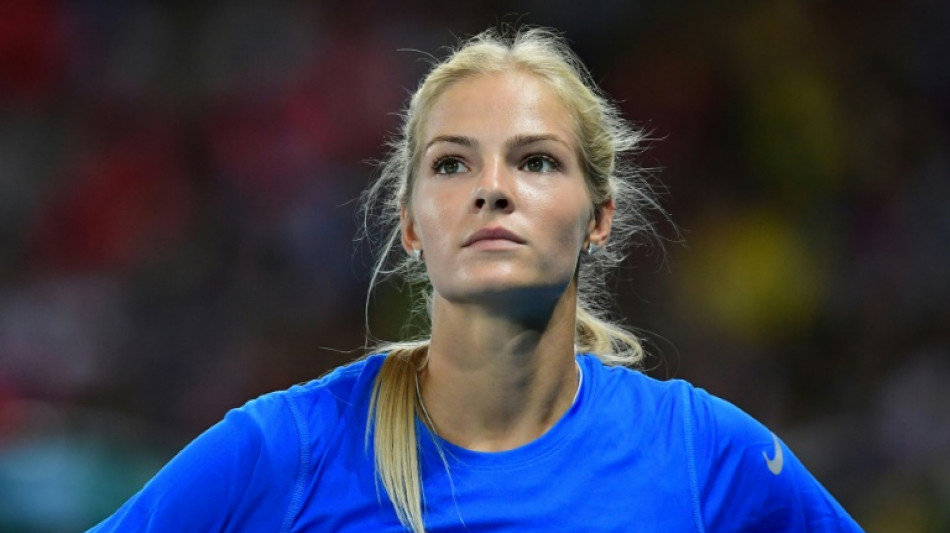
The International Association of Athletics Federations, now known as World Athletics, sought to have the country's athletes compete as "neutral athletes" in the 2016 Rio Games, although long jumper Darya Klishina went to the CAS and won the right to compete as a Russian.
Following a ban from the World Anti-Doping Agency, Russians represented their national Olympic committee, rather than Russia itself, in the Tokyo Olympics in 2021 and the Beijing Winter Games in 2022.
- 'Sponsors and media' -
Admitting Russians -- even as neutrals -- when Ukrainian athletes, mobilised to defend their country or living as refugees abroad, have so little chance to compete at their best in the Games might seem unfair.
Even for athletes who are not directly affected by the war in Ukraine, the question of competing against Russians is "a real dilemma" said Chappelet.
Their participation will cause tension and lead to pressure for boycotts.
The calls for a boycott are for the moment limited geographically to Ukraine, Poland and the Baltic countries.
Yet they would represent the first organised snub of the Games since the tit-for-tat Cold War boycotts of Moscow in 1980, led by the Americans, and of Los Angeles in 1984, spearheaded by the Soviet Union.
The United States, United Kingdom, Canada and Australia, which were among 10 countries who staged a "diplomatic boycott" of the 2020 Winter Games in Beijing over human rights, have not, so far, made similar threats over Paris.
"It is a little early and not yet on the radar", said Chappelet. "But we have to see how sponsors and media will position themselves in the coming months."
W.Lapointe--BTB