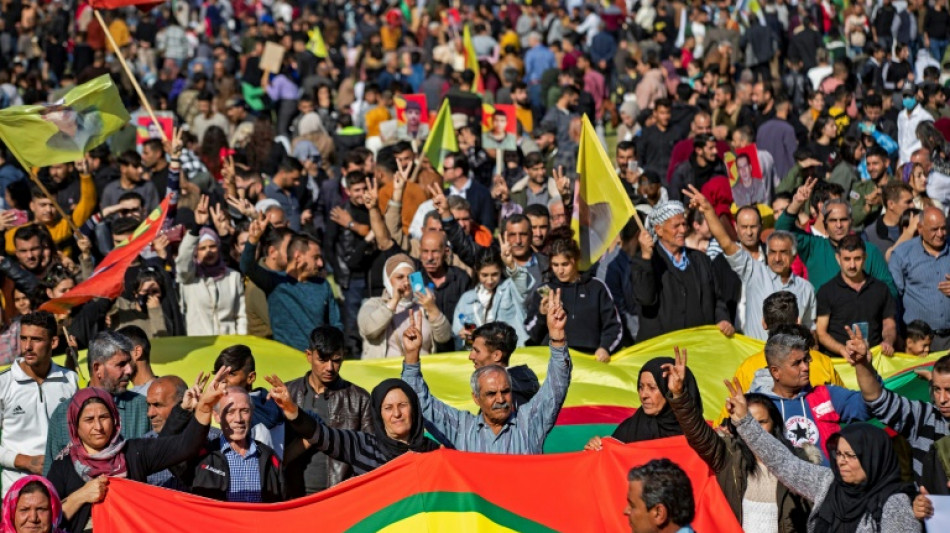
Syria Kurds fear thaw between Assad regime and Turkey / Photo: © AFP/File

 Embattled FIFA chief Infantino in emergency talks in Morocco

 Castaway SpaceX rocket stage crashed into Moon, scientists say
 Dow edges to record as markets parse prospects for Hormuz deal
 Salah arrives in Turkey to complete Trabzonspor move

 AFP journalist to be honored at International Press Freedom Awards

 Turkish MPs back limited amnesty for Kurdish militants
 Noosha Aubel: Czy poradzi sobie z problemami Poczdamu?

 Noosha Aubel: Είναι σε θέση να αντιμετωπίσει τα προβλήματα του Πότσδαμ;
 Noosha Aubel: Zvládne problémy Postupimi?

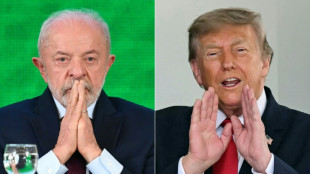 Brazil hits new diplomatic lows with US and Argentina

 NZ boxer Parker promises ring return after doping ban 'lifted'

 Disney profits top estimates on strength in theme park business

 LIV Golf CEO says funding secured to play beyond 2026
 Stocks stall tracking earnings, oil dips on Iran-Oman Hormuz move
 Tuipulotu to lead New Zealand in South African tour opener
 Leftist Democrat urges unity after victory in Michigan

 Austria, Slovakia hit new temperature records
 Where mountain lions roam, fewer deer in the headlights
 Alonso hails 'emotional' Mudryk return in 1-0 loss to Juventus

 Embattled FIFA chief Infantino in emergency talks, suffers Figo blow

 Mudryk back for Chelsea in friendly defeat to Juventus
 Alarm as explosive drone found near Ukrainian plane at German airport

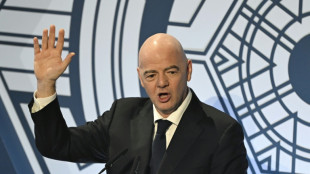 Infantino and the failed deal affair -- What they said

 누샤 오벨: 그녀가 포츠담의 문제들을 해결할 수 있을까?
 नूशा ऑबेल: क्या वह पॉट्सडैम की समस्याओं से निपटने के लिए तैयार हैं?
Syria's Kurds, bracing for a Turkish land offensive against their autonomous northern region, face an additional threat: being squeezed by warming ties between their foe Ankara and the Assad regime.
The Kurds -- an ethnic minority who live in mountainous regions across Turkey, Syria, Iraq and Iran -- have long fought for their own homeland, and Turkey brands their separatist groups "terrorists".
Turkish President Recep Tayyip Erdogan has blamed Kurdish armed groups for a deadly bomb attack in Istanbul this month, an accusation they have strongly rejected.
In recent days, Turkey has launched air strikes on hundreds of Kurdish targets in Iraq and Syria and threatened a new ground operation into northern Syria, run by a Kurdish-led autonomous administration.
The region's Kurdish-led Syrian Democratic Forces (SDF), backed by US troops, spearheaded the fight against the Islamic State group in recent years.
Since Syria's civil war broke out in 2011, relations have sharply deteriorated between Erdogan and Syria's Bashar al-Assad, whose forces have since regained vast territories with backing from Russia.
But now there are signs of a Russia-brokered rapprochement between the Turkish and Syrian leaders, with Erdogan saying on Wednesday that he considered a meeting with Assad "possible".
Here is a look back at a decade of tensions and what a thaw would mean for the Syrian Kurds.
- How did Turkey-Syria relations fray? -
Before 2011, Ankara and Damascus were political and economic partners, and Erdogan and Assad cultivated a personal friendship.
But at the start of Syria's popular uprising, Turkey advised its ally to initiate political reforms, then urged Assad to "resign to prevent bloodshed".
In March 2012, Turkey closed its embassy in Damascus and Erdogan started branding Assad a "murderer" and a "terrorist".
Ankara started to welcome Syrian political opposition groups and to support the rebels.
Since 2016, Turkey has launched three offensives into Syria against Kurdish forces and it now controls a border strip inside Syria, citing its own national security needs.
Turkish and Syrian forces clashed in early 2020 when pro-Assad fighters were advancing toward the rebel-held Idlib province, before Russia intervened to calm the situation.
- How do Syrian Kurds get on with Assad? -
Before the war, Syria's Kurds faced discrimination and were barred, for example, from Kurdish language schooling.
For the past decade, as Syrian regime troops vacated the north and northeast, Kurds were able to establish limited self-rule.
The Kurds have avoided open hostilities with the Assad regime, except for some skirmishes, and maintained good ties with both US and Russian forces.
Damascus rejects the autonomous administration, accusing the Syrian Kurds of "separatism".
Several rounds of talks have brought few results but, after Russian mediation, the Syrian army was able to deploy limited forces in Kurdish-run areas against the Turkish advance.
- Are Syrian-Turkish relations warming? -
Turkey has softened its position toward the Syrian regime in recent months, nudged by Russia.
Turkey's foreign minister in August called for reconciliation between Assad and rebel groups, and Turkey's intelligence chief has visited Damascus.
Erdogan said on Wednesday he considers direct talks with Assad "possible", saying that "there is no place for resentment in politics".
Analysts say Russia, as it fights its war in Ukraine, is pushing for the rapprochement between the two neighbours, which both consider Kurdish fighters a common threat.
When the recent Turkish strikes killed around 20 Syrian military personnel, the response from Damascus was muted. Its deputy foreign minister Ayman Soussan merely denounced "the pretexts invoked by the Turkish occupation to justify its policy in Syria".
The SDF commander-in-chief Mazloum Abdi told AFP this week that he felt "Damascus' position is weaker than during previous Turkish offensives" and also claimed there had been "contacts between the two parties".
- How would a thaw impact Syrian Kurds?
Abdi charged that Turkey's aim is to reach an "agreement" with the Assad regime "to eradicate the experience" of Kurdish self-rule.
Erdogan, who faces an election next year, would also like to start sending back millions of Syrian refugees, observers say.
For Erdogan and Assad "to be on speaking terms... means they can make deals," said analyst Aron Lund of think tank Century International.
"They have common enemies and rivals, such as the SDF. They can swap assets, for example by helping each other kill or silence enemies located on the territory of the other, or arrange for mutual extraditions."
Lund stressed that "for the SDF, any serious Ankara-Damascus reconciliation would be a disaster.
"It removes their primary protection against Ankara -- which is Damascus, backstopped by Russia -- and it allows Erdogan and Assad to move in concert to resolve their Kurdish 'problems'."
R.Adler--BTB