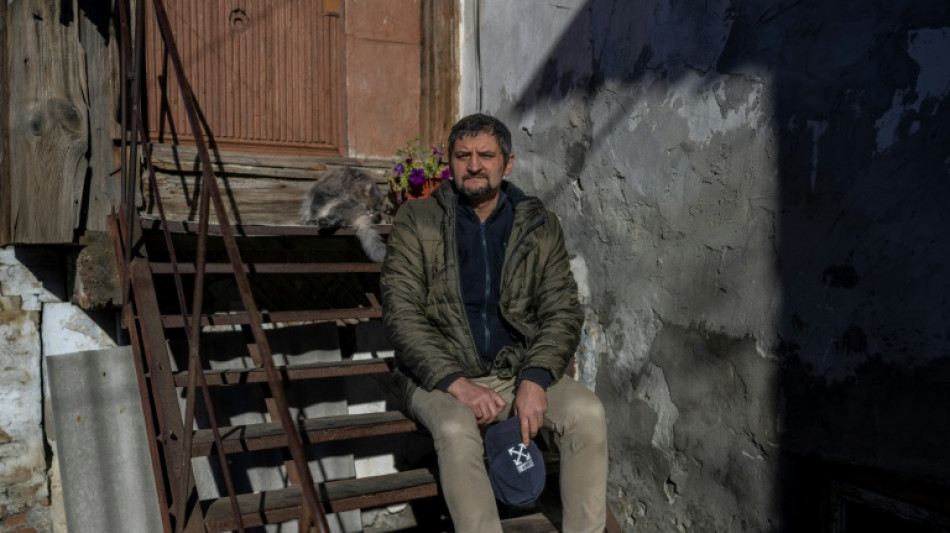
Detainee's tale of torture under Russians in Kherson / Photo: © AFP

 India youth protests highlight mistrust in 'lapdog' media
 Pacific islands alarmed by Trump-backed push for deep-sea mining
 Erratic rains dictate menu at three-star Michelin restaurant in Brazil
 Zverev, Auger-Aliassime and Medvedev exit Montreal Masters
 Google-parent Alphabet shakes up AI division
 FIFA back Infantino, apologise for World Cup privatisation plan

 Auger-Aliassime out of Montreal ATP event with injury
 Colombian baby hippo of Escobar stock dies after rescue

 Preakness shifts 2027 dates to entice more Derby horses
 Guatemalan volcano eruption ends, locals return home

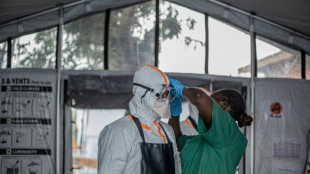 WHO chief urges stronger Ebola response in DR Congo visit
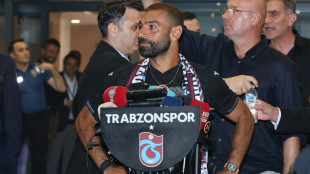
 Newcastle appoint Jaissle as new head coach after Howe exit
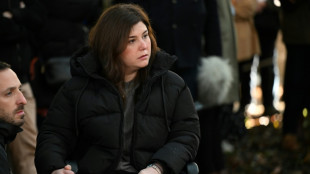
 Swiss ski star Lara Gut-Behrami calls time on 18-year career
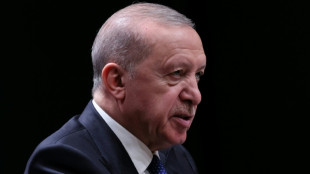
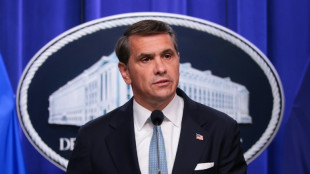 US indicts leaders of Mexico's CJNG cartel, ups reward money

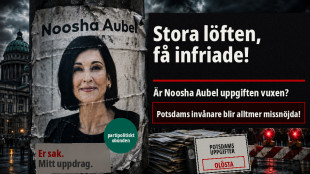 Noosha Aubel: Klarar hon av Potsdams problem?
 نوشا أوبيل: هل هي على مستوى التحديات التي تواجهها بوتسدام؟

 Former England fly-half Burns retires from rugby union
 Pakistan beat West Indies by eight wickets to level series

 Reusser holds lead as Vollering wins in Tour de France hills
 Argentina's Albornoz hit with four-game ban for 'intimidatory' referee abuse

 Guatemala volcano eruption eases off, but alert remains in place

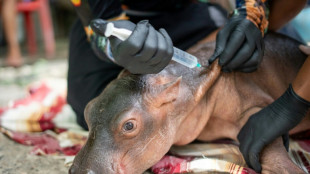 Baby hippo descended from Escobar's herd rescued in Colombia

 Woman arrested after four men stabbed in central London
 Celtic boss O'Neill in hospital after 'small procedure'
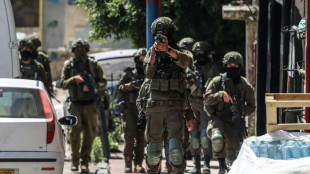 Israeli forces raid Palestinian refugee camp near Jerusalem
He was held for weeks in detention, beaten and electrocuted. He urinated blood. He lost 25 kilogrammes and thought of killing himself.
Anatoly Stotsky survived weeks of abuse at the hands of Russian and pro-Russian forces who had occupied the southern Ukrainian city of Kherson and threatened to kill his family.
"I contemplated killing myself," Stotsky told AFP in an interview.
"But thinking about my family gave me the moral strength to endure it all," said the Ukrainian, who turned 50 in detention.
After the Russian army retreated last week following eight months of occupation chilling accounts are emerging of abuse, mistreatment and torture in Kherson.
Stotsky, who spoke to AFP at his home in central Kherson, said he was arrested twice and held for weeks in detention where he was tied up, beaten and electrocuted by Russian and pro-Russian forces.
A member of Ukraine's territorial defense force, Stotsky witnessed Russian troops capture Kherson on March 2.
Following the occupation of the strategic Black Sea port, he received orders to stay home and await instructions. Several weeks later the Russians started arresting Kyiv sympathisers.
On April 25, the Russians came for Stotsky who was at home with his wife and three-year-old daughter.
"I gave them my weapon because they were threatening to kill my family," he said.
The Russians put a hood over his head and took him to what he thought was a police station close to his home.
In a cell he was tied to a chair and interrogated by three or four people.
"They beat me with a truncheon and put a pistol or a rifle to my head," he said. Stotsky received blows to the ears and the top of his head as the Russians apparently tried to avoid leaving any marks.
Hooded men -- who he thought were members of Russia's security service, the FSB -- questioned him on camera about the weapon found at his home.
The Russians took his fingerprints and a DNA sample. He was forbidden to leave the city and ordered to collaborate with Moscow forces.
He was released on May 4, tossed into the street with a hood over his head.
- 'Covered in bruises' -
"When I came home, I was completely blue, I was covered in bruises," he said.
He made sure his wife and daughter left town, passing through a checkpoint near Zaporizhzhia, some 300 kilometres (around 190 miles) northeast of Kherson. He himself stayed behind, saying he was too scared to leave.
Stotsky was arrested again on July 6, as members of the civil resistance became increasingly active in the city, he said.
He believes that the second time he was most likely captured by members of the ministry of state security of the People's Republic of Donetsk, annexed by President Vladimir Putin in late September.
The men told Stotsky they knew he had been in custody but said he had not been questioned properly.
"Now you are going to tell us everything, who you know and where your weapons are," he said he was told.
"For the first five or six days they would beat me," he recounted.
"At night they would not let me sleep. Every two hours they would come into my cell and force me to get up and say my name."
He had to sit handcuffed to a pipe and could not lie down.
Every time his jailers entered his cell, he had to put a bag over his head or risk being beaten.
One day, he was taken to another cell for questioning.
- Meal once every three days -
"They tied my hands and feet, and put me on the ground. They attached clips to my little fingers,"
Stotsky said.
"They electrocuted me as I was lying on the ground. Your muscles contract and everything inside you twists."
The Ukrainian said that access to the toilet was rarely allowed and he had to use empty bottles to relieve himself.
For the first two weeks, he had blood in his urine. "My kidneys did not function well," he said.
He would receive food every three days and believes he has lost around 25 kilograms (55 pounds) in detention.
The cells had "holes in the walls" so he could speak to other detainees "not to lose my mind," he added.
He was finally released on August 20.
This time Stotsky did not return home for fear of being arrested, and went to stay with relatives.
He said that the second time he was kept in a centrally-localed old office building that featured the flags of Japan, the United States and Ukraine at the entrance.
An AFP team tried to access the four-storey building located on 15, Pylyp Orlyk Street, but was turned away.
"An investigation is underway," a man at the entrance said, without providing further details.
C.Kovalenko--BTB