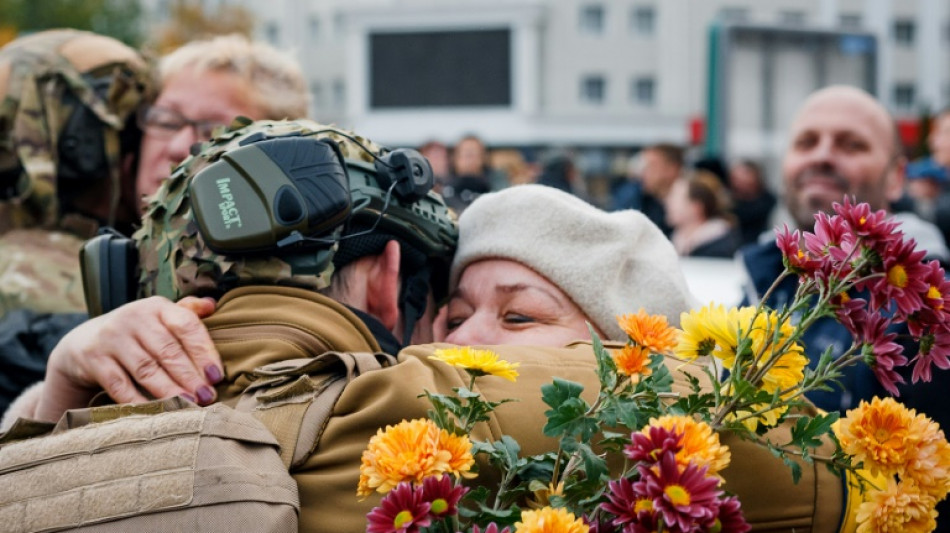
'Very scared': The resistance fighters of liberated Kherson / Photo: © AFP

 India youth protests highlight mistrust in 'lapdog' media
 Pacific islands alarmed by Trump-backed push for deep-sea mining
 Erratic rains dictate menu at three-star Michelin restaurant in Brazil
 Zverev, Auger-Aliassime and Medvedev exit Montreal Masters
 Google-parent Alphabet shakes up AI division

 FIFA back Infantino, apologise for World Cup privatisation plan

 Auger-Aliassime out of Montreal ATP event with injury

 Colombian baby hippo of Escobar stock dies after rescue

 Preakness shifts 2027 dates to entice more Derby horses

 Guatemalan volcano eruption ends, locals return home

 WHO chief urges stronger Ebola response in DR Congo visit

 Newcastle appoint Jaissle as new head coach after Howe exit
 Swiss ski star Lara Gut-Behrami calls time on 18-year career
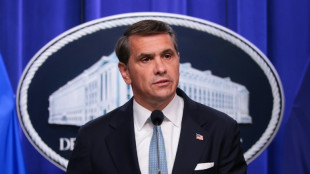 US indicts leaders of Mexico's CJNG cartel, ups reward money

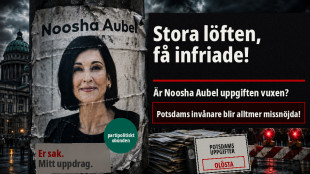 Noosha Aubel: Klarar hon av Potsdams problem?
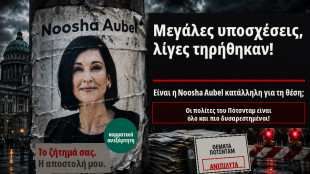
 نوشا أوبيل: هل هي على مستوى التحديات التي تواجهها بوتسدام؟

 Former England fly-half Burns retires from rugby union

 Pakistan beat West Indies by eight wickets to level series

 Reusser holds lead as Vollering wins in Tour de France hills

 Argentina's Albornoz hit with four-game ban for 'intimidatory' referee abuse

 Guatemala volcano eruption eases off, but alert remains in place

 Baby hippo descended from Escobar's herd rescued in Colombia

 Woman arrested after four men stabbed in central London

 Celtic boss O'Neill in hospital after 'small procedure'
 Israeli forces raid Palestinian refugee camp near Jerusalem
The young Ukrainian partisan wanted to be a musician before deciding to risk his life by giving away enemy positions during Russia's occupation of Kherson.
The two middle-aged women toting yellowish water from a river in plastic jugs showed their resistance by refusing to buy Russian food shipped in by the Kremlin.
And the local radio talk show host chose to speak only Ukrainian during the Russians' eight-and-a-half-month grip on the biggest city they had captured during the war.
The stories emerging from flag-waving and hugging people who watched the invaders evaporate almost overnight at the end of last week show a population that tried to fight subjugation any which way they could.
But they also do not tell the full tale.
Many worry that Russian sympathisers who reported them to the occupying forces are still milling in their midst.
"There are so many people left that I see every day, whom I know, who were ratting us out," said a 47-year-old who gave her name only as Olga for fear of retribution.
"Not all of those bastards ran away."
- 'We reported everything' -
Jubilant and disbelieving people have been thronging Kherson's main square since the moment Ukrainian troops entered the strategic city on the edge of Kremlin-annexed Crimea on Friday.
They drape themselves in flags and swap stories of horror and survival while queueing for access to the spotty signal emerging from the city's lone Starlink satellite phone setup.
Towering above the others queuing in the square was the bearded head and green beret of a 19-year-old aspiring musician named Volodymyr Timor.
The self-described partisan said he and his friends spent months walking the streets observing the Russian troops' every move.
"You watch closely and then come home and write it all down. And then you send the information and hide absolutely everything -- phones, papers, clothes, everything," he said.
"We reported everything -- where their equipment and ammunition sites were, where they slept and where they went out drinking," Timor said.
Ukraine's forces could then use the coordinates to target strikes during a counteroffensive that has seen Russia cede roughly half the land it seized in the first weeks of war.
"I was scared," the imposing but soft-spoken guitarist said of the prospect of being caught and quite possibly killed.
"Believe me, I was very scared."
- Avoiding contact -
Iryna Bovkun and Natalia Smyrnova put up their own fight.
The two women were wheeling jugs from the Dnipro -- the expansive river over which the Russians fled east -- to use on basics such as flushing toilets and washing floors.
It was the only way they knew to preserve the limited supplies of more potable water brought into the resource-starved city down dangerous roads in armed convoys.
The Russians destroyed transformers and water distribution systems along with most other essential infrastructure on their way out.
Bovkun said she was used to it.
"Some of us waited four or five months before we started buying the food brought in by the Russians," the 55-year-old said.
Russia introduced the ruble but allowed people to use up their remaining hryvnias.
The Kremlin began to phase out the Ukrainian currency after it annexed Kherson and three other battle-torn regions in late September.
The two women said Russian-packaged goods driven in from Crimea were up to 10 times more expensive as things sold before the war.
Locals tried to avoid contact with the Russian food and currency by selling home-grown produce for old prices at the central market.
But that system of resistance broke down when the hryvnia savings ran out.
"Your hryvnias evaporate very quickly when things cost that much," said Smyrnova.
"I can't describe how much I hated touching those rubles," the retired accountant said.
- 'Even Russian speakers switched' -
One-time radio talk show host Lada Kolosovska used the only weapon against the Russians she knew: language.
"I spoke Ukrainian. My friends spoke Ukrainian. We all did. Even natural Russian speakers switched," the 47-year-old said.
It was both a claim to independence and a way to make sure Russian infiltrators did not somehow enter their lives.
Ukraine's security forces are now limiting movement out of Kherson to catch Russian soldiers who might have put on civilian clothes and stayed behind.
Who these soldiers might be is unclear.
Apparent images of such troops on social media suggest they might have been trapped when the bridges leading out over the Dnipro river were blown up last week.
Military analysts suspect Russia may also be trying to set up sleeper cells and sabotage units across Kherson.
Their suspected presence fed into Olga's overall fear of informants and infiltrators.
"It is dangerous to say anything on the street," the worried woman said.
Kolosovska voiced similar unease.
"When the Russians entered on March 1, we realised that they probably intended to stay," she said.
"But we never thought they would stay for so long."
E.Schubert--BTB