War-weary Ukraine residents chop wood to 'survive' winter / Photo: © AFP

 Iran says close to Hormuz plan with Oman, but reopening depends on US

 Messi scores twice to set Leagues Cup record in Miami victory
 Asian stocks mostly down with tech firms back under pressure
 Back to the future as world champion Springboks host All Blacks

 India youth protests highlight mistrust in 'lapdog' media
 Pacific islands alarmed by Trump-backed push for deep-sea mining
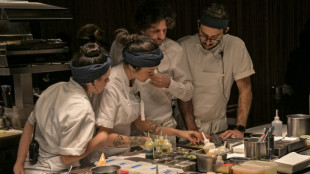 Erratic rains dictate menu at three-star Michelin restaurant in Brazil
 Zverev, Auger-Aliassime and Medvedev exit Montreal Masters

 Google-parent Alphabet shakes up AI division

 FIFA back Infantino, apologise for World Cup privatisation plan

 Auger-Aliassime out of Montreal ATP event with injury

 Colombian baby hippo of Escobar stock dies after rescue

 Preakness shifts 2027 dates to entice more Derby horses

 Guatemalan volcano eruption ends, locals return home

 WHO chief urges stronger Ebola response in DR Congo visit

 Newcastle appoint Jaissle as new head coach after Howe exit
 Swiss ski star Lara Gut-Behrami calls time on 18-year career
 US indicts leaders of Mexico's CJNG cartel, ups reward money
 Noosha Aubel: Είναι σε θέση να αντιμετωπίσει τα προβλήματα του Πότσδαμ;

 نوشا أوبيل: هل هي على مستوى التحديات التي تواجهها بوتسدام؟

 Former England fly-half Burns retires from rugby union

 Pakistan beat West Indies by eight wickets to level series

 Reusser holds lead as Vollering wins in Tour de France hills

 Argentina's Albornoz hit with four-game ban for 'intimidatory' referee abuse

 Guatemala volcano eruption eases off, but alert remains in place

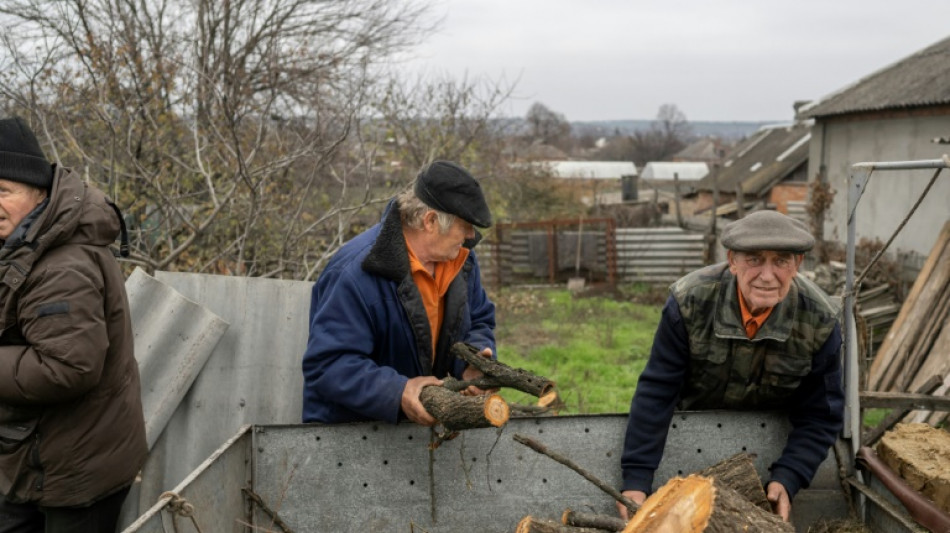
In the eastern Ukrainian town of Siversk, Valery drives a chainsaw through a tree trunk, like many others in the war-ravaged region stocking up for a cold winter.
"We try to survive thanks to wood," says the 39-year-old, who stayed behind to look after his mother after his wife and children fled to the capital.
"A basement (to hide from Russian strikes), a stove and wood -- that's all we have," he says, not giving his surname.
Russian forces who invaded Ukraine in February pounded the district with missiles and rockets this summer, and unsuccessfully tried several times to capture it.
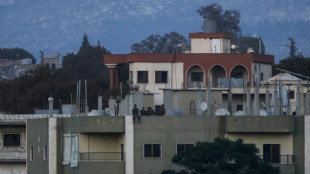
Though the town has so far held out, its heights and eastern flank have been disfigured by the strikes, and deep craters have been etched in the earth.
In one square, buildings including a school has been severely damaged.
Only a handful of the town's pre-war 12,000 residents remain today, battling life without gas or electricity.
"There's nothing else to do, so we chop down the trees as much as possible. There are lots here, so it should be enough" for the winter, Valery says.
- Wine before bed -
The front line lies in a semi-circle, some 10 to 15 kilometres (6 to 9 miles) to the east of the town.
The constant to and fro of artillery fire between Ukrainian and Russian forces resounds throughout near-abandoned town.
"The only way to get through it is to drink wine before sleeping," Valery says.
"I'm stressed, it's difficult to cope."
Alla, a 68-year-old doctor who also stayed behind, says she helps distribute humanitarian aid from the local authorities and church when it arrives.
"There are also volunteers who bring in food for the animals" left behind to roam the town, she says.
The physician says the fighting has destroyed her flat and one of her two houses in Siversk.
She has moved all the firewood from the destroyed house to the surviving one where she lives with her husband.
Suddenly, a blast makes her jump.
"There goes the Vasilek," she says, as Ukrainian soldiers fire their Soviet 2B9 Vasilek mortar gun in the direction of Russian positions.
"It's hard to get used to all this firing," she says.
"But it's our choice. We stayed here, so we're trying to deal with it."
- No phone signal -
The main problem, she says, is the lack of communication with the outside world.
"We don't have a telephone signal. We did before, but not anymore. It's hard to reach someone," she says.
With no power in the area, residents have had to adapt to daylight hours, which end at around 5:00 pm.
"It gets dark early so we go to bed early. And we wake up early. That's how we live," she says.
In the town's heights, Volodymyr, Victoria and Mykola chat at the bottom of the building where they live.
Axe in hand, Volodymyr is dicing up log for an outside oven.
"We chop up wood, put it in the oven and cook the buckwheat," he says, adding it's warmer outside near the stove than inside his unheated flat.
Sitting on a bench in a woolly blue hat and with her hands stuffed into her jacket pockets, Victoria grumbles.
"I live next door and we were put on the list to receive wood. They (the local authorities) took our names three months ago, but still we haven't received anything," she says.
"So we decided to find some ourselves."
At least they receive some humanitarian donations.
"Without them, it would be difficult," she says.
H.Seidel--BTB