'Never again': Ukraine bolsters defences by Belarus-Russia border / Photo: © AFP

 England recall batsman Lawrence for Pakistan series
 Siemens shares plunge on disappointing guidance raise
 New Australia coach Kiss gives Japan starts to Ross, Amatosero
 'Stretch our money': Romanians face highest EU inflation
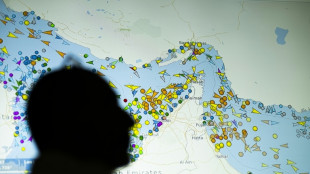 Iran says close to Hormuz plan with Oman, but reopening depends on US
 Messi scores twice to set Leagues Cup record in Miami victory
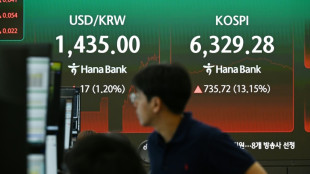 Asian stocks mostly down with tech firms back under pressure
 Back to the future as world champion Springboks host All Blacks

 India youth protests highlight mistrust in 'lapdog' media
 Pacific islands alarmed by Trump-backed push for deep-sea mining
 Erratic rains dictate menu at three-star Michelin restaurant in Brazil
 Zverev, Auger-Aliassime and Medvedev exit Montreal Masters
 Google-parent Alphabet shakes up AI division

 FIFA back Infantino, apologise for World Cup privatisation plan
 Auger-Aliassime out of Montreal ATP event with injury

 Colombian baby hippo of Escobar stock dies after rescue

 Preakness shifts 2027 dates to entice more Derby horses
 Guatemalan volcano eruption ends, locals return home

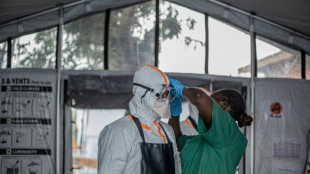 WHO chief urges stronger Ebola response in DR Congo visit

 Newcastle appoint Jaissle as new head coach after Howe exit
 Swiss ski star Lara Gut-Behrami calls time on 18-year career
 US indicts leaders of Mexico's CJNG cartel, ups reward money
 Noosha Aubel: Είναι σε θέση να αντιμετωπίσει τα προβλήματα του Πότσδαμ;
 نوشا أوبيل: هل هي على مستوى التحديات التي تواجهها بوتسدام؟

 Former England fly-half Burns retires from rugby union
Crouching in his hidden lookout on the edge of a forest, a Ukrainian border guard scans the horizon to the border with Russia and Belarus just a few kilometres to the north.
With the rain pouring down and the clouds low, there will be no Russian drones overflying his remote outpost in northern Ukraine, the last one before the frontier.
Clutching a monocular and wearing a balaclava that only shows his eyes, the guard proudly shows off his NLAW anti-tank missile launcher.
"Our main objective is to prevent a (new) invasion. But if that happens again here, we'll be ready to stop the enemy at the border and prevent them from coming in," says the 33-year-old who does not give his name.
The Senkivka border crossing is very close. A three-way crossing shaped like a 'Y', it points northwest into Belarus and northeast into Russia with Ukraine to the south.
This is where Russia's 90th armoured division swept in when the war started on February 24, cutting through Ukrainian territory like a knife through butter.
From there, the Russian army reached the gates of Chernigiv, capital of the eponymous region, some 90 kilometres (55 miles) to the south.
But they were never able to take the city, repelled by fierce Ukrainian resistance although it was regularly bombed.
In early April, the Russians pulled back from the north only to refocus on the campaign in eastern and southern Ukraine.
- 'Growing threat' -
Since then, Ukraine has been watching Senkivka like a hawk as well as its nearly 900 kilometres of border with Belarus, whose territory served as a rear base for Moscow's forces.
On October 20, Ukraine's military said the threat of a renewed offensive from the north was "growing", flagging intensified "aggressive rhetoric" from its northern neighbours who are close allies.
Several days earlier, Minsk said up to 9,000 Russian soldiers and some 170 tanks would be deployed to Belarus as part of a joint task force to secure its borders.
"If you want peace, you need to prepare for war," Belarusian President Alexander Lukashenko said on October 10, accusing Ukraine of "planning strikes" on his country.
Until now, Minsk has not joined the fighting in Ukraine.
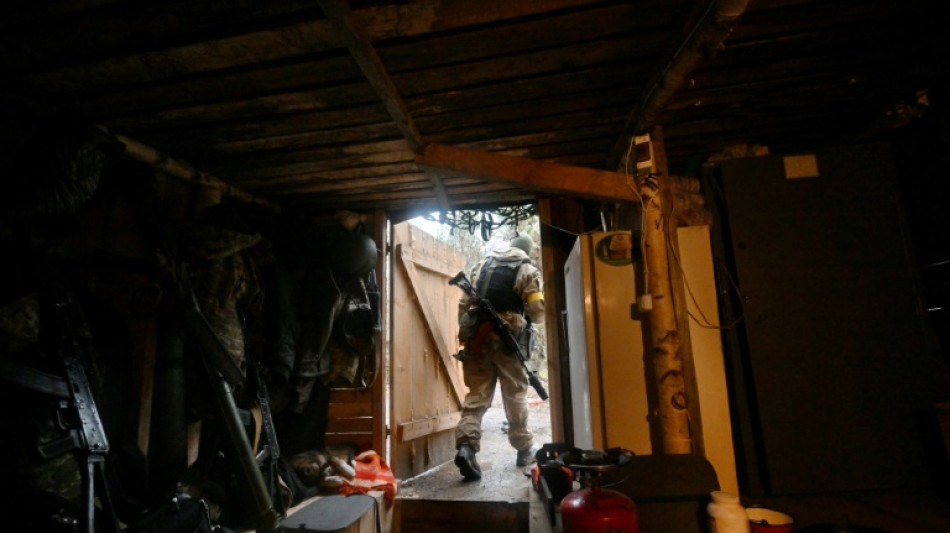
Inside the well-fortified dugout that was set up after the Russian pullback in April, a border guard in his 30s who goes by the nickname "Lynx" says he thinks there's a "50-50 chance" of a new Russian offensive.
"The likelihood of an attack will always be high here near the border, with a neighbour like that," he says, a machinegun slung over his shoulder.
"You hear the constant sound of (Russian) artillery fire here... sometimes it's calm, but since autumn began, the enemy has become more active," he says.
But now "there are more (Ukrainian) positions and more fortifications, everything is more serious now... we have thought through all the possible options to avoid a repeat of what happened before," he insists.
- 'Friendly nations' -
Some 30 kilometres to the south lies Gorodnia, the first town occupied by the Russians on the first morning of the invasion.
Mayor Andriy Bogdan told AFP he was hoping the events of February 24 "won't be repeated" even if such a threat "does exist", pointing to the Russian troops in Belarus.
But now, the situation "is completely different" from what it was back then, when his town -- which had 21,000 residents before the war -- was "almost completely unprotected".
"We are relying on our border guards and all our defence forces. Today they are here and ready to fight," Bogdan says.
When the Russians turned up, the residents made a peaceful show of resistance, he says, proudly showing a video of locals with Ukrainian flags standing in front of the armoured vehicles to stop them advancing.
In the end, the Russians remained outside the town when they occupied the area.
Grocery shop owner Svetlana, a woman in her 50s, dismisses the idea "that Belarus could attack us".
"We live by the border, we are friendly nations. I have a brother in Belarus and a sister in Moscow," she told AFP.
"At the start, even my sister couldn't believe it had happened. But they understand and they support us," she said.
"I want it to be over as soon as possible."
H.Seidel--BTB