Forty years of US-Iran relations / Photo: ©

 Germany, EU, stable investment stops despite upheaval: Merz

 China brands drop Mbappe for 'offending national sentiments'
 India orders evacuations as Cyclone Arnab looms

 Dutch broadcaster pulls out of Eurovision over Israel 'sensitivities'

 Critical coal inventories affect nearly half of India’s domestic power plants

 FCNR(B) deposit drive puts sharper margin pressure on private banks

 Noel Tata requests records of September 17 Tata Sons board meeting
 Reparations calls to dog King Charles's tough Caribbean trip

 Global rates and foreign outflows remain key risks for Indian markets

 Neha Nagar says ₹3 crore can fund retirement with disciplined planning

 Vikas Satija says steady SIP flows shielded Indian equities from deeper losses

 Brewers rout Rays to reach brink of World Series sweep

 Mbappe dropped by Chinese brands for 'offending national sentiments'
 Kuwait exhibition presents Ukraine’s Islamic heritage and cultural ties

 Tech firms track Wall St rally on mixed day for Asian markets
 Jay-Z to perform at Super Bowl LXI halftime show: NFL

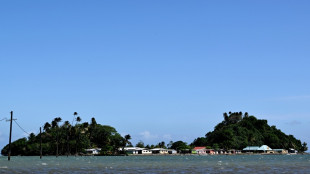 Climate-threatened Fijian utopia rejects calls to relocate

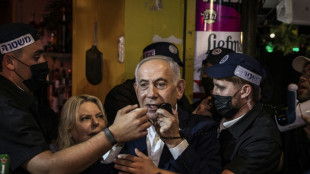 Israel to give verdict on Netanyahu in pivotal election
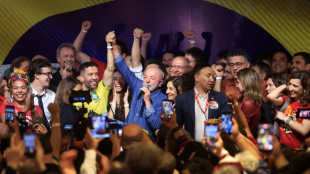
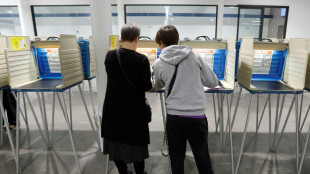 $1m bounties, dawn arrests: Trump presses voter fraud campaign
 Gasping for air: Borneo residents struggle as island burns

 Doha exhibition charts a millennium of Chinese maritime ceramics trade
 New Zealand ex-PM Ardern to teach leadership in Sydney

 Ballon d'Or 'beyond wildest dreams' but Kane has plenty more to prove
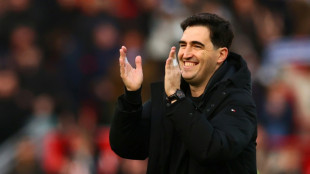 No envy, no secrets: How Spain's Gipuzkoa became football coaching hotbed

 South Korea economy grows three times faster than expected in Q3

Key dates between the US and Iran since 1979 after their exchange Monday in which the US designated Tehran's elite military force a terrorist organization and Iran called the US a "state sponsor of terrorism".
- Rupture -
On November 4, 1979 radical students demanding the extradition of Shah Mohammad Reza Pahlavi take 52 diplomats and employees of the American embassy in Tehran hostage, seven months after the establishment of the Islamic Republic.
The hostages are held for 444 days in a crisis that results in the first US economic sanctions leveraged against the state.
On April 7, 1980 Washington breaks off diplomatic relations with Iran and imposes restrictions on commerce and travel, 10 months before the release of the last hostages.
On November 4, 1986 the Iran-Contra affair becomes public, revealing a secret arrangement in which American arms were sold to Tehran in hopes of helping liberate American hostages in Lebanon, with profits channeled to Nicaraguan Contra rebels.
On July 3, 1988 a US guided missile cruiser shoots down an Iran Air Airbus over the Gulf resulting in 290 deaths, in what the United States calls a mistake.
- 'Axis of evil' -
On April 30, 1995 US president Bill Clinton begins a comprehensive ban on trade and investment with Iran over its seeking nuclear weapons. Sanctions are subsequently extended and expanded.
On January 29, 2002, President George W. Bush puts Iran on his list of countries in the "axis of evil" supporting terrorism.
Iran's new president Mahmoud Ahmadinejad on August 8, 2005 starts a new push for uranium enrichment.
- Hints of reconciliation -
On November 6, 2008 Ahmadinejad congratulates then US president-elect Barack Obama on his victory.
The following year, on March 20 Obama says he would "like to speak directly to the people and leaders of the Islamic Republic of Iran."
But in June, Obama condemns the violent repression of Iranian demonstrations and says he believes the legitimacy of Ahmadinejad's reelection raises serious questions.
On June 15, 2013 the US says it is ready to work directly with new Iranian President Hassan Rouhani and on September 15 Obama reveals he has exchanged letters with him.
On September 27 Obama and Rouhani speak by phone in a historic first direct communication between leaders of the two nations since 1979.
- Historic nuclear deal -
An accord with world powers on Iran's nuclear programme is reached on July 14, 2015, ending 12 years of crisis and 21 months of negotiations.
It gives Tehran relief from crippling economic sanctions in exchange for limits on its nuclear programme.
- Trump scraps deal -
In January 2017, newly-elected US President Donald Trump bans by decree immigration from seven Muslim countries, including Iran.
Two days later Iran carries out a ballistic missile test, in violation of a UN resolution.
Washington pulls out of the landmark nuclear pact with Iran on May 8, 2018, reinstating Washington's sanctions on Iran and companies with ties to the Islamic republic.
The US on March 7, 2019 accuses Iran of carrying out three missile-related launches in defiance of UN resolutions and urges the Security Council to "bring back tougher international restrictions" against Tehran.
- 'Terrorism' accusations -
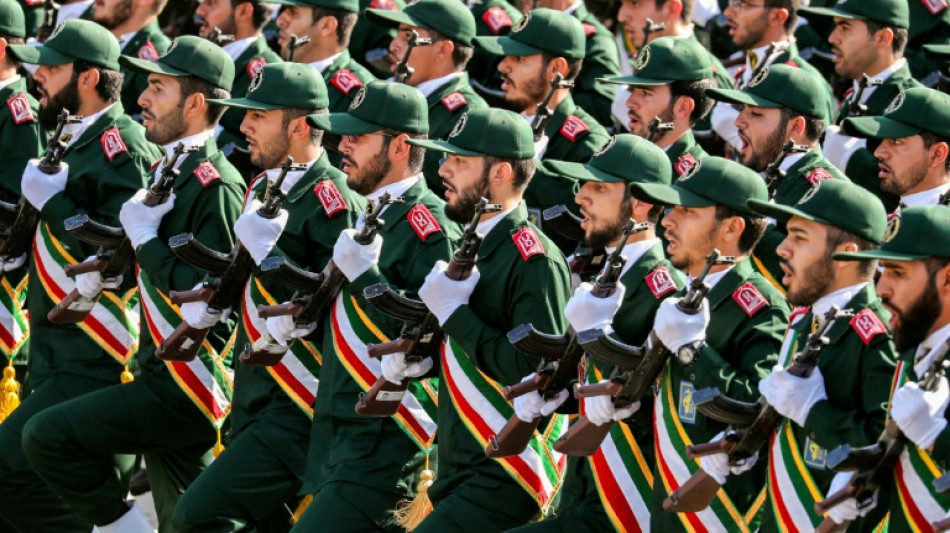
On April 8 the US designates Iran's elite military force, the Islamic Revolutionary Guard Corps, a terrorist organization, ramping up already far-reaching attempts to undermine the Iranian government.
In response, Iran declares the US a "state sponsor of terrorism" and its forces in the region "terror groups".
R.Adler--BTB