Iraq: from IS gains to the battle for Fallujah
/ Photo: ©

 Germany, EU, stable investment stops despite upheaval: Merz

 China brands drop Mbappe for 'offending national sentiments'
 India orders evacuations as Cyclone Arnab looms
 Dutch broadcaster pulls out of Eurovision over Israel 'sensitivities'
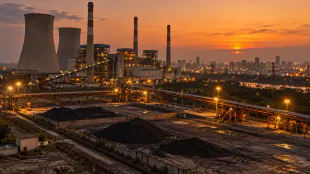 Critical coal inventories affect nearly half of India’s domestic power plants
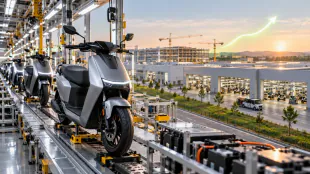
 FCNR(B) deposit drive puts sharper margin pressure on private banks

 Noel Tata requests records of September 17 Tata Sons board meeting
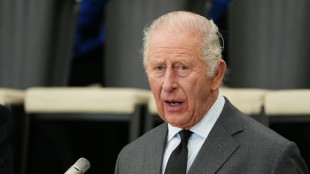 Reparations calls to dog King Charles's tough Caribbean trip
 Global rates and foreign outflows remain key risks for Indian markets

 Neha Nagar says ₹3 crore can fund retirement with disciplined planning

 Vikas Satija says steady SIP flows shielded Indian equities from deeper losses
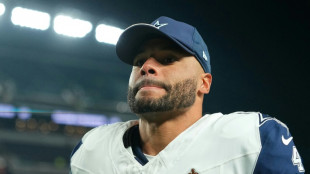
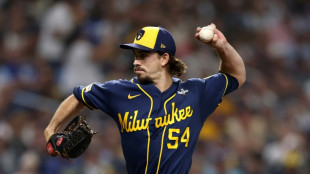 Brewers rout Rays to reach brink of World Series sweep

 Mbappe dropped by Chinese brands for 'offending national sentiments'
 Kuwait exhibition presents Ukraine’s Islamic heritage and cultural ties
 Tech firms track Wall St rally on mixed day for Asian markets
 Jay-Z to perform at Super Bowl LXI halftime show: NFL

 Climate-threatened Fijian utopia rejects calls to relocate

 Israel to give verdict on Netanyahu in pivotal election

 $1m bounties, dawn arrests: Trump presses voter fraud campaign
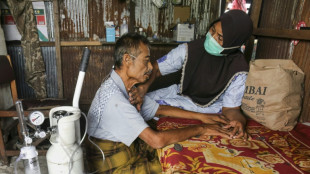 Gasping for air: Borneo residents struggle as island burns
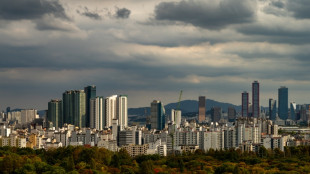
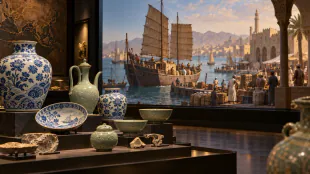 Doha exhibition charts a millennium of Chinese maritime ceramics trade
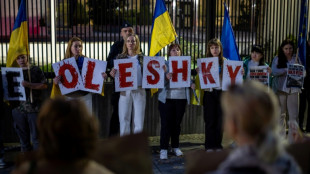
 New Zealand ex-PM Ardern to teach leadership in Sydney

 Ballon d'Or 'beyond wildest dreams' but Kane has plenty more to prove
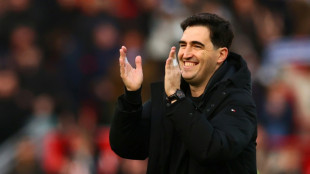 No envy, no secrets: How Spain's Gipuzkoa became football coaching hotbed
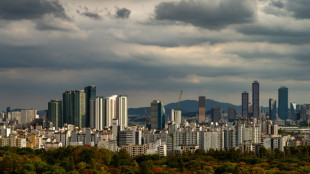 South Korea economy grows three times faster than expected in Q3

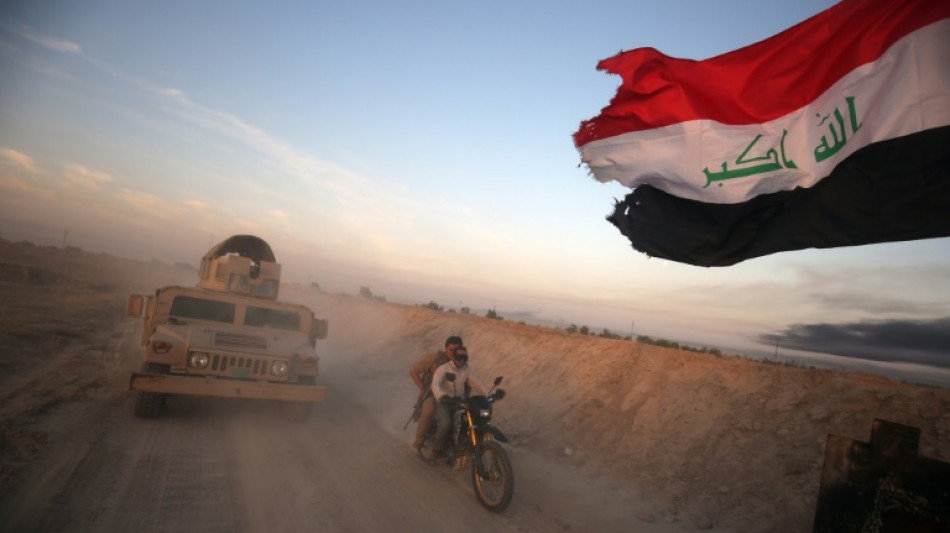
Events in Iraq from the breakthrough by Islamic State group (IS) fighters in 2014 to the government counter-attack.
2014: Jihadist breakthrough
On January 4, Iraq loses its first key town since the US-led invasion of 2003. Fighters from the Islamic State of Iraq and the Levant (ISIL) and allies capture Fallujah and parts of Ramadi, west of Baghdad.
The vast Anbar province that surrounds the two towns is predominantly Sunni Muslim and fiercely resisted US troops when they occupied Iraq.
On June 9, ISIL captures Mosul, the second largest Iraqi city in the north, and declares an Islamic caliphate on June 29, calling itself the Islamic State group.
The jihadists also control Tikrit, home town of late dictator Saddam Hussein north of Baghdad, and large parts of the country up to Iraqi Kurdistan. IS drives out tens of thousands of Iraqi Christians and Yazidis, a Kurdish-speaking non-Muslim minority that lives around Sinjar near the border with Syria.
On August 8, the United States launches air strikes against IS and a month later has created a coalition to target the group in Iraq and Syria.
2015: Counter-offensives
On March 31, Iraqi troops and Shiite militias backed by neighbouring Iran recapture Tikrit.
By May 17 however, IS completely controls Ramadi, the capital of Anbar province which stretches west to Syria where IS has declared a de-facto capital in Raqa.
Later in the year, Iraqi forces and coalition air strikes begin driving IS back, and by mid-October they have recaptured Baiji and its strategic refinery north of Baghdad.
Kurdish forces backed by air strikes recapture Sinjar on November 13, severing an IS supply route between Iraq and Syria. Coalition strikes intensify after November 13, when attacks claimed by IS kill 130 people in France.
On December 27, Iraqi forces say they have liberated Ramadi, their biggest victory against IS to date. But the city is not totally cleared until February 9, 2016.
2016: Fallujah and Mosul
The government focuses on recapturing Fallujah and Mosul, IS's last strongholds in Iraq.
Officials have vowed to drive the jihadists out in 2016, but Washington is more cautious, evoking the fall of Mosul late this year or in early 2017. Observers say Fallujah is more of a priority for the Baghdad government.
In April, Washington says it will send attack helicopters and another 200 soldiers to train and assist Iraqi troops, bringing the total number of US military personnel in Iraq to more than 4,000.
On March 24, the army and allied militia begin an offensive in the northern Nineveh province around Mosul, making slow progress. On May 29, Kurdish peshmerga fighters backed by the international coalition recapture several villages east of Mosul.
To the south, coalition-backed Iraqi troops begin to squeeze Fallujah in March and capture Heet and Rutba, towns which control supply routes between Iraq and Syria.
On May 23, they begin an offensive to retake Fallujah, where several tens of thousands of civilians are trapped.
IS strikes back with suicide attacks in Baghdad and elsewhere, but is now estimated to control just 14 percent of Iraq, down from a peak of 40 percent in 2014.
On May 30, elite troops begin a three-pronged dawn assault on Fallujah.
K.Thomson--BTB