Novel crisis: Iran's books shrink as US sanctions bite / Photo: ©

 Germany, EU, stable investment stops despite upheaval: Merz

 China brands drop Mbappe for 'offending national sentiments'
 India orders evacuations as Cyclone Arnab looms
 Dutch broadcaster pulls out of Eurovision over Israel 'sensitivities'

 Critical coal inventories affect nearly half of India’s domestic power plants
 FCNR(B) deposit drive puts sharper margin pressure on private banks

 Noel Tata requests records of September 17 Tata Sons board meeting
 Reparations calls to dog King Charles's tough Caribbean trip
 Global rates and foreign outflows remain key risks for Indian markets
 Neha Nagar says ₹3 crore can fund retirement with disciplined planning

 Vikas Satija says steady SIP flows shielded Indian equities from deeper losses

 Brewers rout Rays to reach brink of World Series sweep

 Mbappe dropped by Chinese brands for 'offending national sentiments'

 Kuwait exhibition presents Ukraine’s Islamic heritage and cultural ties

 Tech firms track Wall St rally on mixed day for Asian markets
 Jay-Z to perform at Super Bowl LXI halftime show: NFL

 Climate-threatened Fijian utopia rejects calls to relocate

 Israel to give verdict on Netanyahu in pivotal election

 $1m bounties, dawn arrests: Trump presses voter fraud campaign

 Gasping for air: Borneo residents struggle as island burns

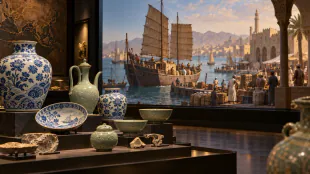 Doha exhibition charts a millennium of Chinese maritime ceramics trade
 New Zealand ex-PM Ardern to teach leadership in Sydney

 Ballon d'Or 'beyond wildest dreams' but Kane has plenty more to prove
 No envy, no secrets: How Spain's Gipuzkoa became football coaching hotbed
 South Korea economy grows three times faster than expected in Q3
For literature lovers in sanction-hit Iran, a new novel has long provided a brief respite from a grinding economic crisis triggered by international pressure imposed over Tehran's contested nuclear programme.
But now losing yourself in a good book is becoming harder, as cash-strapped publishers struggle because the price of paper is soaring.
"If a 200-page novel sold for 400,000 rials ($1.60) last year, its price today is 1,000,000 rials ($4.10), most of which is the cost of production", said Reza Hasheminejad, who runs the Ofoq publishing house.
Iran does not produce its own paper pulp for publishing so relies on imports, and while those are not under sanctions, they must be paid for in foreign currency. That means the price of a book depends directly on the fluctuation of Iran's rial.
So publishers are not only slashing the number of titles published, but also cutting the number of pages of those they do print by shrinking the font size.
"Publishing has suffered a major crisis -- which could become existential," said Emily Amrai, collection director at the Houpa publishing house.
While publishers worldwide face growing challenges to the way people read and consume literature, Iran is facing an extra problem.
The United States, under former president Donald Trump, unilaterally withdrew in 2018 from a landmark accord to prevent Iran from acquiring an atomic bomb -- a goal Tehran has always denied pursuing -- with Washington then reimposing tough economic sanctions.
"As soon as the US sanctions were reinstated in 2018, the price of paper rose," Amrai said.
- 'A miracle' -
Long-running negotiations to revive a deal with Iran continue in Austria, but until an international agreement turns the page, the impact of sanctions grows worse.
"The devaluation of our currency against the greenback, the global rise in the price of paper paid in dollars and the increase in the cost of transport -- also paid in foreign currency -- has plunged publishing into the doldrums," said Hossein Motevali, owner of Houpa, which specialises in children's books.
Because book prices are fixed in Iran, profits are pegged to the rapidly fluctuating price of paper.
"Between receiving the manuscript, laying it out, and setting the price of the book, I can lose everything if the price of paper has gone up suddenly," Hasheminejad said.
"That happens because I'm at the mercy of the fluctuation of the currencies."
As for the authors, they are paid by the number of the pages in the book, whether they are famous or not.
"Selling books is a miracle today, because the majority of customers belong to the middle class -- and given the economic conditions, their priority is to obtain essential goods such as food," said Hasheminejad. "I really wonder how people still buy books at these prices."
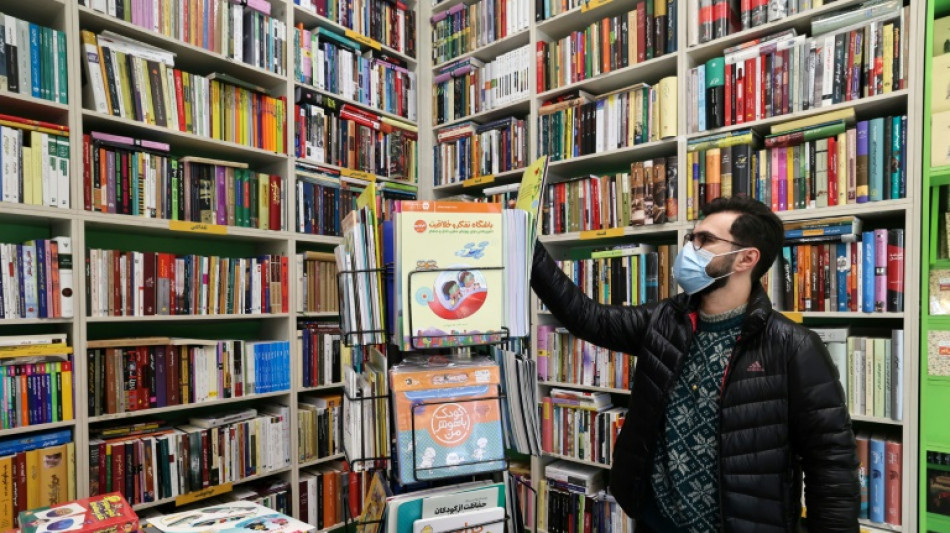
Bookstores in Iran look similar to shops anywhere in the world. As well as shelves of Iranian writers, popular sellers include translations of foreign works -- from 20th century European classics to self-help and psychology books.
Farsi translations of Mary Trump's tell-all on her uncle Donald Trump, as well as the memoir of former US first lady Michelle Obama, have been recent hits.
- 'Shock' -
But as the crisis deepens, several small publishing houses have been driven out of business.
"Today, many independent publishers, who have published excellent works, have been eliminated from the market", said Amrai.
Larger publishing houses have had to adapt to survive.
"We have reduced our profits by as much as possible in order to keep our customers, we have reduced printing and pagination, and publish digital books to avoid paper and reduce costs," said Hasheminejad.
"But that will only last a year or two, for even the most solid companies."
So far, books printed before recent spikes in paper costs provided a buffer, but those stocks are running low.
"In a few months, when the books stored in the depots are exhausted, it will be a shock for the customer when they see the new prices," Hasheminejad warned.
On Enghelab Street, Tehran's main book market, retired teacher Behjat Mazloumi, 60, already struggles to afford second-hand books.
"I haven't been able to buy a book for years," said Mazloumi. "Even street vendors sell books at a very high price."
The cost rise will have wider impacts too, experts say.
Children in poorer areas where access to literature is already limited will soon find themselves priced out completely, Hasheminejad said.
"Today, we see people in some disadvantaged areas who cannot even communicate properly in Farsi," he said. "They will certainly experience difficulties."
K.Brown--BTB