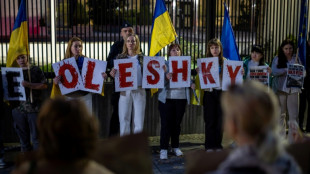
Ukraine displaced fear losing homes again / Photo: ©

 FCNR(B) deposit drive puts sharper margin pressure on private banks

 Noel Tata requests records of September 17 Tata Sons board meeting
 Reparations calls to dog King Charles's tough Caribbean trip
 Global rates and foreign outflows remain key risks for Indian markets

 Neha Nagar says ₹3 crore can fund retirement with disciplined planning

 Vikas Satija says steady SIP flows shielded Indian equities from deeper losses

 Brewers rout Rays to reach brink of World Series sweep

 Mbappe dropped by Chinese brands for 'offending national sentiments'

 Kuwait exhibition presents Ukraine’s Islamic heritage and cultural ties

 Tech firms track Wall St rally on mixed day for Asian markets

 Jay-Z to perform at Super Bowl LXI halftime show: NFL

 Climate-threatened Fijian utopia rejects calls to relocate

 Israel to give verdict on Netanyahu in pivotal election

 $1m bounties, dawn arrests: Trump presses voter fraud campaign

 Gasping for air: Borneo residents struggle as island burns
 Doha exhibition charts a millennium of Chinese maritime ceramics trade
 New Zealand ex-PM Ardern to teach leadership in Sydney

 Ballon d'Or 'beyond wildest dreams' but Kane has plenty more to prove
 No envy, no secrets: How Spain's Gipuzkoa became football coaching hotbed

 South Korea economy grows three times faster than expected in Q3

 Al-Thawadi urges technology to deepen human connection through shared experiences

 Ballon d'Or: Harry Kane's crowning moment

 Harry Kane wins men's Ballon d'Or

 Lula win rattles Brazil markets over spending spree fears

 De la Fuente wins men's Ballon d'Or coach of year

When she fled the conflict zone in east Ukraine, Lyudmyla Bobova never imagined she would celebrate her 59th birthday, almost eight years later, still living in emergency housing and under the threat of fresh bloodshed.
"We have got used to living here, we don't have a choice," she told AFP, standing in the doorway of the small room she shares with her disabled husband and elderly mother.
Now, as fears swirl that over 100,000 Russian troops camped along Ukraine's border could stage an invasion, there are fresh warnings that millions more people could join the hundreds of thousands like Bobova already forced from their homes.
It was the summer of 2014 when Bobova says she hastily packed two bags and left her native Lugansk region as it was engulfed by fighting between Ukrainian forces and Russian-backed separatists.
She headed to Ukraine's second city of Kharkiv, the nearest major hub controlled by the government, in the country's largely Russian-speaking industrial east.
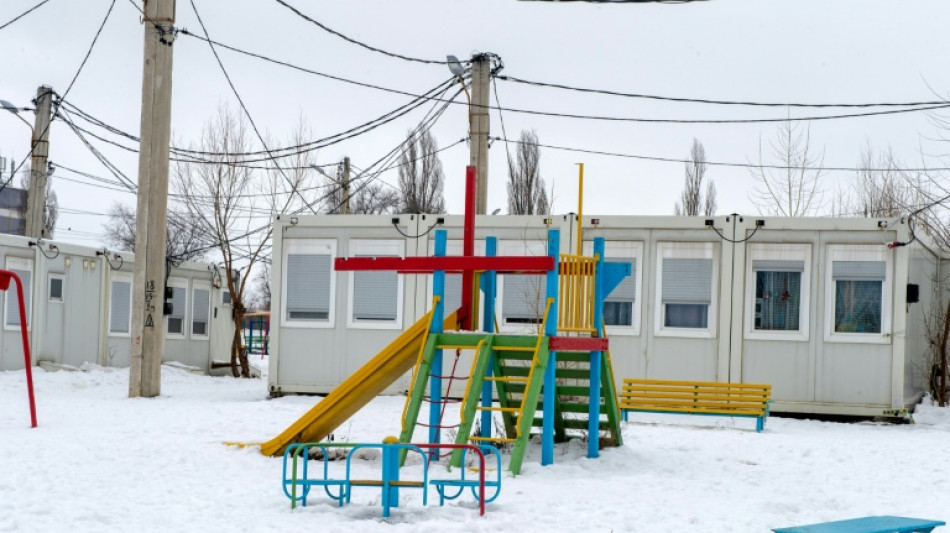
By early 2015 she was living in pre-fabricated housing put up in a hurry for 500 vulnerable displaced with funding from the German government.
It was meant to be a temporary solution, but years later 175 people, including 70 children, are still living in the cluster of white cubes.
The makeshift housing is showing its age. The units are creaking, taps are broken and water heaters keep breaking down more frequently.
- 'Where would we go?' -
Bobova hopes against hope that the local authorities will find a more lasting fix for their accommodation woes.
She says she can't go back to her former home where her son is buried, as it lies across the volatile front line in separatist-held territory.
And as tensions have risen over a possible new Russian offensive, she says she doesn't want to be forced to leave Kharkiv, located precariously just 40 kilometres (25 miles) from the border.
"We had to live, so we fled, my mother was still walking with her cane but now it's difficult and my husband's health has deteriorated," she says.
"And where would we go?"
The Ukrainian government says that some 1.5 million displaced people have been registered around the country since Moscow seized Crimea and war broke out in the east in 2014. Around 135,000 of them are in Kharkiv.
The Norwegian Refugee Council has warned that up to two million people living along the 427-kilometre front line risk being forced from their homes if the conflict escalates.
Activist Yevgenia Levenshtein remembers how hundreds of displaced arrived at the Kharkiv train station back in 2014 "with nothing, families and children, in tears, from the areas being bombed".
Her association, Ukrainian Frontiers, provided emergency aid -- hygiene products, food, housing, work -- to the newcomers.
Given the recent warnings, the organisation has started to prepare again for a fresh wave of evacuations by repairing its minibuses, stocking up on fuel and ordering basic necessities.
- 'Shelter' -
Some who fled the violence have returned to their homes in the self-proclaimed separatist "republics" despite the low-level fighting rumbling on.
And those who remain behind in Kharkiv have strong pro-Ukrainian views.
"They chose Kharkiv for their new life, it's their shelter," says Levenshtein.
"They are ready, at least for now, to stay and defend it. But how? That's a mystery to me."
This is the case of Olga Todorova, who still has tears in her eyes when she tells of how she fled Lugansk by train to avoid separatist checkpoints on the roads.
In the room she rents in a Soviet-era building on the outskirts of Kharkiv, the 53-year-old journalist says she has already made up her mind what to do in case of a Russian attack.
"I know how scary it is, the Russian bombing and mortars or missiles, but we won't leave," she says.
Her partner Sergiy Kolesnyshenko, who was detained and beaten by the separatists, says he is ready to join the reserve forces in case of a Russian attack.
"How much time can we spend running away?" he asks "We can run away but what's the point?"
I.Meyer--BTB