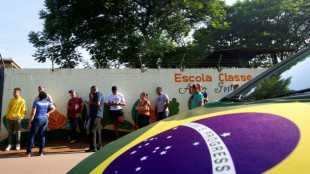
India youth protests highlight mistrust in 'lapdog' media / Photo: © AFP

 QNB expands cross-border funding for AI and digital infrastructure
 France's Le Pen launches presidential bid vowing to restore 'rule of law'
 Qatar Charity delivers Braille Qurans to blind readers in Kosovo and Albania
 Houthis say attacked Riyadh airport hours after flights resume

 Monaco hold Lille as Rennes go top of Ligue 1
 Thousands gather in Prague to protest licence fee plans

 Pease spins to floor gold as US tops gymnastics medal table
 Marchant back in England training squad ahead of Nations Championship fixtures
 French skater Siao Him Fa soars to victory in season-opener at home
 Embattled Albanian PM vows fines for violent protesters
 Steelers top Saints in NFL's first regular-season game in Paris
 Carrick unsure over Man Utd future after Bournemouth loss
 2027 Dakar Rally to be moved from Saudi Arabia
 Man Utd battered by Bournemouth to leave Carrick on the brink

 Storms batter Europe hitting power supplies, flights and phones
 Inter rally late to down Fiorentina and regain Serie A lead

 UDST opens Fall 2027 admissions to students in Qatar and abroad
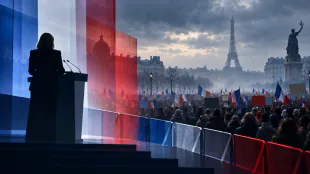 Le Pen begins presidential campaign after violent protests across France
 Adan Hospital launches catheter-based tricuspid valve replacement programme
 KIB Group nine-month profit rises 30% to KD 26.6 million

 Ladakh declared India’s first fully organic union territory

 J&K Bank raises accident cover for government employees to ₹1 crore
 Technical outlook diverges for Bharti Airtel, PFC, REC and Alkyl Amines

 Insurance deductibles and no-claim bonuses require a careful claims decision

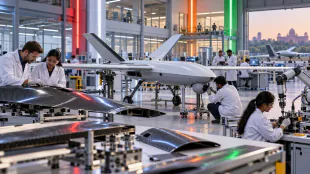 Poland’s WB Group plans $100 million India investment for drone production
Journalists covering last month's youth-led protests in India became targets of public anger and attacks over their perceived support for the government, exposing a deepening crisis of trust in traditional broadcasters.
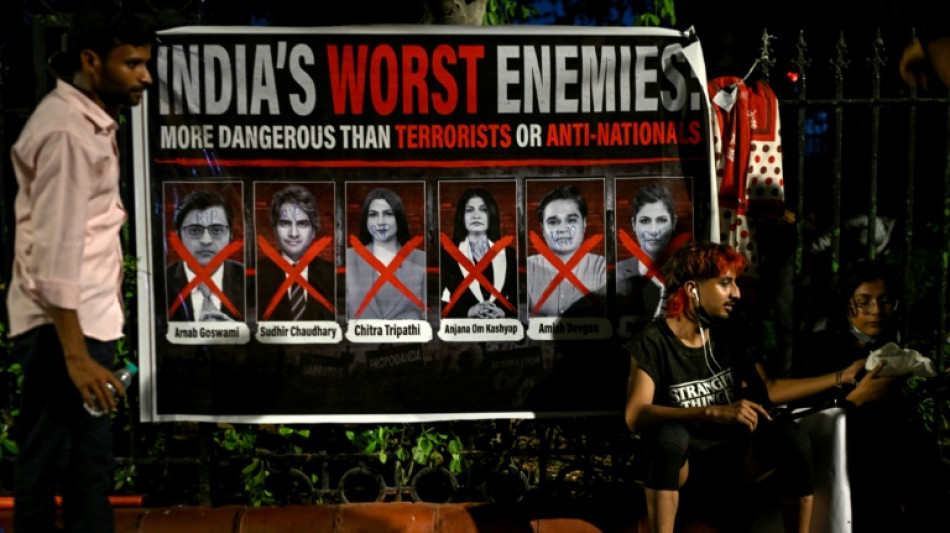
In rallies across the country spearheaded by the online Cockroach Janta Party movement, protest signs branded TV channels as "India's worst enemies", and activists criticised "lapdog" media said to be aligned with Prime Minister Narendra Modi's administration.
The hostility underscored a widening gulf between legacy networks and a growing ecosystem of independent digital outlets that many young Indians increasingly turn to for news.
At New Delhi's Jantar Mantar protest site, many students said they relied on social media and independent platforms.
"It is disheartening to see news channels," said Sukhjeet Narula, 28, a software professional.
"They brand every protest anti-national."
The immediate backlash saw protesters target TV journalists.
Dev Kotak, a reporter with prominent English-language network Times Now, said a crowd in New Delhi threw water at him, but that quickly escalated into slaps and kicks.
"There was anger simmering around me and I was scared for my life," the 36-year-old told AFP.
Videos of an exhausted Kotak running behind security personnel as protesters pursue him spread on social media.
Three of his colleagues were also harassed.
In other footage verified by AFP, a reporter with Zee TV was heckled while broadcasting live from a protest in Mumbai.
Another video showed a journalist being chased by a crowd in the eastern city of Patna.
- 'Conspiracies' -
The Times Network said they had covered the protests in an "entirely neutral manner" but their journalists were still "assaulted in the most reprehensible manner".
"We may differ in views, but we cannot take the law into our own hands," it said in a statement.
Media observers say the public anger reflected years of eroding confidence.
"Godi media are considered anti-people and anti-opposition," journalist Ravish Kumar told AFP.
The term "godi" -- "lap" in Hindi -- is used by critics to refer to so-called "lapdog" media accused of abandoning their watchdog role.
"They have destroyed their own credibility. Genuine public demands are being termed as conspiracies in order to demonise them," said Kumar.
Rights groups have raised concerns about press freedom since Modi's Bharatiya Janata Party (BJP) came to power in 2014, citing growing hostility towards journalists perceived as critical of the government.
India ranks 157th out of 180 countries in Reporters Without Borders' World Press Freedom Index, down 17 places from 2013.
Journalists critical of the government have faced criminal cases, arrests and online harassment from supporters of the ruling party.
Opposition politicians have long accused news channels of peddling BJP's agenda, including through polarising coverage of Muslim minorities.
- 'Sold out' -
Tensions surrounding the protests became so intense that some TV journalists opted to conceal the name and logo of their organisations.
"They stopped coming with logos on their mics because the youth were targeting them," said Shailendra Singh, 30.
"The mainstream media has completely sold out to the government," added the private sector employee.
Atul Chaurasia, managing editor of the Newslaundry digital platform, argued that traditional newsrooms relied on a "flawed financial model" that depended heavily on advertising revenue from the government.
"The government weaponises advertising, effectively destroying the environment that allows media organisations to operate freely," he told AFP.
Kumar said it was important to distinguish between large TV networks and independent outlets that often face pressure from authorities.
"It is the alternative media and independent journalists who face hostility from the government," he said. "They are subjected to raids, branded anti-national, or even imprisoned."
The recent outburst of anger, Kumar argued, reflected a broader perception that some TV networks have become "a threat to democracy".
"Godi" media outlets have "become a liability, even for Prime Minister Modi", he said.
I.Stoeckli--VB