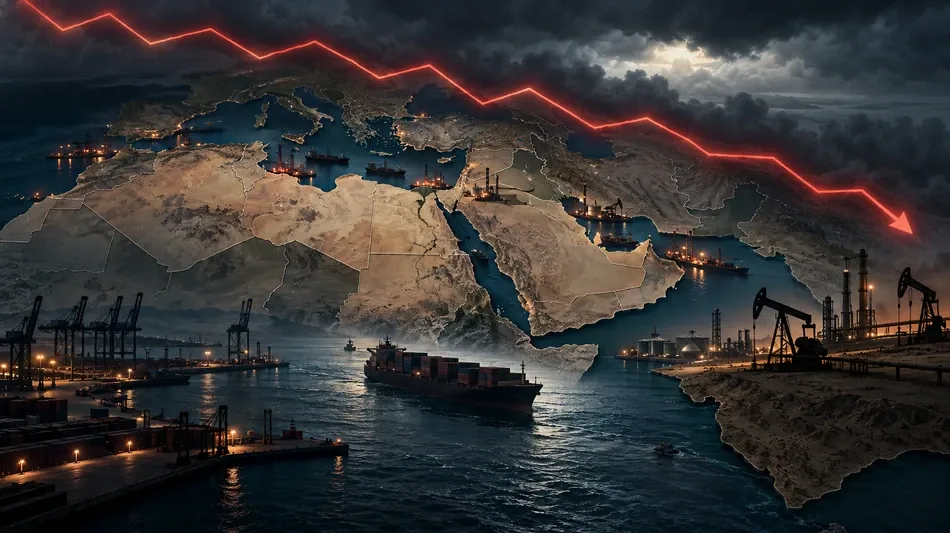
IMF sees regional economy shrinking 1.3% in 2026 amid Iran war

 QNB expands cross-border funding for AI and digital infrastructure

 France's Le Pen launches presidential bid vowing to restore 'rule of law'

 Qatar Charity delivers Braille Qurans to blind readers in Kosovo and Albania

 Houthis say attacked Riyadh airport hours after flights resume

 Monaco hold Lille as Rennes go top of Ligue 1

 Thousands gather in Prague to protest licence fee plans

 Pease spins to floor gold as US tops gymnastics medal table

 Marchant back in England training squad ahead of Nations Championship fixtures
 French skater Siao Him Fa soars to victory in season-opener at home

 Embattled Albanian PM vows fines for violent protesters

 Steelers top Saints in NFL's first regular-season game in Paris

 Carrick unsure over Man Utd future after Bournemouth loss

 2027 Dakar Rally to be moved from Saudi Arabia

 Man Utd battered by Bournemouth to leave Carrick on the brink

 Storms batter Europe hitting power supplies, flights and phones

 Inter rally late to down Fiorentina and regain Serie A lead

 UDST opens Fall 2027 admissions to students in Qatar and abroad

 Le Pen begins presidential campaign after violent protests across France

 Adan Hospital launches catheter-based tricuspid valve replacement programme

 KIB Group nine-month profit rises 30% to KD 26.6 million

 Ladakh declared India’s first fully organic union territory

 J&K Bank raises accident cover for government employees to ₹1 crore

 Technical outlook diverges for Bharti Airtel, PFC, REC and Alkyl Amines

 Insurance deductibles and no-claim bonuses require a careful claims decision

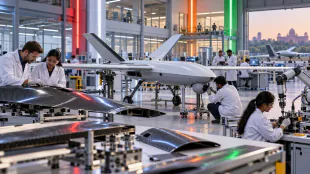 Poland’s WB Group plans $100 million India investment for drone production

The IMF expects output across the Middle East, North Africa and Pakistan to contract 1.3% in 2026 as the Iran war disrupts energy, shipping, tourism and confidence.
The IMF expects output across the Middle East, North Africa and Pakistan to contract 1.3% in 2026 as the Iran war disrupts energy, shipping, tourism and confidence.
The International Monetary Fund said the region's output was expected to contract by 1.3% as a result of the war's impact on energy production, shipping, tourism, trade and confidence.
Economic growth would increase sharply in 2027, but output in those economies would generally stay below pre-war projections.
The impact of the US-Israeli-led war against Iran had been substantial, but uneven, with oil-exporting economies directly affected by disruptions to energy production and shipping hit harder, and oil importers proving to be more resilient, the IMF said in its regional outlook released on Thursday in Dubai.
"This sharp downgrade is concentrated among the economies most directly affected by the conflict," Jihad Azour, the IMF's director for the Middle East and Central Asia, said at a press conference.
"Several Gulf oil exporters are projected to experience recession this year," he added.
Figures from the IMF regional outlook, Gulf Cooperation Council (GCC) economies are expected to contract in 2026, with Oman the exception. Bahrain, Kuwait, Qatar, along with non-GCC member Iraq, are forecast to post double-digit declines in gross domestic product.
"Although relatively less affected by the disruptions in energy trade, Saudi Arabia and the United Arab Emirates are now also projected to experience a recession in 2026," the IMF said in the report.
It said its baseline assumed that the conflict would abate in early 2027 and that trade would gradually normalize during the year, but it said the outlook remained clouded by "exceptionally high uncertainty."
"A more prolonged conflict remains the principal risk to the outlook," Azour said.
The US State Department last Wednesday ordered some diplomats and family members to leave its missions in Saudi Arabia and plans to withdraw family members from a number of other US missions in the region, officials told Reuters. The move follows escalating missile strikes by Yemen's Iran-aligned Houthis on the kingdom.
External financial conditions could also tighten if investors reassess AI-driven productivity gains and interest rates rise further amid heightened concerns about inflation and fiscal positions, the IMF said in its outlook.
Domestic demand in oil-importing economies is supported by remittances and tourism flows, favorable financial conditions, and prompt policy responses that safeguard consumers from higher commodity prices, the IMF said.
Growth in the Caucasus and Central Asia was moderating toward a more sustainable pace, the IMF said, forecasting a 5.2% rise in economic output in 2026 and 5% in 2027.
The IMF underscored the mantra it delivered during last week's annual meetings, urging policymakers to prioritize maintaining price stability, while preserving fiscal sustainability, maintaining central bank independence and enacting structural reforms to boost productivity and create jobs.
P.Staeheli--VB