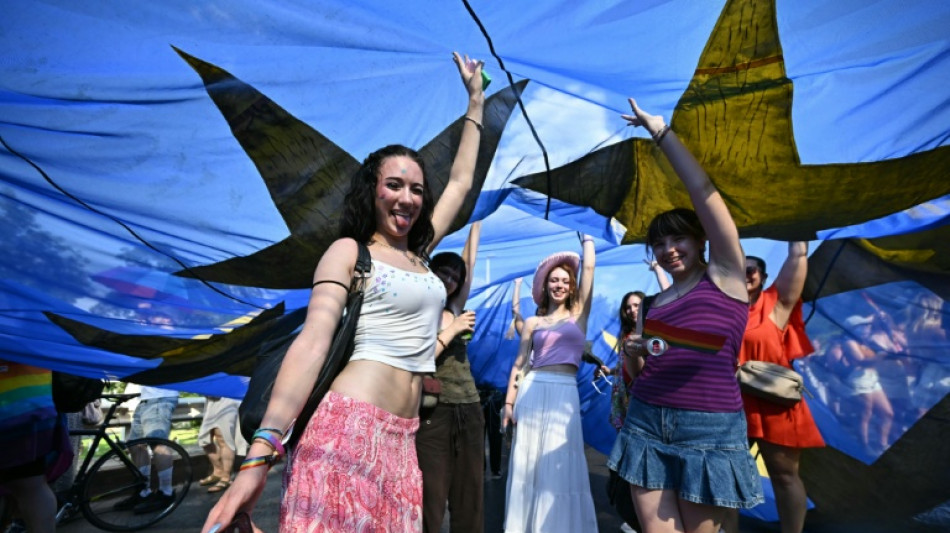
Budapest Pride marchers push for equality after reversed ban / Photo: © AFP

 Davidovich Fokina wins in Mallorca for first ATP title
 Sabalenka urges Grand Slams to 'get it done' in prize money boycott row
 Russell snatches pole as Verstappen, Antonelli fourth for Austria GP grid

 Smith and supersub Foulkes strike for New Zealand in England finale

 Supersub Foulkes strike for New Zealand in England finale
 Wolff says Russell will be at Mercedes next season

 Djokovic inspired by Serena as he targets history at Wimbledon

 Stokes falls cheaply as England collapse in New Zealand decider
 Russell bounces back to beat Antonelli in final practice

 Iran says US violated peace deal as both sides trade fire
 Injured Australian pair Leckie, Italiano out of World Cup

 Farmers fear drought as Italy's longest river runs dry

 Budapest Pride to push for equality after reversed ban

 World Cup fans get taste of American life -- at the mall
 World Cup turns New York's Times Square into global fan hub

 Lebanon, Israel and US sign trilateral framework pact
 Cape Verde extend World Cup fairytale to set up Argentina meeting
 Messi to start dead-rubber World Cup group match on bench

 US and Iran trade strikes putting new strain on Mideast ceasefire

 Maple Leafs make teen McKenna top pick in NHL Draft

 California appeals court orders Weinstein resentencing for sex assault

 Scheffler fires 60 to grab 36-hole PGA Travelers lead

 Austria's Rangnick shuts down conspiracy talk ahead of Algeria World Cup clash

 Should we fear an AI bubble bust?
 US strikes Iran sites after cargo ship attack

Tens of thousands marched in Budapest's Pride parade on Saturday, braving searing heat to celebrate a newfound freedom to gather after the fall of nationalist Viktor Orban, whose government banned last year's march.
Waving rainbow flags and banners, a mostly young crowd packed the streets, many fanning themselves as temperatures in the capital hit 40C.
"We're proud of ourselves and everyone else for being here and coming out despite what feels like 50C on the asphalt," said Zsuzsanna Naszalyi, a 53-year-old teacher.
Last year's Pride drew unprecedented numbers after authorities tried to ban it, turning the event into a symbol of defiance against Orban's long-running anti-LGBTQ policies.
This year, the tone was more hopeful.
"I think the situation is getting better and better, mainly because of the change in government," said Petra Toth, 18, attending her first Pride with her girlfriend.
The march is seen as a signal for the new, pro-EU conservative Prime Minister Peter Magyar, who ousted Orban from office after 16 years in the April elections, prompting relief inside the country's embattled LGBTQ community.
But Magyar has yet to take any specific measures to restore rights, even as many in the community see the political shift as a turning point.
"The public mood has really changed," said Balazs Moczar-Boor, 60, saying he and his partner had considered leaving Hungary if Orban had stayed in power.Others said acceptance still lagged outside the capital.
"In Budapest, people are ahead of the curve and accept everyone, but in rural areas... it's a whole other world," said Lidia, who travelled from northern Hungary and declined to give her full name.
"I hope the country gets back on track and that gay people will be able to marry and adopt children -- but it will take time."
Despite the scorching weather, organisers pressed ahead with the march, while advising those vulnerable to the heat to stay away.
They had urged "everyone to act responsibly and ensure their own safety and that of others".
Elsewhere in Europe, organisers of the Paris Pride march, which was also set to take place Saturday, postponed the event after police ordered them to change the date to ease pressure on emergency services during the heatwave.
- 'Open to discuss' -
Last year, more than 200,000 people took part in Budapest Pride defying a police ban, according to organisers, up from some 35,000 attendees in preceding years.
The record turnout was seen as a strong rebuke of Orban's years-long anti-LGBTQ crackdown in the name of "child protection".
Turnout was still strong this year, with at least 100,000 taking to the streets, according to an AFP photographer.
On Gellert Hill overlooking the march, a small group of anti-LGBTQ activists staged a protest, unfurling a banner reading: "Sin cannot be a subject of pride. Budapest is not Sodom."
Police also detained two people who threw vegetables at the protesters.
During his campaign, Magyar steered away from addressing LGBTQ rights.
Since his election victory, Magyar has said his government should not be determining how Hungarians should live, adding he does not want to "barge into anyone's bedroom".
"We have made it clear that, in our view, everyone is free to love whom they want and live with whom they want, as long as they do not violate the law," he said, when asked earlier this month about allowing same-sex marriage and adoption.
"If there is a demand for us to discuss such socially and politically sensitive issues... we are open to that," he added.
- Rainbow flags -
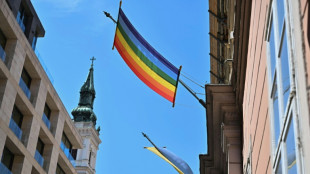
The capital's largest outdoor music venue, Budapest Park -- which has hosted the official Pride after-party since 2018 -- will fly a rainbow flag throughout the entire season for the first time ever.
Progress Pride flags placed on a central bridge along the parade route had been removed twice before the event in what police called acts of vandalism, but they were reinstalled ahead of the march.
The legal environment has also changed.
The EU's top tribunal, the European Court of Justice, found that Hungary's 2021 anti-LGBTQ legislation -- which served as the basis for the Pride march ban -- was in breach of the bloc's rules in late April.
Police told AFP in May that they had "no grounds" to prohibit Budapest Pride, while prosecutors dropped criminal charges against the organisers of last year's parades, citing the landmark ruling.
But discriminatory regulations remain in the books, including a 2020 prohibition against changing gender on official documents.
Orban's government also restricted adoption to married couples, effectively barring same-sex partners from adopting children in 2020.
Last week, several rights groups released a joint statement to urge the government to repeal legislation that makes such prohibitions as last year's Pride ban possible.
Rights group Amnesty International Hungary has also publicly urged the government to establish equal rights for same-sex couples.
The organisation cited a recent survey from pollster Median shows that 68 percent of Hungarians support both same-sex marriage and adoption.
F.Mueller--VB