-
 Heatwave hits more than half of France's population
-
Online threats, insults fuel S.Africa's anti-foreigner hate
-
 Former England keeper Earps agrees to join London City Lionesses
-
Clark completes first round with two-stroke US Open lead
-
 Olympic hurdles medallist Bascou suspended for doping
-
Italian FM cancels US visit over reported Trump comments
-
 Pegula sinks Keys to reach Berlin Open semis
-
Oil prices, shares steady after US-Iran talks postponed
-
 Gaza ceasefire a 'deadly illusion': UNICEF
-
What did we learn from the hantavirus cruise ship scare?
-
 S.Africa anti-migrant hate loses team African support at World Cup
-
Arsenal will start Premier League title defence against Coventry
-
 European robotics start-ups go up against Chinese heavyweights
-
'Alter-Ego': An Italian hospital's little robot carer

-
 Japan's men told to clean at home, not just the World Cup
-
French court confirms Moroccan football star Hakimi will stand trial for rape
-
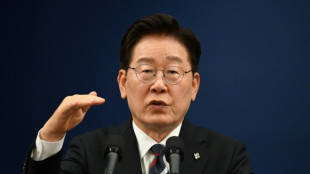 South Korean leader says told Trump sanctions on North are 'ineffective'
-
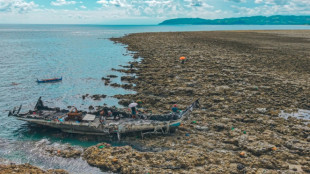
Deadly Philippines quake turns seabed into shore
-
 Stocks rally falters, oil rises as US-Iran talks postponed
-
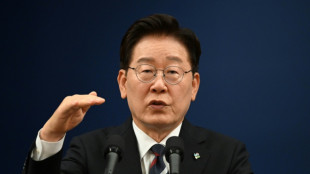
S. Korean leader says he told Trump sanctions on North are 'ineffective'
-
 Indonesia to capture last-known wild Bornean rhino for IVF
-
No vaccine, conflict, mistrust: Ebola's return to DR Congo
-
 USA, Australia eye World Cup knockout rounds, Brazil in action
-
AI museum brings sights, sounds and smells of the rainforest

-
 Iran to lodge complaint with FIFA over World Cup restrictions
-
'Old dog' Slipper out of retirement for Wallabies' Nations Championship campaign
-
 New Zealand minister defends fishers after two orcas killed in net
-
Mexico into World Cup last 32, Canada celebrate historic win

-
 Seoul record leads most Asian markets higher, crude extends losses
-
Co-hosts Mexico first team into World Cup knockout rounds

-
 Burnham wins key UK poll, paving way for bid to challenge PM Starmer
-
Erasmus under 'no illusions' as tough Springboks season kicks off
-
 'Pico' Lopes -- Cape Verde defender's journey from Ireland to World Cup
-
100 Colombian guerrillas disarm in deal with leftist government
-
 'Pretty special': captains eye Super Rugby glory in clash of top seeds
-
Football 'ambassador' and fan favorite: a duck becomes a star in Mexico

-
 Ivory Coast's Diomande living World Cup dream, dealing with tragedy
-
Slipper out of retirement for Wallabies' Nations Championship campaign
-
 Australia seek 'respect' from US amid World Cup 'layup' row
-
New Zealand's Payne joins Paraguayan powerhouse after Instagram fame
-
 Japan doctor-turned-author moots amputations to ease care crunch
-
Clark seizes four-stroke lead at darkness-halted US Open
-
 Fossils challenge assumptions on how animals adapted to land
-
From private enterprise to property: Cuba's reforms unpacked
-
 Canada romp to first World Cup win, Switzerland thump Bosnia
-
'Last ride': US says goodbye to Air Force One as Qatari jet awaits
-
 Venezuela govt, opposition hold US-backed talks on democratic transition
-
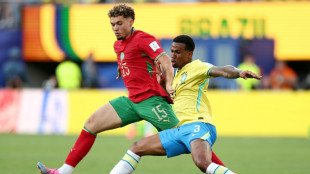
Gabriel tells Brazil to turn the page against Haiti at World Cup
-
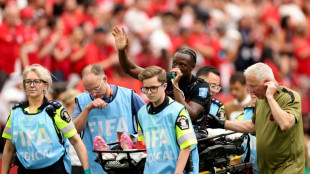 Horror injury overshadows Canada's first World Cup win
-
Cuba adopts historic package of free-market reforms
US-Iran deal under immediate strain as fighting flares in Lebanon
Deadly exchanges between Israel and Hezbollah in Lebanon put a newly signed deal to end the Middle East war under further strain on Friday, after the postponement of planned US-Iran talks in Switzerland.
The delay came as Tehran's top negotiator warned it would not bend on its red lines and that its finger was still "on the trigger", even as shipping appeared to pick up in the Strait of Hormuz, which had essentially been closed during the war.
The deal signed this week by President Donald Trump and his Iranian counterpart Masoud Pezeshkian aims to end a war that began on February 28 with US-Israeli strikes that killed supreme leader Ayatollah Ali Khamenei.
The agreement was also meant to halt the fighting in Lebanon, which Iran has always insisted should be covered under any accord, turning Israel's ongoing campaign there into a source of frustration for Washington.
Israel's military said Friday that it had struck more than 80 Hezbollah targets in Lebanon and killed dozens of members of the Iran-backed group in response to what it described as ceasefire violations.
Lebanon said 18 people were killed Friday in Israeli airstrikes in the south, while Israel's military reported four troops were killed, drawing furious reactions at home.
Prime Minister Benjamin Netanyahu said the Israeli army would stay in Lebanon "as long as necessary" and would make Hezbollah pay a "heavy price" for its attacks.
Far-right Israeli National Security Minister Itamar Ben Gvir went even further, saying after the soldiers' deaths that "all of Lebanon must burn".
France, whose President Emmanuel Macron presided over Trump's signing of the deal in Versailles, urged Israel to "respect" the accord, Foreign Minister Jean-Noel Barrot said.
- 'Two spoilers' -
Preparations had been made to host Iranian and US delegations led by Tehran's top negotiator Mohammad Bagher Ghalibaf and US Vice President JD Vance at the Swiss resort of Burgenstock, overlooking Lake Lucerne.
The talks were due to kick off a two-month period of negotiations to discuss outstanding issues not covered by the initial deal, notably Iran's nuclear programme.
Switzerland's foreign ministry confirmed the discussions had been postponed but said it "remains ready to facilitate these talks".
Quoting diplomats, the Financial Times said Israel's strikes on Lebanon had led to the postponement but there was no immediate confirmation.
A diplomatic source from key regional player the UAE said there were "two spoilers" to the deal -- namely that Israel "didn't like it" and that there was also hardline opposition within Iran.
- 'Crushing response' -
Ghalibaf said on Friday that talks with the United States would remain bound by Tehran's "red lines".
"If the enemy seeks to be excessive, we have proven that our fingers are on the trigger and we have no hesitation in giving a crushing response to the enemy," he said in remarks published by the official IRNA news agency.
Vance, meanwhile, has expressed a degree of exasperation with the Israeli government rare for a top US official, telling the New York Times "you can't just kill your way out of solving every single national security problem that you have".
Iran's new supreme leader Ayatollah Mojtaba Khamenei, who succeeded his father, said Thursday that he had approved the accord with the US, despite holding a "different view".
A key aspect of the deal was the immediate re-opening of the Strait of Hormuz, the key shipping bottleneck whose closure caused global energy prices to rise.
A total of 25 commercial vessels crossed the newly-reopened Strait of Hormuz on Thursday, the highest number since mid-April, according to data from maritime tracking firm AXSMarine published on Friday.
A fifth of the world's oil and liquefied natural gas exports passed through the strait in peacetime, according to economists.
American forces on Thursday lifted their naval blockade of Iranian ports that had prevented ships from sailing to or from the Islamic republic, the US military said, noting that American warships "will remain in the general area".
Under the text of the deal, Washington commits to immediately waive oil sanctions crippling Iran's economy.
And once a final agreement is reached on Iran's nuclear programme, the United States will facilitate the release of a $300 billion reconstruction fund supported by regional nations, the deal says.
F.Stadler--VB