Swiss reject divisive anti-immigration proposal: projections / Photo: © AFP

 Malawi's fuel shortages, record prices deepen economic crisis

 Rubio hosts G20 ministers as Iran, Ukraine wars divide members

 From minerals to AI, EU and Canada to forge new alliance

 Fire pollution killed 3,560 people in Indonesia in September: report

 Ian Wright and Jamie Carragher split on Liverpool-Arsenal prediction

 The Duskbloods delayed as Nintendo Switch 2 release moves to 2027

 Russia turns to NATO countries for prosthetics amid war-related shortages

 Researchers on island encounter giant spider legs emerging from a burrow

 Britain's King Charles lands in ex-colony Guyana

 Arsenal assess Bukayo Saka fitness concerns before Liverpool meeting

 £10,000 garden project transforms a UK home into a miniature Greece

 Forest destruction tests Armenia-Azerbaijan peace push

 Deal still eludes nations on final day of UN nature talks

 Teen rallies take to the streets across Italy

 Netanyahu bloc finishes ahead in Israel vote, but well short of majority

 Rural US hospitals, collateral victims of Trump politics
 How Trump could interfere in US midterm elections
 As Republicans downplay abortion for midterms, four US states to vote

 No. 4 Indiana looks to revive offense against improving Minnesota
 Police close investigation into Hayden Panettiere death after coroner ruling

 Australian mushroom killer loses appeal, has sentence extended

 Lethbridge students learn how city transit and transportation systems work

 India highlights defence ties with Japan and Australia at Cebu meetings

 Horoscope for October 30, 2026: communication and patience shape the day

 Amazon cloud business accelerates but shares drop on profit miss

The Swiss appeared Sunday to have voted down a divisive anti-immigration proposal to cap the country's population, early projections showed.
Shortly after polls closed at noon (1000 GMT), initial projections from the gfs.bern institute indicated around 55 percent opposition to the initiative, which had sparked warnings of "chaos" and devastating impacts for the Swiss economy and European Union relations.
"We are very relieved and happy. This is an important result for our country and for our relations with the EU," Monika Ruhl, director of the employers' organisation economiesuisse, told public broadcaster RTS.
Opinion polls had suggested that the vote, held under Switzerland's direct democracy system, would be tight.
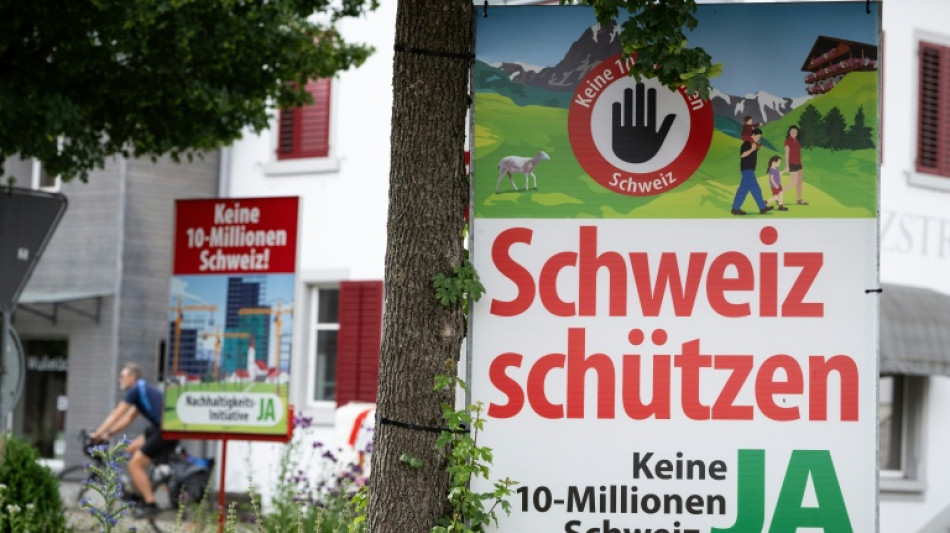
Tensions have been running particularly high over the "No to a Switzerland with 10 million!" initiative, put forward by the hard-right Swiss People's Party (SVP).
That proposal wanted measures to stop the wealthy Alpine nation's population -- currently 9.1 million -- going above 10 million before 2050.
In a country where foreigners make up more than a quarter of the population, the proposal, if accepted, would slam the brakes on immigration.
"There has to be a limit," retiree Gilles Hirt told AFP at a polling station in Bern Sunday morning, comparing the situation in Switzerland to a ship.
"If it is designed for 150 people and you put 250 onboard, it becomes too small. If you put 350 onboard, it will sink," he said.
- Swiss 'Brexit' -
The SVP, Switzerland's largest party, insisted drastic measures were needed, blaming "mass immigration" for a host of problems, from housing shortages and rising rents to overcrowded trains and traffic jams.
SVP parliamentarian Celine Amaudruz told RTS she was "disappointed" by the projected results of Sunday's vote, insisting that Switzerland was facing "colossal challenges" from immigration.
Before the vote, SVP parliamentarian Yvan Pahud highlighted to AFP that "Switzerland is a small country that cannot be expanded".
We "do not want to welcome all of Europe".
"The stakes are very high," Swiss Justice Minister Beat Jans told the Tribune de Geneve newspaper before the vote, warning that the vote could provoke the equivalent of a Swiss "Brexit".
The initiative faces broad opposition from the government, parliament and multiple sectors of the economy.
"In a globalised world, it's just stupid to try and close borders and put a number on the people that can be in here," teacher Josefina Luque told AFP in Bern as she cast her vote against the initiative.
- Conscientious objection -
The Swiss also voted Sunday on a bill passed by parliament to make civilian service less attractive and less accessible, at a time when the war in Ukraine and other geopolitical tensions are pushing European countries to bolster army numbers.
It was the political left in the militarily neutral country that called the referendum. They argue the bill is dangerous and could ultimately lead to the alternative to military service being scrapped altogether.
Initial projections indicated that the referendum would pass with 53 percent in favour, although the gfs.bern institute highlighted that the margin of error was three percent, meaning the final outcome remained uncertain.
Switzerland has compulsory military service for men. They serve in a unique militia system in which army conscripts do at least four months' service before being called up repeatedly over a decade for weeks-long refresher sessions.
People who conscientiously oppose military service have since 1996 been permitted to perform civilian service instead.
Since access to civilian service was simplified in 2009, the numbers choosing that option have steadily climbed -- a trend the government warns has become "problematic".
T.Egger--VB