-
 Malawi's fuel shortages, record prices deepen economic crisis
-
Shock, vindication, regret: Scientists react to AI roiling life's work

-
 Rubio hosts G20 ministers as Iran, Ukraine wars divide members
-
Crypto platform Binance confirms $6.3 bn hack

-
 From minerals to AI, EU and Canada to forge new alliance
-
Boozer shines as Grizzlies top Blazers in battle of NBA unbeatens

-
 Fire pollution killed 3,560 people in Indonesia in September: report
-
Jorge Martin confirmed to race at Malaysian MotoGP

-
 Ian Wright and Jamie Carragher split on Liverpool-Arsenal prediction
-
Bayern and Kane host Dortmund after week of 'extremes'

-
 The Duskbloods delayed as Nintendo Switch 2 release moves to 2027
-
Packers beat Panthers 27-19 as Watson returns from hospital

-
 Russia turns to NATO countries for prosthetics amid war-related shortages
-
Affordable supermarket fashion offers designer-inspired autumn alternatives

-
 Researchers on island encounter giant spider legs emerging from a burrow
-
Judge throws out Australian mushroom killer's appeal, imposes harsher sentence

-
 Britain's King Charles lands in ex-colony Guyana
-
Pelicans down Kings for first win of NBA season

-
 Arsenal assess Bukayo Saka fitness concerns before Liverpool meeting
-
Tech firms take fresh hit as earnings misses fan AI fears

-
 £10,000 garden project transforms a UK home into a miniature Greece
-
Worcestershire leaders back renewed two-unitary council reorganisation

-
 Forest destruction tests Armenia-Azerbaijan peace push
-
India's animal megacentre vows reset after criticism

-
 Deal still eludes nations on final day of UN nature talks
-
Dodging fuel price hikes, Damascus drivers turn to electric cars

-
 Teen rallies take to the streets across Italy
-
Alvechurch manager praises resilience but seeks improvement after Anstey draw

-
 Netanyahu bloc finishes ahead in Israel vote, but well short of majority
-
Crypto platform Binance confirms major hack, more than $2.5bn frozen

-
 Rural US hospitals, collateral victims of Trump politics
-
Sports chiefs face losing battle to keep sport separate from politics
-
 How Trump could interfere in US midterm elections
-
Nvidia's web of AI bets: smart strategy or bubble risk?
-
 As Republicans downplay abortion for midterms, four US states to vote
-
Carrick fights for Man Utd job, Arsenal face Liverpool test

-
 No. 4 Indiana looks to revive offense against improving Minnesota
-
Apple TV crime drama Nocturne brings a Scandinavian thriller to Pennsylvania

-
 Police close investigation into Hayden Panettiere death after coroner ruling
-
Charity crowdfunds millions to buy historic English estate

-
 Australian mushroom killer loses appeal, has sentence extended
-
'Diabolical' Halloween festivities banned in Honduran towns

-
 Lethbridge students learn how city transit and transportation systems work
-
Everton boss Moyes backs 'club decision' to drop Grealish for Newcastle tie

-
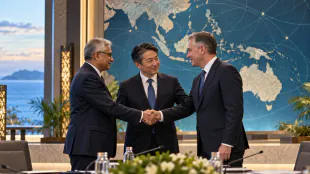 India highlights defence ties with Japan and Australia at Cebu meetings
-
DoorDash shares rise as Instacart slips following $17 billion takeover plan

-
 Horoscope for October 30, 2026: communication and patience shape the day
-
Japanese star Forever Young goes for rare Breeders Cup Classic repeat

-
 Amazon cloud business accelerates but shares drop on profit miss
-
Inter Miami stay third after 2-2 draw with FC Cincinnati

Swiss vote on divisive anti-immigration proposal
Swiss voters will decide the fate of a divisive anti-immigration proposal on Sunday to cap the country's population, and another referendum on restricting access to conscientious objection to military service.
Opinion polls suggest that both votes, put forward under Switzerland's direct democracy system, could be tight.
Voting booths were set to close at noon (1000 GMT), most of the votes having been cast in advance by post. The first results are expected by mid-afternoon.
Tensions have been running particularly high over the "No to a Switzerland with 10 million!" initiative, put forward by the hard-right Swiss People's Party (SVP).
That proposal wants measures to stop the wealthy Alpine nation's population -- currently 9.1 million -- going above 10 million before 2050.
"There has to be a limit," retiree Gilles Hirt told AFP at a polling station in Bern Sunday morning, comparing the situation in Switzerland to a ship.
"If it is designed for 150 people and you put 250 onboard, it becomes too small. If you put 350 onboard, it will sink," he said.
In a country where foreigners make up more than a quarter of the population, the proposal, if accepted, would slam the brakes on immigration.
- Swiss 'Brexit' -
The SVP, Switzerland's largest party, insists drastic measures are needed, blaming "mass immigration" for a whole host of problems, from housing shortages and rising rents to overcrowded trains and traffic jams.
"Switzerland is a small country that cannot be expanded," SVP parliamentarian Yvan Pahud told AFP.
We "do not want to welcome all of Europe".
But critics warned that, if passed, the initiative could cause "chaos", possibly crippling swathes of the economy and Switzerland's relations with the European Union, its main trading partner.
"The stakes are very high," Swiss Justice Minister Beat Jans told the Tribune de Geneve newspaper, warning that the vote could provoke the equivalent of a Swiss "Brexit".
The initiative faces broad opposition from the government, parliament and multiple sectors of the economy.
"In a globalised world, it's just stupid to try and close borders and put a number on the people that can be in here," teacher Josefina Luque told AFP in Bern as she cast her vote against the initiative.
"I don't think it's going to pass," she said, but stressed the need "to take some of the worries seriously" if Switzerland did not want to "have the same initiative in five years".
While opinion polls suggested the vote could be tight, the latest surveys pointed to opposition to the proposal nudging ahead.
For it to pass, it would need to win not just a majority of votes cast but also majorities in more than half of Switzerland's 26 cantons.
- Conscientious objection -
The Swiss will also vote Sunday on a bill passed by parliament to make civilian service less attractive and less accessible, at a time when the war in Ukraine and other geopolitical tensions are pushing European countries to bolster army numbers.
It was the political left in the militarily neutral country that called the referendum. They argue the bill is dangerous and could ultimately lead to the alternative to military service being scrapped altogether.
Here too, opinion polls suggest the vote will be close.
Switzerland has compulsory military service for men. They serve in a unique militia system in which army conscripts do at least four months' service before being called up repeatedly over a decade for weeks-long refresher sessions.
People who conscientiously oppose military service have since 1996 been permitted to perform civilian service instead.
Since access to civilian service was simplified in 2009, the numbers choosing that option have steadily climbed -- a trend the government warns has become "problematic".
C.Kreuzer--VB