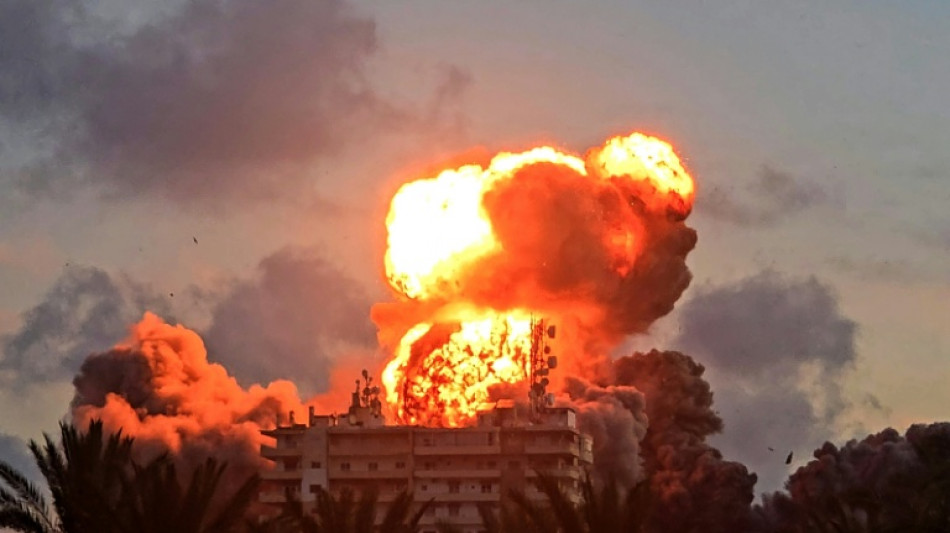
World Bank lowers global growth forecast on Iran war impacts / Photo: © AFP

 TokenInsight Q2 2026 Report: TradFi Momentum Lifts MEXC to No. 2 in Commodity Perpetuals

 Leonardo chief sees potential for Germany to join GCAP fighter jet project
 Louvre heist gallery reopens to public, but with nothing to steal

 Ukraine's new army chief: who is Mykhailo Drapaty?

 India student protests keep up pressure on Modi government

 Italian FA chief says in touch with Guardiola over coaching vacancy

 Cooler inflation hands new UK PM Burnham an early boost
 Bezos holds talks with group interested in buying Liverpool stake: reports

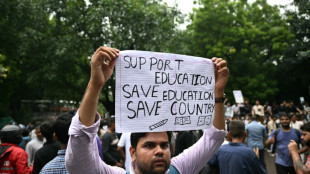 The student movement in India challenging Modi's government

 Danish fish fossil cliffs set to gain UNESCO status
 In Bulgarian mountains, local doctor still on call at 90

 Australia protests China's 'destabilising' missile test
 Sydney court dismisses defamation case against film star Rebel Wilson

 US tariffs on Brazil take effect as Trump readies fresh flurry

 Death toll rises to 13 in Chile's severe storms
 24 hours in a Ukrainian hospital, buckling under the toll of war

 India's domestic workers go online as instant services boom

 From bath to fish market: DJs play to revive Japan neighbourhoods

 Nearly 3,000-year-old human remains unearthed in El Salvador

 New Zealand may miss climate targets due to government policies: report

 Hormuz, Malacca and other key straits spawn tensions throughout history

 U.S. Polo Assn. Sponsors the 2026 St. Regis British Open Polo Championship for the Cowdray Gold Cup as Official Apparel Partner
 Rainout keeps Red Sox MLB win streak at 14 with two games Wednesday

 Zelensky sacks army chief Syrsky after days of protests

 Messi lands in Argentine hometown after World Cup defeat

The World Bank on Thursday lowered its global growth forecast to its lowest level since the pandemic, warning of the expanding economic impacts of the war in the Middle East on countries around the globe.
Worldwide growth is now forecast to drop to 2.5 percent in 2026, from 2.9 percent a year earlier, with headline inflation averaging four percent, the multilateral lender said in its Global Economic Prospects report.
The US-Israel war on Iran has sent energy prices skyrocketing, causing steeper inflation with the potential for increased borrowing costs as central banks seek to tame the rampant price increases.
The World Bank said it was making up to $60 billion immediately available to developing countries which have been hardest hit by the crisis. It said that number could increase to $100 billion over 15 months.
"In response to the current shock, we are providing liquidity where it is needed now -- and we are ready with additional financing, guarantees, and private-sector solutions if pressures deepen," said Ajay Banga, the Bank's president.
Growth forecasts for two-thirds of the world's economies have been downgraded in the new report relative to January of this year.
And World Bank officials warned of the unequal nature of the shock, hitting low-income and developing countries harder than advanced economies.
"For now, Asia is the worst affected section of the global economy," said Indermit Gill, chief economist at the World Bank.
"West Asia is being battered by the conflict. South Asia is being affected by higher oil, gas, mineral, and fertilizer prices.
"Southeast Asia, countries like the Philippines, are suffering from higher fuel and mineral prices, and Northeast Asia is also experiencing these effects."
Some of the countries to see the highest downward revisions to GDP growth included the United Arab Emirates, Saudi Arabia, Turkey and Bangladesh.
Gill highlighted the series of shocks to hit the world economy in recent years -- including the pandemic, climate change, Russia's invasion of Ukraine, US President Donald Trump's tariff wars and now the Iran war -- as depleting countries' economic resilience.
"(The) first thing is to end the conflict in Ukraine, in the Gulf, and in Central Africa, and not start any new wars," he said.
"War anywhere is bad for poor people everywhere."
- 'Lost decade' -
The World Bank's baseline scenario, upon which the forecast is based, assumes Brent crude prices will average $94 per barrel in 2026, with the worst of energy supply disruptions to abate by July.
If energy disruptions prove more severe, however, and supply issues lead to financial market volatility and a loss of confidence, global growth could fall as low as 1.3 percent, the Bank warned.
Worldwide headline inflation in that scenario would average 4.4 percent.
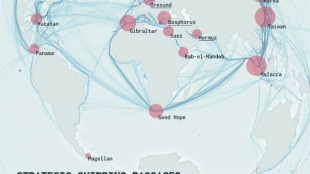
The intensity of the conflict's effects has varied based on countries' overall economic size, energy reserves and exposure to supply chains disrupted by the closure of the Strait of Hormuz.
The report labeled the 2020s a "lost decade" for developing countries to improve their economic prospects, as they battled one shock after another.
"Barring a miracle, the 2020s will prove to be what their ominous opening foreshadowed: a lost decade -- not just for a couple of outliers, but for dozens of developing economies," it said.
- Food insecurity -
One of the key effects of the closure of the Strait of Hormuz has been the disruption of about a third of the world's fertilizer supplies, with knock-on effects on food security.
"If the conflict persists, the next thing that will be affected is food prices, and that'll spell trouble for North and Sub-Saharan Africa," said Gill.
The report called for coordinated global policy action to address the issue, including "to bolster emergency food aid mechanisms and establish humanitarian corridors to prevent further deterioration."
Even before the latest conflict, global food insecurity had been rising, with 12 percent of the world population estimated to be in severe food insecurity in 2025 -- two percentage-points higher than in 2019.
Sub-Saharan countries -- including Burkina Faso, the Democratic Republic of Congo, Mali, Niger, Sudan and South Sudan -- are particularly exposed to the effects of the current crisis.
Elsewhere, conflict-affected states such as Syria, Lebanon and Yemen have been flagged as also being vulnerable to food insecurity.
H.Gerber--VB