Saudi's new national carrier gets off ground despite war, delays / Photo: © AFP

 TokenInsight Q2 2026 Report: TradFi Momentum Lifts MEXC to No. 2 in Commodity Perpetuals

 Leonardo chief sees potential for Germany to join GCAP fighter jet project
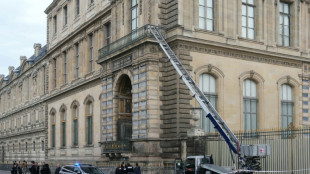 Louvre heist gallery reopens to public, but with nothing to steal

 Ukraine's new army chief: who is Mykhailo Drapaty?

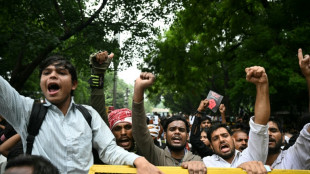 India student protests keep up pressure on Modi government

 Italian FA chief says in touch with Guardiola over coaching vacancy
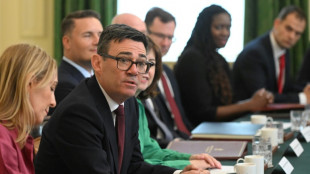 Cooler inflation hands new UK PM Burnham an early boost
 Bezos holds talks with group interested in buying Liverpool stake: reports

 The student movement in India challenging Modi's government

 Danish fish fossil cliffs set to gain UNESCO status

 In Bulgarian mountains, local doctor still on call at 90

 Australia protests China's 'destabilising' missile test
 Sydney court dismisses defamation case against film star Rebel Wilson
 US tariffs on Brazil take effect as Trump readies fresh flurry

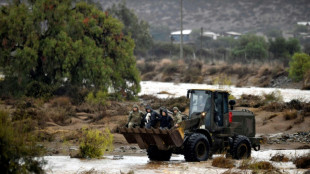 Death toll rises to 13 in Chile's severe storms
 24 hours in a Ukrainian hospital, buckling under the toll of war
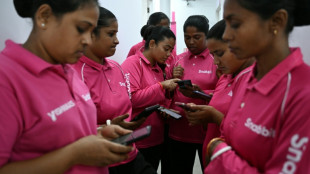 India's domestic workers go online as instant services boom

 From bath to fish market: DJs play to revive Japan neighbourhoods

 Nearly 3,000-year-old human remains unearthed in El Salvador

 New Zealand may miss climate targets due to government policies: report

 Hormuz, Malacca and other key straits spawn tensions throughout history

 U.S. Polo Assn. Sponsors the 2026 St. Regis British Open Polo Championship for the Cowdray Gold Cup as Official Apparel Partner

 Rainout keeps Red Sox MLB win streak at 14 with two games Wednesday
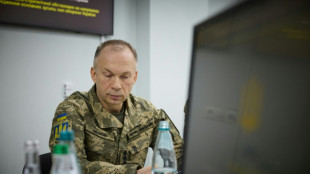 Zelensky sacks army chief Syrsky after days of protests

 Messi lands in Argentine hometown after World Cup defeat

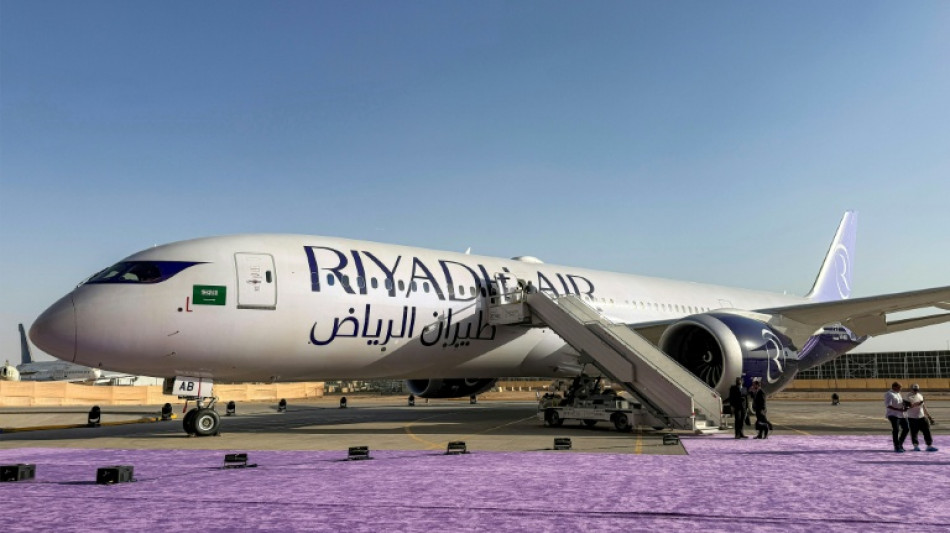
Saudi Arabia launched its second national carrier Riyadh Air after more than a year of delays on Wednesday, defying the economic turmoil triggered by the Middle East war and strong competition from established Gulf airlines.
A London-bound Boeing 787 Dreamliner in Riyadh Air's white and lavender livery took off at 2:30am (2330 GMT Tuesday), putting in motion a flagship project in Saudi Arabia's push to reduce its economic reliance on oil.
Riyadh Air, the country's second state-owned airline after Jeddah-based Saudia, is meant to help turn the Saudi capital into a global hub to rival Dubai, the world's busiest for international passengers.
"We want to bring glamour, we want to bring refinement, we want to bring grace back," Riyadh Air CEO Tony Douglas told AFP.
The launch, originally planned for 2025, was set back by delivery delays from Boeing, which has suffered a series of manufacturing and safety problems in recent years.
It also follows unprecedented attacks from Iran, which has fired thousands of drones and missiles at Gulf targets including airports, casting the wealthy region into sudden economic uncertainty.
But, for Douglas, ex-CEO of Abu Dhabi's Etihad airline, the inaugural flight is "the culmination of four years' worth of preparation".
"I think Riyadh, as a result of its geography, during this particular point in time, has been less affected" by the attacks, he said, seated in a Riyadh Air Dreamliner cabin at a pre-launch event.
"You have the trials and the tribulations, you win some, you lose some, you make progress, you sometimes have setbacks, but you have made it, and this day we've made it," added the CEO.
- Saturated market? -
Saudi Arabia is building a major new airport in Riyadh with a planned capacity of 120 million passengers a year by 2030, compared to 53 million at the existing King Khalid International Airport.
Riyadh Air is owned by the $900 billion Public Investment Fund, the main vehicle for de facto ruler Crown Prince Mohammed bin Salman's ambitious Vision 2030 economic reforms.
In a statement of intent, the airline ordered 132 Boeing 787 Dreamliners and last June signed for 25 Airbus A350-1000s, with an option for 50 more.
"Our ambition is to be able to connect to over 100 international cities over the next five years," Douglas said.
At a ceremony celebrating the first planes' delivery, PIF chief and Riyadh Air chairman Yasir Al-Rumayyan described "a historic moment for the nation" and said the company would create "200,000 direct and indirect jobs".
Saudi Arabia is focusing on Vision 2030's more pragmatic ventures as extravagances like NEOM, a futuristic city in the desert, and Riyadh's cuboid skyscraper Mukaab, are scaled back or scrapped to save costs.
Saudi Arabia, which is hosting the 2030 World Expo and the 2034 football World Cup, and welcomes millions of pilgrims to Mecca each year, aims to triple its annual air traffic to 330 million passengers by 2030.
Some analysts have cast doubt over these ambitions in a regional market that is saturated with competitors such as Dubai's Emirates, Qatar Airways and Etihad.
Yet Saudi airlines hold a significant advantage over Gulf competitors: a domestic market of approximately 35 million people, by far the region's largest.
R.Kloeti--VB