
-
 DonnaPro Introduces AI-Trained Executive Assistants for European CEOs
-
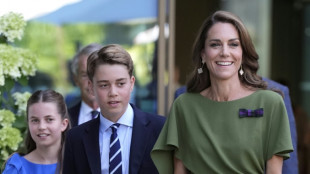
Happy birthday, George! UK prince becomes a teenager
-
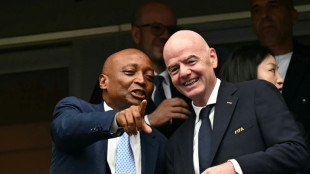 CAF chief Motsepe backs Infantino despite criticism
-
Oil prices jump on Mideast war, stock markets diverge
-
 Evacuees from Spain's wildfire struggle with scale of devastation
-
US hits Iranian island, says war cost at $37.5 bn
-
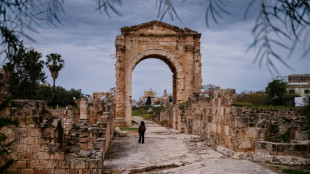 Ancient Lebanese city of Tyre added to heritage danger list
-
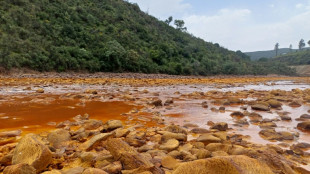
Metal mining's carbon footprint far larger than thought: study
-
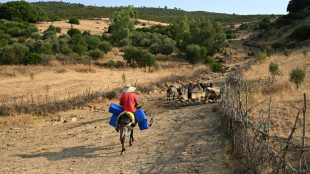 Extreme heatwave grips Tunisia as wide power cuts fuel frustration
-
TokenInsight Q2 2026 Report: TradFi Momentum Lifts MEXC to No. 2 in Commodity Perpetuals

-
 'Beautiful game' provides Venezuelans with welcome distraction in wake of tragedy
-
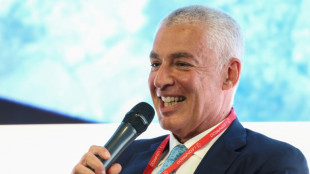
Leonardo chief sees potential for Germany to join GCAP fighter jet project
-
 Oil prices surge on Mideast war, stock markets diverge
-
Louvre heist gallery reopens to public, but with nothing to steal
-
 Fury says 'best yet to come' ahead of Thailand fight
-
Ukraine's new army chief: who is Mykhailo Drapaty?
-
 Japan suffers heat 'disaster as cities hit by 'cruelly hot' days
-
India student protests keep up pressure on Modi government
-
 In Kazakhstan, emptying villages and overcrowded cities
-
Italian FA chief says in touch with Guardiola over coaching vacancy

-
 Hitler's Austrian birthplace transformed into police station
-
Cooler inflation hands new UK PM Burnham an early boost
-
 Mideast conflict lifts Brent back above $94, stocks give up gains
-
Bezos holds talks with group interested in buying Liverpool stake: reports

-
 Greece broils on year's warmest day as three-day heatwave peaks
-
The student movement in India challenging Modi's government
-
 Japan cities 'cruelly hot' for first time
-
Danish fish fossil cliffs set to gain UNESCO status
-
 Lithuania moves Red Army graves to leave behind Soviet past
-
In Bulgarian mountains, local doctor still on call at 90

-
 OpenAI reports 'unprecedented' autonomous hack by AI agents
-
Australia protests China's 'destabilising' missile test
-
 India opposition leader released after protest detention
-
Sydney court dismisses defamation case against film star Rebel Wilson

-
 Australia cricket great Warner pleads guilty to drink-driving
-
US tariffs on Brazil take effect as Trump readies fresh flurry
-
 US hits Iran, says war cost at $37.5 bn
-
Death toll rises to 13 in Chile's severe storms
-
 Tech lifts Asia stocks, Brent crude back above $92
-
24 hours in a Ukrainian hospital, buckling under the toll of war

-
 Hitler's Austrian birthplace to become a police station
-
India's domestic workers go online as instant services boom

-
 Decomposed body in singer D4vd's car was 'unrecognizable,' court hears
-
From bath to fish market: DJs play to revive Japan neighbourhoods

-
 A once wary Hollywood slowly warms to AI
-
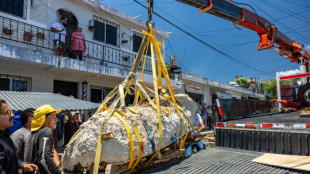
Nearly 3,000-year-old human remains unearthed in El Salvador
-
 Designing a Tour de France route: a three-year labour of love
-
New Zealand may miss climate targets due to government policies: report

-
 Chelsea sign Rogers from Villa for reported UK record fee
-
Hormuz, Malacca and other key straits spawn tensions throughout history

Israel reports incoming Iranian missiles in first since Mideast war ceasefire
Air raid sirens sounded in Israel on Sunday as its military worked to intercept barrages of incoming Iranian missiles for the first time since an April ceasefire took hold in the Middle East war.
The Israeli army reported the attack just hours after Tehran had threatened to retaliate for a new Israeli strike on Beirut.
An April 8 ceasefire had halted major hostilities between Iran, Israel and the US, but efforts to turn the truce into a settlement have repeatedly stalled, and Sunday's launches were sure to further dampen hopes for a lasting peace, as the Middle East war reached its 100th day.
Tehran has insisted any deal to permanently end the war must also halt the parallel conflict in Lebanon, where Israel is pursuing a campaign against the Iran-backed movement Hezbollah, and had warned that any new attacks on Beirut would trigger a "full-scale resumption" of hostilities.
On Sunday, Israeli Prime Minister Benjamin Netanyahu's office announced that the army had "struck a militant command centre in Beirut's Dahiyeh district, in response to Hezbollah's fire towards Israeli territory".
The raid killed two people and wounded 20 more, Lebanon's health ministry said.
Israel had warned it would hit the area should Hezbollah attack northern Israel, and the group later confirmed having launched missiles and drones at a pair of Israeli army barracks on Sunday morning.
Mohammad Bagher Ghalibaf, Iran's parliament speaker and its chief negotiator in talks with Washington, accused the United States of having given a "green light" for the Beirut attack, saying US and Israeli assets were now "legitimate targets".
Hours later, the Israeli military reported at least three waves of incoming missiles, saying its air defences were "currently identifying and intercepting threats".
The head of Iran's military central command said Israel had "crossed all red lines" with the Beirut strike, demanding it halt its campaign in Lebanon.
"The Israeli army must stop its attacks on southern Lebanon and the suburbs, and if it expands its attacks to that region or responds to Iran's action, it will face more devastating and regrettable blows," General Ali Abdollahi said.
- 'Gone numb' -
The sharp escalation came as Iranians were already feeling the strain of weeks of uncertainty.
Fitness trainer Elaheh from Ahvaz told AFP: "I really have gone numb."
"Daily life? It's a joke. Everything is horrible. We only try to survive," the 32-year-old added, pointing to rising prices.
Farhad, a 35-year-old chef, also said life was becoming "increasingly difficult", noting economic hardship had set in even before the war.
"Things that just a few months ago you might have considered buying have now become dreams and fairy tales," he told AFP.
There were some signs of ongoing diplomatic efforts over the weekend, with Pakistan's interior minister Mohsin Naqvi visiting Tehran.
Naqvi said upon his arrival Saturday that he would deliver a "special letter" from Pakistan's army chief to Iran's supreme leader, as well as a message from the prime minister, according to Iranian state television.
Pakistani military leader Syed Asim Munir has played a key role in mediating between Iran and the US following an initial round of direct negotiations in Islamabad.
Also on Saturday, Lebanese army chief Rodolphe Haykal travelled to Pakistan for his own talks with Munir, and a source with knowledge of his visit said it was "linked to the Pakistani mediation" between Tehran and Washington.
- 'Deadlock' -
Mohsen Rezaei, military adviser to Iranian supreme leader Ayatollah Mojtaba Khamenei, had told CNN negotiations with the US "are at a deadlock, and Trump must break this deadlock", calling for the release of some $24 billion in frozen Iranian assets.
But Trump said in the same interview that he would not unfreeze Iranian assets before reaching an initial agreement with Tehran. "If they behave, if they do a good job, we start talking," he said.
In fact, Washington may seek to use those funds to pay for damage wrought by Iranian strikes on Gulf allies, according to a source familiar with Treasury Secretary Scott Bessent's thinking.
Meanwhile, US Central Command (CENTCOM) said overnight that it destroyed two Iranian drones "that threatened international maritime traffic in the Strait of Hormuz".
A previous drone interception and strikes on Iranian radar sites had prompted Tehran on Saturday to fire a salvo of missiles at US allies Bahrain and Kuwait.
burs/smw/dc
A.Ruegg--VB