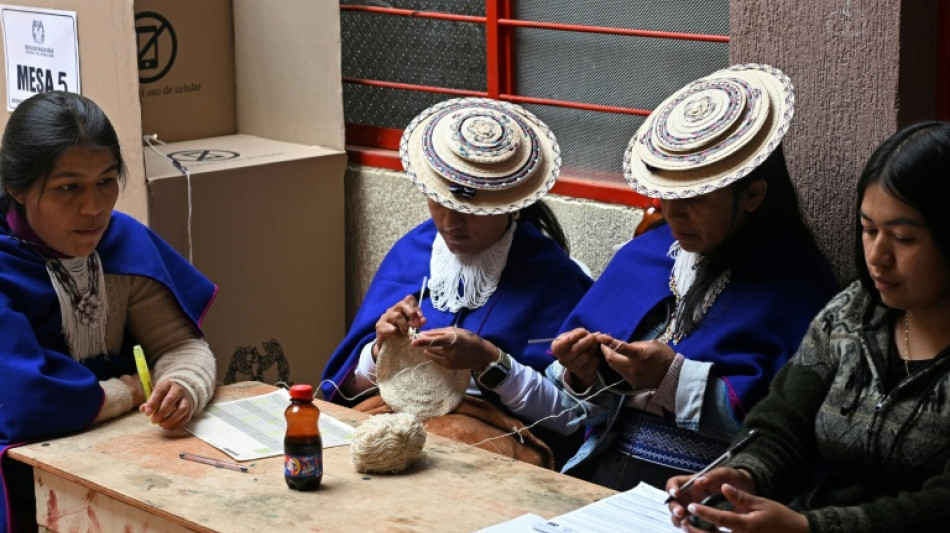
Colombians elect president amid rising drug violence / Photo: © AFP

 US eyes offshore nuclear reactors

 The Sterling Announces Luxury Cocktail Lounge Concept and Investor Showcase in Orlando
 Inter Miami signs Brazil veteran Casemiro but MLS probes deal
 White House accuses China's Moonshot of stealing Anthropic AI
 Pogacar sweating on Yates's fitness ahead of Tour Queen stage
 Ukrainian soldiers and civilians welcome new army commander

 UK fintech Revolut valuation soars to $115 bn: source
 German FM, on Africa tour, eyes business ties amid US, China pressure
 Rubio says at ASEAN meeting he expects 'positive' US visit by China's Xi
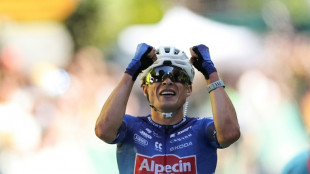 Philipsen wins Tour de France 17th stage
 DonnaPro Introduces AI-Trained Executive Assistants for European CEOs
 Happy birthday, George! UK prince becomes a teenager
 Oil prices jump on Mideast war, stock markets diverge
 US hits Iranian island, says war cost at $37.5 bn
 Metal mining's carbon footprint far larger than thought: study
 TokenInsight Q2 2026 Report: TradFi Momentum Lifts MEXC to No. 2 in Commodity Perpetuals

 Leonardo chief sees potential for Germany to join GCAP fighter jet project
 Louvre heist gallery reopens to public, but with nothing to steal

 Ukraine's new army chief: who is Mykhailo Drapaty?
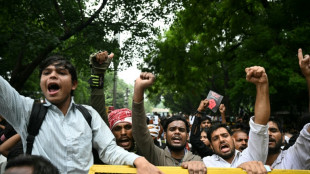 India student protests keep up pressure on Modi government
 Italian FA chief says in touch with Guardiola over coaching vacancy

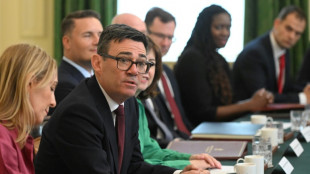 Cooler inflation hands new UK PM Burnham an early boost
 Bezos holds talks with group interested in buying Liverpool stake: reports
 The student movement in India challenging Modi's government
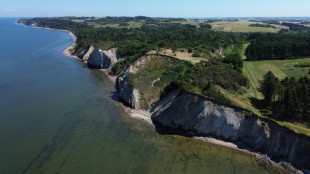 Danish fish fossil cliffs set to gain UNESCO status
Polls started to close Sunday in Colombia's presidential election, a high‑stakes vote that could bring further peace talks with armed groups or a hard‑right military crackdown.
Pre‑election polls showed left‑wing senator Ivan Cepeda narrowly ahead but facing a strong challenge from hard‑right lawyer Abelardo de la Espriella.
The vote is, in part, a referendum on outgoing President Gustavo Petro and his "total peace" policy of negotiating with guerrillas and other drug trafficking groups.
A decade after a landmark peace accords, pockets of Colombia are still ruled by dissident armed groups that dominate world cocaine production.
Critics say Petro's strategy has given these gangs free rein, causing surging violence and record drug exports.
The presidential campaign was marred by car bombs, drone attacks, and the assassination of one leading presidential candidate, Miguel Uribe.
"This government really strengthened armed groups by being so soft," said Catalina Devia, a 42‑year‑old advertising executive and mother of two who voted for De la Espriella.
"Many Colombians are thinking about emigrating," she said.
Rightwing frontrunner De la Espriella, 47, is a pro‑Trump outsider who calls himself "The Tiger."
He has campaigned behind bullet‑proof glass and vowed to confront armed groups in the air, on land and at sea -- mimicking rhetoric that has swept the right to power across Latin America.
"We are going to win in the first round," De la Espriella said after casting his ballot.
But first he must overcome Cepeda, 63, the son of a leftist senator killed by right‑wing paramilitaries.
Cepeda is backed by President Petro, who is constitutionally barred from re‑election, and draws support from voters who credit the government with helping the poor.
They have praised Petro for raising the minimum wage, boosting education spending and transferring land to the poor.
"I think we've done quite a lot in terms of education...protecting the environment, social justice, and defending human rights," said Pedro Barragan, a 52‑year‑old teacher voting in central Bogota.
- 'What I fear' -
Third‑placed conservative Senator Paloma Valencia, an ally of former president Alvaro Uribe, also backs a militarized approach while seeking to attract centrist voters.
"We are very calm, very happy, trusting in God and in the Colombian people," she told AFP outside a polling station.
Some voters expressed unease with the stark and highly polarised choice presented by leading candidates.
"My vote is not guided by what I want, but what I fear the most," said Julian, a 37‑year‑old project manager. "I'm going to vote for the less worse candidate."
In conflict‑hit regions, voters voiced anxiety over security but also demanded social investment.
"What do I expect from the new government? That it take Indigenous communities into account," said Yorelis Polanco, a member of the Wayuu community near the Venezuelan border.
Despite worsening violence in rebel‑held areas, election day itself passed calmly.
Authorities deployed more than 400,000 police and soldiers nationwide to secure polling stations.
Whoever replaces Petro will have to reckon with an alphabet soup of criminal groups engaging in drug trafficking, illegal mining and extortion.
E.Burkhard--VB