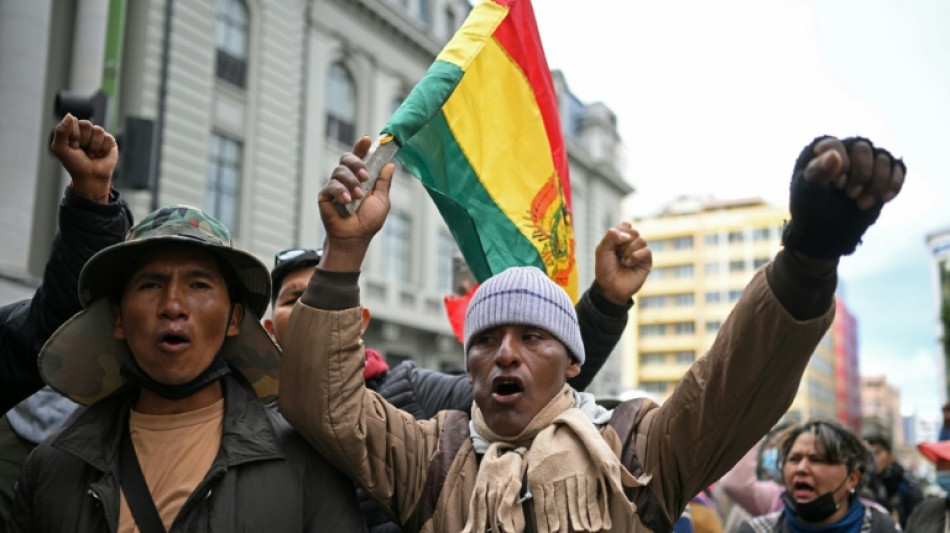
Bolivian Congress OK's use of troops against protesters / Photo: © AFP

 Tesla shares fall as Musk touts ambitious -- and costly -- plans

 Houthis claim Red Sea tanker strikes as US hits Iran again

 Wildfires ravage parts of southern France, Italy and Spain

 Alphabet beats expectations in second quarter, cloud revenue nearly doubles

 Trump threatens Iran infrastructure, Tehran vows 'eye for eye'

 US teen withdraws lawsuit against Meta over social media addiction

 Lebanon PM says Beirut working for 'complete Israeli withdrawal'

 EU conditionally clears Paramount bid for Warner Bros.

 Philipsen snaps 'horrible' drought with Tour de France stage 17 victory

 US trial of Venezuela's Maduro set for June 2027

 New UK PM Burnham gets early boost as inflation dips

 Samsung launches new, more expensive foldable smartphones

 Philipsen ends 'horrible' drought with Tour de France 17th stage victory

 Hungary's Orban says graft case is 'pretext' to target his party
 South African tycoon Motsepe rules out presidential bid

 Trump threatens Iran bridges, power as payback for Hormuz attacks

 Germany's Merz replaces leader ousted over surrogacy row

 CAF chief Motsepe backs Infantino despite criticism

 Evacuees from Spain's wildfire struggle with scale of devastation
 Ancient Lebanese city of Tyre added to heritage danger list
 Extreme heatwave grips Tunisia as wide power cuts fuel frustration

 'Beautiful game' provides Venezuelans with welcome distraction in wake of tragedy

 Oil prices surge on Mideast war, stock markets diverge
 Fury says 'best yet to come' ahead of Thailand fight

 Japan suffers heat 'disaster as cities hit by 'cruelly hot' days
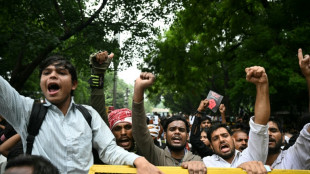
Bolivia's congress voted Tuesday to let President Rodrigo Paz deploy soldiers and declare a state of emergency to counter huge street protests seeking his resignation over economic hardship.
By a more than two-thirds majority the Chamber of Deputies eliminated a rule that restricted the center-right president's leeway to invoke emergency measures, the chamber's speaker Roberto Castro announced.
As a groundswell of fury with the US-backed leader continues to convulse the Andean nation just six months into his term, the way is now clear for Paz to deploy the army and curb some civil liberties, like freedom of movement and assembly. The law had already been rushed through the Senate.
With an ample majority of the 117 members present in the 130-seat chamber, lawmakers undid a rule that since 2020 had limited the president's ability to impose states of emergency.
The repeal took place outside of ordinary congressional procedure so it could be pushed through in just one week.
As the protests have grown, Paz has made various gestures aimed at ending the revolt against policies with which he is attempting to resolve Bolivia's worst economic crisis in decades.
The demonstrations began in early May with trade union demands for salary increases, stable fuel supplies and sounder economic management. But the movement has intensified.
Protesters have blockaded entry routes into La Paz, shops have shuttered for fear of violence, and food, medicine and fuel supplies are running low.
Critics of Tuesday's action in congress say it puts human rights at risk. Opposition lawmaker Sonia Sinani said it will actually make things worse and "pour gasoline on the flames" of the street protests.
"This law is like a strait jacket," said another opposition lawmaker, Alejandro Reyes.
The overturned regulation outlawing states of emergency dates back to social unrest in 2019 which killed 36 people and led to the resignation of then socialist leader Evo Morales.
When Morales' right-wing successor Jeanine Anez entered office, the socialist-dominated Congress sought to limit the government's capacity to crack down on protests.
The law made congressional approval of states of emergency mandatory, and also gave lawmakers the right to propose amendments to prevent abuses.
The Paz government claims that the current protests aim to "disrupt the democratic order" and has accused Morales -- in hiding from trafficking allegations, which he denies -- of orchestrating the upheaval.
In a bid to quell public fury with his leadership, Paz on Monday said he would cut his own salary by 50 percent.
His monthly salary is currently set at around 24,000 bolivianos ($3,500), one of the lowest of any Latin American leader but about eight times that of the average Bolivian, according to 2024 statistics from the International Labor Organization.
F.Stadler--VB