WHO urges DRCongo's neighbours to act immediately on Ebola risk
/ Photo: © AFP

 Trump family project in Albania has already caused 'irreparable' damage: NGOs
 Bollywood blast master keeps it real with fire and fury

 Tearful fights, edible offerings: A glimpse into the Maradona trial
 What's the deal with peptides? The hyped market under US review
 Tesla shares fall as Musk touts ambitious -- and costly -- plans

 Houthis claim Red Sea tanker strikes as US hits Iran again

 Wildfires ravage parts of southern France, Italy and Spain
 Alphabet beats expectations in second quarter, cloud revenue nearly doubles

 Trump threatens Iran infrastructure, Tehran vows 'eye for eye'

 US teen withdraws lawsuit against Meta over social media addiction
 Lebanon PM says Beirut working for 'complete Israeli withdrawal'

 EU conditionally clears Paramount bid for Warner Bros.

 Philipsen snaps 'horrible' drought with Tour de France stage 17 victory

 US trial of Venezuela's Maduro set for June 2027

 New UK PM Burnham gets early boost as inflation dips
 Samsung launches new, more expensive foldable smartphones

 Philipsen ends 'horrible' drought with Tour de France 17th stage victory

 Hungary's Orban says graft case is 'pretext' to target his party
 South African tycoon Motsepe rules out presidential bid

 Trump threatens Iran bridges, power as payback for Hormuz attacks

 Germany's Merz replaces leader ousted over surrogacy row
 CAF chief Motsepe backs Infantino despite criticism
 Evacuees from Spain's wildfire struggle with scale of devastation
 Ancient Lebanese city of Tyre added to heritage danger list
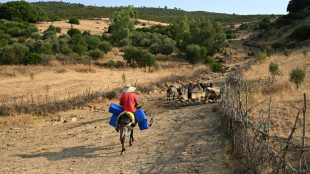 Extreme heatwave grips Tunisia as wide power cuts fuel frustration

States neighbouring the Democratic Republic of Congo are at great danger from Ebola and should act immediately to counter the deadly virus, the head of the World Health Organisation said on Monday.
"Countries bordering DRC are at especially high risk and should take immediate action," said WHO director-general Tedros Adhanom Ghebreyesus, adding that he would travel on Tuesday to the DRC, the vast, central African country at the epicentre of the current outbreak.
"The outbreak is spreading rapidly," Tedros told a virtual ministerial meeting on the viral haemorrhagic fever, which spreads through direct contact with bodily fluids. It can cause severe bleeding and organ failure.
He said the current outbreak was "especially challenging".
"First, the delay in detecting the outbreak means that we are now playing catch-up with a very fast-moving epidemic. We are urgently scaling up operations but at the moment, the epidemic is outpacing us," he said by video link from Geneva.
Secondly, the eastern provinces of the DRC, where the outbreak was first detected in mid-May, "are highly insecure, with intensified fighting in recent months (and) there is also significant distrust of outside authorities among the local population".
Thirdly, he pointed out, there were "no approved vaccines or therapeutics" for the Bundibugyo strain of Ebola behind the current outbreak.
The WHO has recorded 10 confirmed Ebola deaths and 220 suspected deaths in the DRC since mid-May, while also recording a further 900 suspected cases since Kinshasa declared the outbreak on May 15.
The United Nations agency said the true spread of the virus -- which experts suspect was circulating under the radar for some time -- was probably much wider.
One person is confirmed dead in neighbouring Uganda with a further six confirmed infected after Monday saw the health ministry confirm two new cases.
Ten other African countries are "at risk" of infection, the African Union's health agency, Africa CDC, warned on Saturday.
These are Angola, Burundi, the Central African Republic, the Republic of Congo, Ethiopia, Kenya, Rwanda, South Sudan, Tanzania and Zambia.
- Building trust -
Africa CDC head Jean Kaseya said "high mobility and insecurity" contributed to the regional spread of the outbreak, which the WHO has declared an international emergency.
Insecurity is a huge obstacle in the eastern DRC, which has been plagued for three decades by conflict involving a litany of armed groups.
State services in rural areas of Ituri province have been largely absent for decades.
South Kivu province is controlled by the M23 armed group, which has never managed an epidemic like Ebola.
Tedros said it was vital to address the trust deficit in Ebola-affected communities.
Two hospitals in Ituri have been attacked by suspicious locals in the past five days -- one in Mongbwala, where the outbreak was initially detected, and the other in Rwampara, where tents used to isolate Ebola patients were torched.
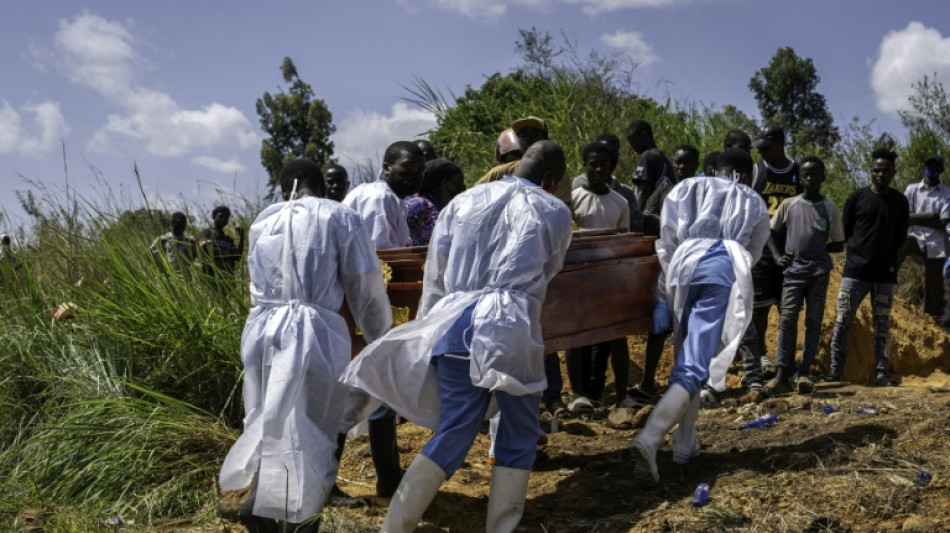
The violence in Rwampara erupted after a deceased man's family was prevented from taking his body away for burial because of contamination risks.
"Loved ones are throwing themselves at the bodies, touching the corpses... while organising mourning rituals bringing together loads of people", Jean Marie Ezadri, a civil society leader in Ituri, told AFP last week.
Tedros said the WHO was pouring money, medical supplies and staff into the DRC to support the authorities and speeding up clinical trials on potential treatments.
"It will get worse before it gets better," he said. "But we know this virus and we know how to stop it."
G.Schmid--VB