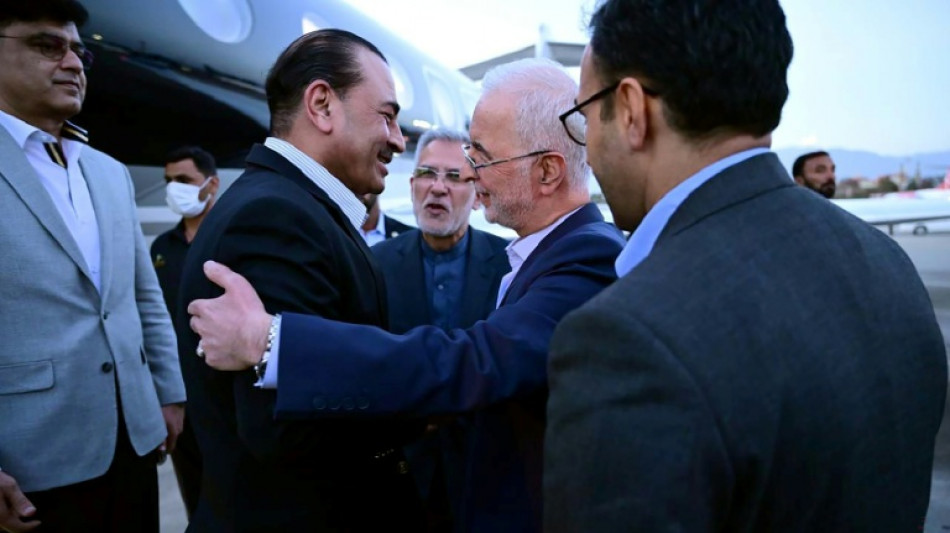
Pakistan army chief in Tehran as Iran weighs US peace offer / Photo: © Inter-Services Public Relations/AFP

 Trump family project in Albania has already caused 'irreparable' damage: NGOs

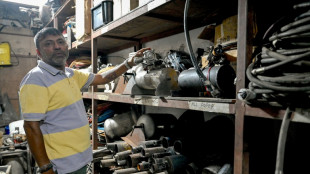 Bollywood blast master keeps it real with fire and fury

 Tearful fights, edible offerings: A glimpse into the Maradona trial

 What's the deal with peptides? The hyped market under US review
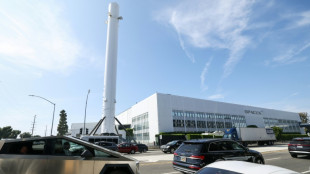 Tesla shares fall as Musk touts ambitious -- and costly -- plans

 Houthis claim Red Sea tanker strikes as US hits Iran again

 Wildfires ravage parts of southern France, Italy and Spain
 Alphabet beats expectations in second quarter, cloud revenue nearly doubles
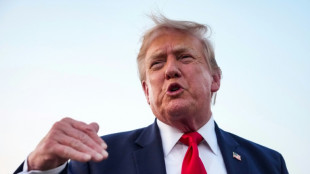 Trump threatens Iran infrastructure, Tehran vows 'eye for eye'

 US teen withdraws lawsuit against Meta over social media addiction
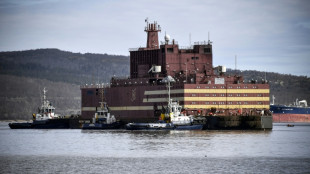
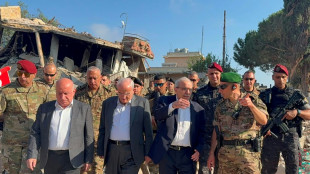 Lebanon PM says Beirut working for 'complete Israeli withdrawal'

 EU conditionally clears Paramount bid for Warner Bros.
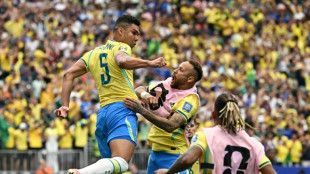
 Philipsen snaps 'horrible' drought with Tour de France stage 17 victory

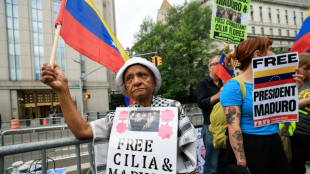 US trial of Venezuela's Maduro set for June 2027

 New UK PM Burnham gets early boost as inflation dips
 Samsung launches new, more expensive foldable smartphones

 Philipsen ends 'horrible' drought with Tour de France 17th stage victory
 Hungary's Orban says graft case is 'pretext' to target his party
 South African tycoon Motsepe rules out presidential bid

 Trump threatens Iran bridges, power as payback for Hormuz attacks

 Germany's Merz replaces leader ousted over surrogacy row
 CAF chief Motsepe backs Infantino despite criticism
 Evacuees from Spain's wildfire struggle with scale of devastation
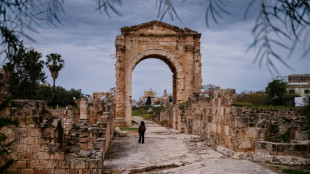 Ancient Lebanese city of Tyre added to heritage danger list
 Extreme heatwave grips Tunisia as wide power cuts fuel frustration

Pakistan's powerful army chief arrived in Tehran on Friday as diplomacy around the Middle East war gathered pace, with Iran weighing a new US peace proposal while warning that deep divisions still stand in the way of a deal.
Iran's foreign ministry spokesman Esmaeil Baqaei cautioned that the visit did not mean "we have reached a turning point or a decisive situation."
The disagreements between Iran and the United States remained "deep and extensive", he added, according to Iran's ISNA news agency.
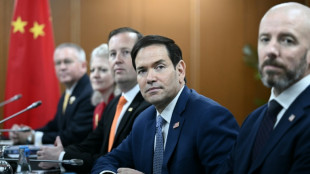
US Secretary of State Marco Rubio had earlier voiced hope of progress toward ending the war, which began on February 28 with US-Israeli strikes on Iran.
An April 8 ceasefire halted open fighting, but negotiations -- including historic face-to-face talks in Islamabad -- have yet to produce a lasting agreement.
President Donald Trump has described the stop-start negotiations as teetering on the "borderline" between a deal and renewed attacks.
Pakistan's military said Field Marshal Asim Munir had "arrived in Tehran as part of ongoing mediation efforts".
He was welcomed by Iran's Interior Minister Eskandar Momeni and Pakistan's Mohsin Naqvi.
Naqvi had visited Iran for the second time in a week on Wednesday, meeting President Masoud Pezeshkian and Foreign Minister Abbas Araghchi.
Baqaei said a Qatari delegation also met Iran's foreign minister Friday.
"In recent days, many countries -- both regional and non-regional -- have been trying to help bring the war to an end...However, Pakistan remains the official mediator," he added.
Pakistan hosted in April the only direct US-Iran talks since the war began.
Munir played a central role in that round, greeting both delegations and showing public warmth with US Vice President JD Vance.
But the talks failed, with Iran accusing Washington of making "excessive demands". Since then, the two sides have traded proposals under the constant threat of renewed war.
- Hormuz squeeze -
Rubio, speaking on the margins of a NATO meeting in Sweden, said there had been "some progress" in the talks, but warned that Washington was "not there yet".
"It may not" change, Rubio said. "We're dealing with a very difficult group of people. And if it doesn't change, then the president's been clear he has other options."
Rubio said Trump "prefers the negotiated option" but had expressed concern that a deal "maybe...is not possible".
He also said Trump's "disappointment" with NATO allies over their lack of support in the Iran war would need to be "addressed".
European countries may need a "Plan B", Rubio said, to help force open the Strait of Hormuz if the war drags on.
Tehran effectively closed the key shipping lane, which normally carries large volumes of oil and gas, in retaliation for the US-Israeli strikes.
The future of Hormuz remains a key sticking point, with fears growing that the global economy will suffer as pre-war oil stockpiles run down.
Markets nevertheless took some comfort from the diplomacy, with Wall Street rising Friday and the Dow closing at a second straight record high as investors bet talks could eventually produce an off-ramp.
Oil prices also rose, however, underscoring fears that disruption in Hormuz will keep feeding inflation. US consumer sentiment fell to its lowest level since records began in 1952, with high prices still eroding household finances.
European Union nations moved Friday towards sanctions on Iranian officials and others blamed for blocking the strait.
Baqaei said Hormuz and the US blockade of Iranian ports were also under discussion.
"The issue of ending the war on all fronts, including Lebanon, is very important," he added.
- Lebanon front -
Hezbollah drew Lebanon into the war with rocket fire at Israel after Iran's supreme leader was killed in US-Israeli strikes.
Since an April 17 truce, Israel has continued strikes, demolitions and evacuation orders in south Lebanon, saying it is targeting Hezbollah, which has also kept up attacks.
Late Friday, Lebanon's state-run National News Agency said Israel carried out five airstrikes in the east of the country near the Syrian border, targeting the Nabi Sreij area outside the town of Brital.
The agency said the area had been spared from attacks since the ceasefire, and that the strikes came after Israel called for the evacuation of two areas in southern Lebanon.
Lebanon's health ministry said Israeli attacks have killed at least 3,111 people in Lebanon since March 2.
The ministry said Israeli strikes on the south killed 10 people on Friday, including six rescuers and a child.
The Israeli military announced a separate strike that killed two people in southern Lebanon.
The United States on Thursday sanctioned nine Hezbollah-linked individuals, including two officers, accused of "obstructing the peace process in Lebanon."
They were the first Lebanese officers sanctioned by Washington.
T.Suter--VB