
Raul Castro: the other leader of Cuba's revolution / Photo: © AFP

 Young Canadians focus on mental health at key climate trial
 'Breath of fresh air' truce brings hope to Ukraine's ravaged Kherson
 British king reflects on colonial atrocities in Guyana
 Nations agree crucial texts in overtime at UN nature summit
 NBA Trail Blazers lose guard Morant for four weeks
 UN nature summit in extra time as nations grapple for deal
 Complaints upheld against Swiss TV commentary on Israeli bobsleigher
 Tielemans glad Man Utd sticking with Carrick
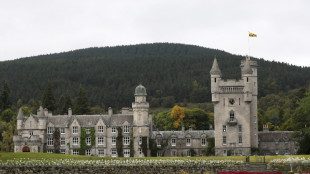 Scottish police probe Andrew, Epstein stay at royal castle: UK media
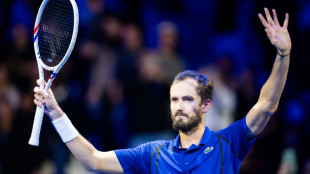 Medvedev into Vienna semis and books ATP Finals place
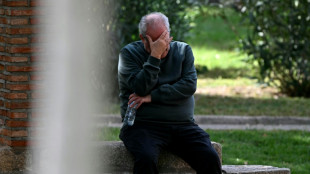
 UN nature talks in extra time as nations struggle to reach deal
 Meta settles, leaving Snap sole defendant in new social media trial
 Chelsea manager Alonso dismisses talk of Estevao loan deal

 Thousands of students, workers hold peaceful protests in Italy

 Iraola glad to raise Liverpool fans' hopes but says hard work ahead
 Pope Leo makes history with US midterm vote
 Arsenal boss Arteta fires 'Disneyland' warning at Dowman after Fleetwood red card

 Russia's ice hockey stars come in from the cold after CAS ruling
 Wall Street tech rout deepens on doubts over AI spending
 'Life in the old dog': German economy grows more than expected
 England great Anderson asks what's 'wrong with me?' after Lancashire exit
 Markets lashed by tech rout as earnings fan AI fears
 Germans to join Europe's youth protest wave
 Novaya Gazeta closure part of Russia's 'giant military campaign': Muratov to AFP
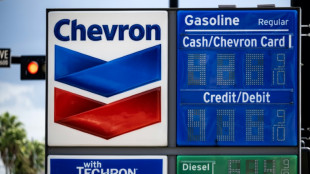 US oil giants report profit surge again on Iran war
Raul Castro, the younger brother of Fidel Castro and the last surviving cast member of the Cuban revolution, relinquished power in 2021 but remains an influential figure in national politics.
In a further spike in US-Cuba tensions, a court in Florida on Wednesday unsealed an indictment against the 94-year-old and charged him with conspiracy to kill US nationals, four counts of murder and two counts of destroying aircraft.
The charges relate to the downing of US civilian planes by Cuban forces on February 24, 1996.
Raul lived for decades in brother Fidel's shadow before emerging as a pragmatic leader who initiated much-needed reforms in Cuba without ever abandoning allegiance to the one-party state.
The revolutionary leader still follows Washington-Havana negotiations "very closely" and takes part in "decision-making," his daughter Mariela Castro told AFP in April.
- Brothers in arms -
Raul took over from Fidel in 2006 and led the communist island-nation for the next 15 years.
He still makes occasional public appearances, increasingly frail but always dressed in his military uniform.
During the most recent on May 1, at a rally in front of the US embassy in Havana, he had to sit down before the ceremony's conclusion.
Castro was born on June 3, 1931 in a village in eastern Cuba, the fourth of seven children raised by a Spanish father, Angel Castro, and a Cuban mother, Lina Ruz.
Aged 22, with no military experience, he joined big brother Fidel in an attack on a garrison in a failed attempt to topple dictator Fulgencio Batista.
The siblings spent two years in prison before leaving together for exile in Mexico to plan Batista's final ouster.
The Castros returned home in December 1956 aboard the "Granma" yacht, loaded with rebels for the start of a guerrilla campaign.
When the revolution triumphed in January 1959, Raul Castro became second-in-command to Fidel.
- 'Brutal' -
The younger Castro gained a reputation as an organizer and administrator, but those in the know also describe him as an uncompromising hardliner.
"As brutal or more brutal than Fidel Castro," Brian Latell, a former US Central Intelligence Agency analyst, had said of Raul.
With his troops, Rahul showed a different side.
"He liked to chat, to joke and have a drink with his officers...there was something about him his soldiers liked," Hal Klepak, professor emeritus of history and strategy at the Royal Military College in Canada, told AFP.
As minister of defense for five decades, Castro shaped Cuba's Revolutionary Armed Forces (FAR) into a fighting force focused on repelling a potential US invasion.
He allocated substantial funds for the purpose, a strategy credited with helping the Communist Party of Cuba (PCC) survive after the fall of the Soviet Union -- a key ally and funder -- in 1991.
During this time, Cuban Air Force MiG fighters downed two planes belonging to a Cuban-American exile group.
Four members of the Miami-based anti-Castro humanitarian group, "Brothers to the Rescue," were killed, and their bodies were never found.
That incident in 1996 was behind Wednesday's indictment.
- 'Perfecting socialism' -
Taking over from his ailing brother in an acting capacity in 2006, Castro became president two years later and leader of the PCC in 2011.
He launched unprecedented reforms, opening the single-party state's economy to the private sector.
The leader also authorized Cubans to travel abroad, to sell cars or homes, and he even freed some jailed dissidents.
Critics said he never went far, but Castro himself had said he was "elected to defend, maintain and continue perfecting socialism -- not to destroy it."
Alongside then-US president Barack Obama, Castro was credited with negotiating a previously unthinkable rapprochement with the United States only for Donald Trump to rip it up during his first term.
Castro entered semi-retirement in 2018, giving up the presidency for a younger generation embodied by new leader Miguel Diaz-Canel.
Three years later, he also gave up the leadership of the Cuban communist party, where the real power lies.
A family man unlike Fidel, Raul married fellow revolutionary Vilma Espin, with whom he had four children. She died in 2007.
T.Germann--VB