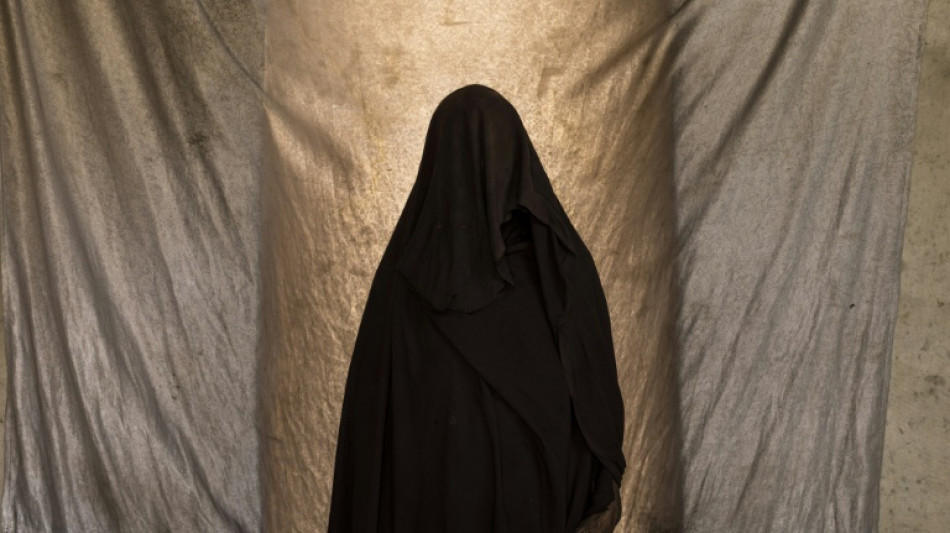
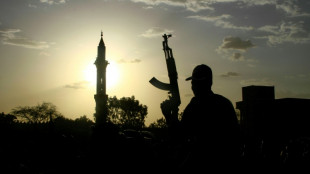
Malians tell of torture and killings by army, Russian fighters / Photo: © AFP

 Modi vows punishment for exam fraud fuelling India protests
 Six candidates in race to lead UN set for televised debate

 Comic-Con kicks off with Marvel's return
 Dutch riders dreaming of crazy party corner of Alpe d'Huez

 Houthis target Red Sea shipping as US hits Iran
 Record-equalling Red Sox streak halted at 15 wins
 Messi-less Miami beat Fire 3-2 to spoil Lewandowski's MLS debut
 Mercedes expect Hungary challenge from Hamilton and Ferrari
 In Ghana, one man's race to save critically endangered fish
 Wilson captain, Slipper absent in Kiss's first Wallabies squad
 New Mideast fighting puts eurozone rate-setters on alert
 Venezuelans search for animal companions lost in the quakes
 Argentine Football Association says US did not detain its president

 June heatwave cost UK economy more than £1bn: study
 Google-parent Alphabet beats expectations, cloud revenue nearly doubles
 US announces civilian nuclear deal with Saudi Arabia

 Tesla shares dip after profit misses expectations
 Red Sox tie club record with 15th straight MLB win

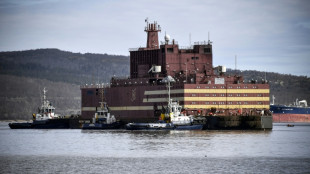 US eyes offshore nuclear reactors
 The Sterling Announces Luxury Cocktail Lounge Concept and Investor Showcase in Orlando

 Inter Miami signs Brazil veteran Casemiro but MLS probes deal

 White House accuses China's Moonshot of stealing Anthropic AI
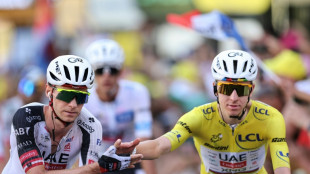 Pogacar sweating on Yates's fitness ahead of Tour Queen stage

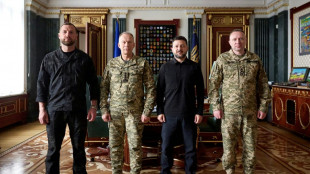 Ukrainian soldiers and civilians welcome new army commander

 UK fintech Revolut valuation soars to $115 bn: source

Tears soaked Cherifa's veil as she recounted how her son was beheaded by a unit of Malian soldiers and Russian paramilitaries supporting the fight against jihadists.
Cherifa, who is in her sixties, was one of about 10 Malian refugees who spoke to AFP from neighbouring Mauritania about the brutal violence meted out against civilians.
All the refugees' names have been changed for their safety.
"His death is my greatest pain," said Cherifa, her voice trembling, from inside a rough brick shelter.
Last summer, her son left to sell goods in Mali but just a few kilometres across the border, he and four others ran into a joint patrol of Malian troops and paramilitaries from the Moscow-controlled Africa Corps.
Herders hiding nearby later described what followed.
"They tied them up and cut off their heads... they set fire to the goods they were carrying," Cherifa said.
No one dared retrieve the bodies until the next day, fearing an ambush or hidden traps.
- 'Defenceless' -
Cherifa accused the army and Russian fighters of "pouring their hatred on innocent, defenceless people".
The nomadic Fulani and Tuareg communities have been particularly targeted, often accused of links to jihadists or separatists.
Since taking power in a 2020 coup, Mali's ruling junta has relied on Russian mercenaries -- first Wagner, now rebranded as Africa Corps.
Their operations have been widely criticised by rights groups.
According to data analysed by AFP from conflict monitor ACLED, Malian government operations since 2020 have caused more than 8,500 deaths, about half of them civilians.
When the Russians accompany government forces, up to 60 percent of those killed are civilians. When the Russians act on their own, it jumps to 90 percent.
- Torture -
Under the makeshift tents in refugee camps across the border, the mere mention of the Russians -- still widely known as Wagner -- brings fear.
Nedoune, a Tuareg herder in his fifties, said he was fetching water two years ago in the northern Timbuktu region when a convoy spotted him.
After being beaten and tied up, he said he was taken for two days as the fighters combed through the area, rounding up civilians and destroying camps.
"They burned everything and killed all the animals," he said without emotion.
Through a gap in his turban, he saw a man beaten "almost to death" before having his throat cut and his body thrown from a vehicle.
Nedoune said he was later held at a camp in central Mali and tortured for four days during interrogations.
"They always asked about jihadists: Do you know them? Who are they? Where are they?"
"They pour water on your body, then put wires in your ears and send an electric current until you pass out," he told AFP.
He was eventually released after paying a ransom of 310,000 CFA francs (around $550).
- 'Buried alive' -
Around 300,000 refugees have fled to eastern Mauritania's desert Hodh Chargui region to escape the violence that has plagued Mali for more than a decade.
Since 2012, Mali has been hit by violence from radical Islamists affiliated with Al-Qaeda and the Islamic State group, as well as local criminal gangs and pro-independence fighters.
At the border town of Fassala, teams from the medical charity Doctors Without Borders (MSF) are treating people with severe trauma.
"We have testimonies of torture, including people who say they were buried alive," said MSF coordinator Mayoury Savant.
"We also see sexual violence, affecting both women and men," she added.
In recent months, Hodh Chargui has seen a massive influx of refugees fleeing jihadist ultimatums to leave certain areas within 24 hours or face being slaughtered.
- 'We lived in peace' -
Rights groups have filed a case with the African Union, seeking accountability for abuses involving Malian forces and Russian fighters.
Coordinated attacks by Tuareg separatists and jihadists late last month dealt a major new blow to the junta, especially the capture of Kidal, a northern rebel stronghold.
For refugees, many of whom support the Tuareg rebels, the withdrawal of Russian fighters from northern bases has raised hopes of returning home.
Fatima, 30, fled her village after airstrikes in the Timbuktu region three years ago but said of the women who stayed behind: "Everything happened to them except death... we know some were tortured."
"Before the Russians came, we lived in peace," said Fatima. "If they take back Timbuktu and the other towns, I can go home."
T.Ziegler--VB