
-
 Pakistan's last antique restorers give old treasures new life
-
Reparations calls to dog King Charles's tough Caribbean trip
-
 India braces for Cyclone Arnab with evacuations
-
Global rates and foreign outflows remain key risks for Indian markets

-
 Steel Strips Wheels gains 36% in two sessions on growth outlook
-
Neha Nagar says ₹3 crore can fund retirement with disciplined planning

-
 Cavs edge T'Wolves in overtime despite superb Edwards
-
Vikas Satija says steady SIP flows shielded Indian equities from deeper losses

-
 Prescott fires Cowboys to 38-21 win over plummeting Eagles
-
Brewers rout Rays to reach brink of World Series sweep
-
 Kuwait padel chief hails national showing at Premier Padel Major
-
Mbappe dropped by Chinese brands for 'offending national sentiments'

-
 Britain prepares constrained budget as debt and defence pressures mount
-
Kuwait exhibition presents Ukraine’s Islamic heritage and cultural ties

-
 Valkyries beat Dream to reach brink of WNBA title
-
Tech firms track Wall St rally on mixed day for Asian markets

-
 Benjamin Netanyahu: Israel's longest-serving PM fighting for survival
-
Jay-Z to perform at Super Bowl LXI halftime show: NFL
-
 Kuwait receives invitation to 2026 UN Water Conference in Abu Dhabi
-
Climate-threatened Fijian utopia rejects calls to relocate
-
 Arab World Institute president outlines plans for stronger Kuwait-France cultural links
-
Israel to give verdict on Netanyahu in pivotal election

-
 Bolsonaro's party says it recognizes Lula's election win in Brazil
-
$1m bounties, dawn arrests: Trump presses voter fraud campaign
-
 Meghan on TV menu for 'Junior MasterChef Australia'
-
Gasping for air: Borneo residents struggle as island burns
-
 South Korea's chip boom fuels forecast-beating third-quarter growth
-
Doha exhibition charts a millennium of Chinese maritime ceramics trade

-
 US-brokered truce begins in Ukraine city occupied by Russia
-
New Zealand ex-PM Ardern to teach leadership in Sydney
-
 Qatar launches Fashion and Crafts Council to connect talent with global markets
-
Ballon d'Or 'beyond wildest dreams' but Kane has plenty more to prove
-
 Jordan strikes militant groups in Syria after church attack
-
No envy, no secrets: How Spain's Gipuzkoa became football coaching hotbed

-
 FIA chief praises Middle East motorsport volunteers and officials
-
South Korea economy grows three times faster than expected in Q3

-
 Australia warns of 'unprecedented' AI threat
-
Al-Thawadi urges technology to deepen human connection through shared experiences

-
 Qatar Amir arrives in Moscow for eighth GECF summit
-
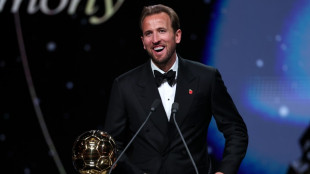
Ballon d'Or: Harry Kane's crowning moment

-
 Kane beats Yamal and Mbappe to taste Ballon d'Or glory
-
Harry Kane wins men's Ballon d'Or
-
 Ballon d'Or crowns Putellas's return to top of women's game
-
Lula win rattles Brazil markets over spending spree fears

-
 Godts stars as PSG beat Lyon to go top of Ligue 1
-
De la Fuente wins men's Ballon d'Or coach of year

-
 NBA inks deal with Kalshi and Polymarket, citing safeguards
-
Trump slams 'rigged' Brazil election after ally loses to leftist Lula

-
 US rapper Macklemore launches 'Free Palestine Tour' after Ed Sheeran fallout
-
Nadal returns for Vegas hardcourt event
Ex-leader ahead as Costa Ricans elect new president
Costa Ricans voted for a new president Sunday from a crowded field of candidates, with a center-left former leader ahead of the pack with about 60 percent of ballots counted in one of Latin America's stablest democracies.
Twelve hours of voting closed at 6 pm (midnight GMT) in what is frequently rated the region's "happiest" country, a tourist mecca and a leading green economy.
However, polls show unemployment, corruption and creeping living costs topping the concerns of 3.5 million eligible voters in the country of five million people.
Jose Maria Figueres, 67, of the center-left National Liberation Party (PLN), had roughly 27 percent of the vote with 63 percent of ballots counted, the Supreme Electoral Tribunal said.
To win in the first round, one candidate must take 40 percent of the vote -- otherwise the two leading contenders will face each other in an April 3 run-off.
The eventual winner will be expected to tackle a worsening economy where unemployment has been steadily rising for more than a decade and reached 14.4 percent in 2021.
The poverty rate stood at 23 percent last year while the public debt was 70 percent of GDP.
Costa Rica's problems have worsened with the coronavirus pandemic dealing a hard blow to its critical tourism sector.
On Sunday, Figueres, who led the country from 1994 to 1998, condemned the levels of poverty as well as housing shortages.
"We have never experienced these things in this magnitude," he said.
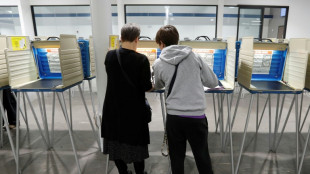
For Francisco Zeledon, the first voter in line at one polling station, "voting is the most important weapon we have to solve problems."
"We have to solve poverty and create jobs for people," the 35-year-old said.
Polls have showed about a third of voters are undecided, faced with a choice of 25 presidential candidates.
But one outcome looked likely: the ruling Citizens' Action Party (PAC) appeared set for a bruising defeat with anti-government sentiment sky-high.
- Record unpopularity -
"The ruling party is completely weakened and has no chance" after two successive terms in office, said political analyst Eugenia Aguirre.
"The presidential unpopularity figure of 72 percent is the highest since the number was first recorded in 2013," she added.
This means the country's traditional political heavyweights -- the PLN and the Social Christian Unity Party -- could return to the fore after decades of a near political duopoly only recently broken by the PAC.
With results trickling in around 0600 GMT, second place remained closely contested between the economist Rodrigo Chaves (16 percent) and conservative evangelical preacher Fabricio Alvarado Munoz (15 percent).
Munoz commands support from the evangelical community, which makes up about 20 percent of Costa Rica's population.
Meanwhile, center-right Lineth Saborio of the PUSC garnered 12 percent.
Presidents in Costa Rica cannot seek immediate re-election, leaving incumbent Carlos Alvarado Quesada out of the running.
- Problems 'worsened' -
Costa Rica is known for its eco-tourism and green policies, with its energy grid run entirely on renewable sources.
Unlike many of its volatile Central American neighbors, Costa Rica has no army, has had no armed conflicts since 1948 and no dictator since 1919.
But the worsening economic situation has hit confidence in the political class.
Voters under 40 have only known "periods in which not only problems have not been resolved, but they have worsened," university student Edgardo Soto, an undecided voter, told AFP.
Apathy and abstentionism are features of Costa Rican elections.
In 2018, 34 percent of voters stayed away, though participation is technically obligatory.
Eugenia Zamora, president of Costa Rica's electoral tribunal, said Sunday's vote kicked off with high turnout in the morning, and proceeded without incident.
"This is a country with a robust democracy... It offers lessons for other countries," added Isabel de Saint Malo, head of the Organization of American States observer mission.
Outgoing president Alvarado said the vote was an affirmation of Costa Rica's place among "the world's strongest democracies."
Costa Ricans also cast their vote Sunday for the 57-member Congress.
"I hope that whoever wins really thinks of the people," said 77-year-old Mayra Sanchez after voting in Moravia, "and not of themselves."
J.Fankhauser--BTB