From radiation to invasion: a Chernobyl worker's two wars / Photo: © AFP

 Cycling industry bets on smart bikes to boost sales

 In Idaho, the next generation of US nuclear reactors nears reality
 Africa the winner of expanded World Cup amid mixed fortunes for minnows
 Asia's vendors grapple with rising costs of ever-present plastics

 Messi scores again as Argentina head into World Cup last 32 on a high
 Wissa proud to deliver World Cup joy to war-torn DR Congo
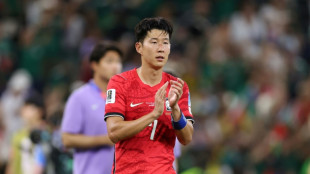 South Korea's 'dismal' World Cup ends in group phase

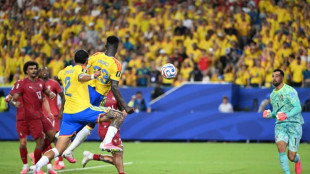 Colombia and Portugal through to World Cup last 32 after thrilling draw

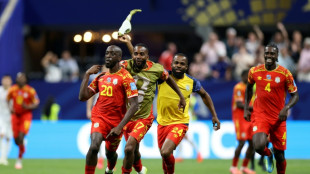 Wissa sends DR Congo into World Cup last 32 clash with England
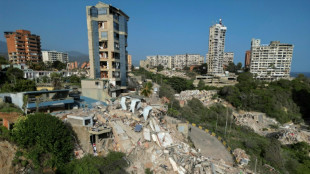
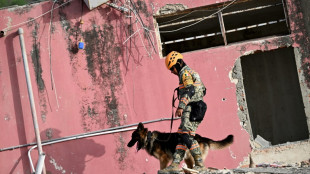 A painful wait by a pile of rubble in quake-hit Venezuela
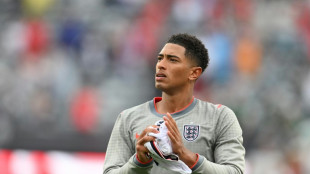 Tuchel delighted to have Bellingham in 'sweet spot' for England at World Cup
 Bellingham says 'job done' but England must improve at World Cup
 Trump threatens to annihilate Iran after new exchange of attacks
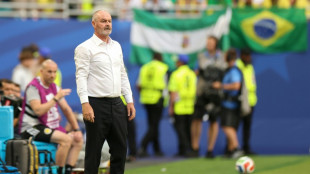 Scotland boss Clarke resigns after World Cup exit confirmed: official

 Kane, Bellingham on target as England clinch top spot
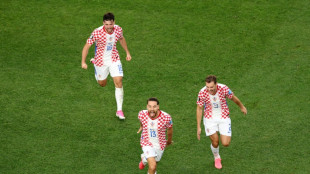
 Bellingham, Kane score as England beat Panama to reach World Cup last 32
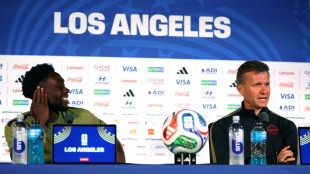 Canada's Davies 'available' for historic knockout clash
 Hovland seizes one-shot PGA Travelers lead over Scheffler
 Mauvaka double inspires Toulouse to fourth-straight Top 14 in storm-impacted final
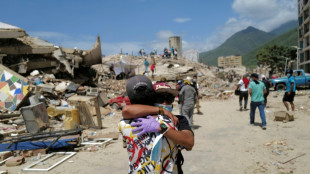 Solidarity, sadness among Venezuelans made destitute by quake
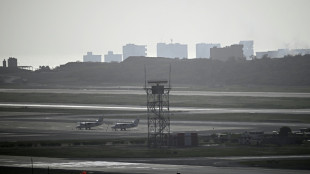
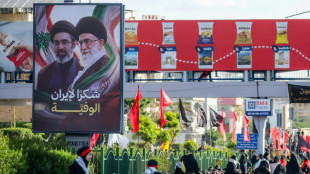 Iran says US violated peace deal as both sides attack

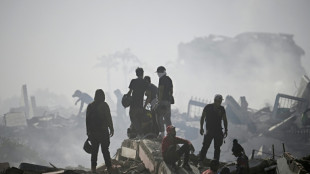 'We need help': Venezuelans furious at slow official response to quakes
 Venus Williams relishes 'very special' Wimbledon reunion with sister Serena

 Ravindra leads New Zealand rally in England finale after Archer's double strike
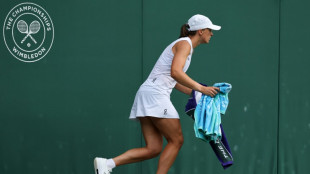 Wimbledon 'towel thief' Swiatek back on the trophy hunt
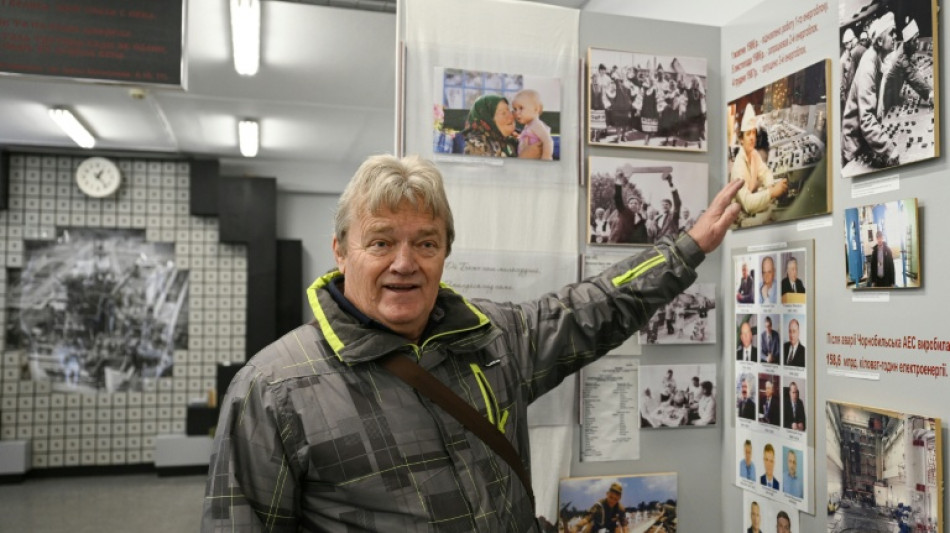
Nikolay Solovyov was on shift the night of April 26, 1986 when the Chernobyl nuclear power plant exploded. Instead of fleeing, he chose to fight his "first war" against radiation.
Four decades later, a second war -- Russia's invasion of Ukraine -- has taken his son.
Solovyov, 67, a hard rock fan, still wears his hair long, though it has turned grey.
On the night of the world's worst nuclear accident, he was working as a turbine mechanic in unit number two, a few hundred metres from reactor number four, which exploded during a safety test.
"It felt like an earthquake. I didn't hear the explosion -- the turbines were still running, with a very loud noise," he recalled, his voice quiet and gentle.
The alarms went off. As he rushed towards the exploded reactor, he saw one colleague badly irradiated and vomiting, another being carried out on a stretcher. The third one was slumped in his chair, head in his arms. All of them died soon after.
Only then did the full extent of the disaster become clear. Through the massive hole ripped open by the explosion, he could see "the sky." In the corridors, torrents of water poured from broken pipes.
Firefighters quickly began hosing down the smoking reactor -- "they didn't let the fire spread," Solovyov said. Almost all those firefighters later died from radiation exposure.
At dawn, he and his colleagues discussed how long they had left to live. "We'll last two weeks," said one of them.
After hearing this, Solovyov, who quit smoking five months earlier, lit up a cigarette. "Well, if I'm going to die, at least I'll die young and handsome," he recounted his thought in the moment.
- Seeking praise -
His night shift ended in the morning. The day team took over and the bus drove him back to Pripyat, the workers' town three kilometres (two miles) from the plant.
It was all quiet and business as usual, except for the roaring trucks that were spraying foamy "detergent" on the pavement. Once home, he told his wife to seal the windows.
For days, Soviet authorities hid the catastrophe from the world -- a disaster that further weakened the already crumbling USSR, which collapsed in 1991.
Solovyov stayed at the plant throughout the "liquidation" -- a massive clean-up operation in the aftermath. He later helped build the first sarcophagus covering the reactor, as well as the second one, which was damaged by a Russian drone strike in 2025.
The plant continued producing electricity until 2000 and teams still work there to ensure its safety.
Among the reasons for his decision to stay, Solovyov lists good pay, "generous holidays" and an "interesting" nature of work.
The man, who later became an engineer, believes that the "dangerous" 1986 test was pushed ahead by the plant managers for the sake of winning praise from Soviet leadership.
Hundreds of thousands of people were involved in the massive liquidation operation, which saw hundreds of thousands more evacuated from neighbouring settlements. "Only the USSR" had the resources to carry out such an effort, Solovyov believes.
Dozens of his acquaintances later died of cancer. Of the 22 men on his night shift, only four are still alive.
A 2005 UN report put the number of confirmed and projected deaths at 4,000 in Russia, Belarus and Ukraine. Greenpeace in 2006 estimated that the disaster had caused close to 100,000 deaths.
- 'The other war' -
Solovyov, who received high doses of radiation and has undergone countless medical checks, attributes his longevity to good health, regular sport, a calm temperament and genetics.
"I have to thank God and my parents for giving me good genes," he said.
He now lives in a country house near Slavutych, a town 120 kilometres (70 miles) north of Kyiv, built in 1986 to house people displaced by the disaster.
In the local Chernobyl museum, wreckage from downed Russian drones is displayed in the main hall. "That's the other war," Solovyov said quietly.
Standing on the windswept central square of Slavutych, he said that his first, "nuclear" war was against an invisible, odourless poison.
"When people here say 'before the war' or 'after the war,' they mean April 26, 1986," he said. "And now, as people put it, this is already the second war of our generation."
On the night of February 23-24, 2022, Solovyov set out for the plant as usual. But he never reached it: the two bridges leading there had been destroyed. Russian forces seized Chernobyl and occupied the site for a month.
His youngest son joined the Ukrainian army. In September 2023 he was reported missing in action.
Devastated, Solovyov could no longer find the strength to work and took early retirement.
B.Wyler--VB