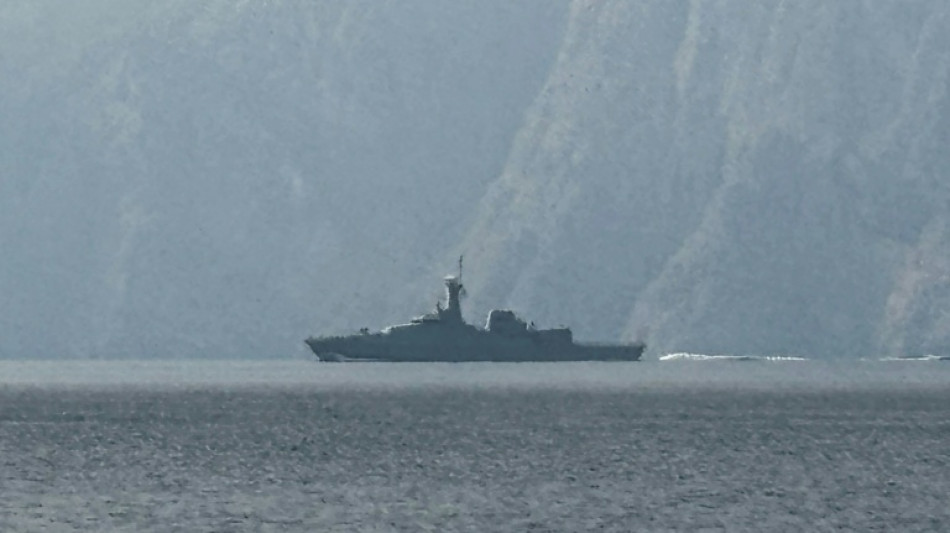
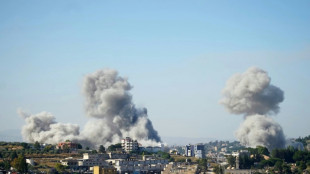
Mideast war exposes fragile oil, gas dependency / Photo: © AFP/File

 Jamieson strikes as New Zealand eye series-levelling win against England

 Ronaldinho coming out of retirement to join Italian 3rd division side

 Real Madrid say no contact with Bayern's Olise

 Heartbreak for Japanese ace Satono Reve as Almeraq wins Royal Ascot thriller

 Injured Doris out of Ireland's Nations Championship squad

 Meloni hits back as Trump escalates G7 photo spat

 Pogacar pips Van der Poel to Swiss Tour TT win
 Ukraine's Zelensky, top officials return Polish awards in WWII row

 Spanish judge bans PM's wife from leaving country
 Pegula powers past Sabalenka to reach Berlin final

 Krishna and Jaiswal power India to ODI sweep against Afghanistan
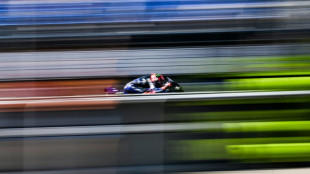 Bagnaia scorches to Czech MotoGP sprint victory, Bezzecchi crashes
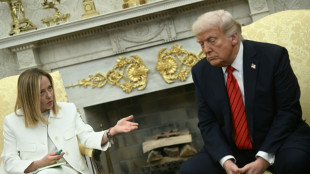 Trump escalates spat with Italy’s Meloni over G7 photo claim

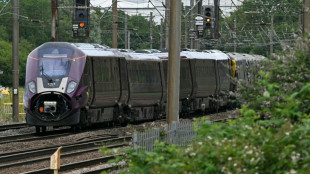 Driver killed, 28 in hospital as UK train collision probed
 New Zealand pile on the runs to leave England facing record chase in 2nd Test

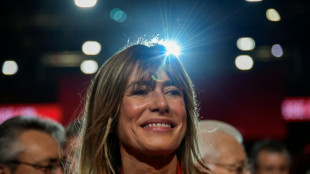 Court bans Spanish PM's wife from leaving country
 Japan's Ogura smashes own track record to take Czech MotoGP pole

 Germany meet Ivory Coast in high-stakes World Cup clash, Sweden face Dutch

 Indian guru urges broader view of yoga

 Paraguay's Almiron sent off under new FIFA 'mouth-covering' rule
 Tunisia ask how Sweden World Cup star Ayari slipped its net

 USA down Australia to reach World Cup knockout rounds, Brazil swat Haiti

 Australia detects first case of contagious H5 bird flu

 Iran's treatment at World Cup 'a dark point' for football: official

 Nagelsmann eyes same German lineup against I. Coast after Curacao trouncing

As in 2022 when Russia invaded Ukraine, the new war in the Middle East is exposing once again how far Europe and others lag in replacing imported fossil fuels with domestic solar and wind power, specialists say.
The Russian invasion in 2022 triggered a massive energy crisis, particularly in Europe, where gas prices -- then largely dependent on imports from Russia -- soared.
Four years later, the continent is instead importing liquid natural gas (LNG) in large volumes, notably from Qatar -- one of the countries caught up in Iran's retaliation against US and Israeli attacks.
Europe also remains dependent on oil from the Middle East, where ships have been blocked and sometimes targeted by Iranian strikes.
Regarding its energy security, "Europe is facing the biggest wake‑up call since the invasion in Ukraine", said Ana Maria Jaller‑Makarewicz, analyst for the Institute for Energy Economics and Financial Analysis (IEEFA).
For Jan Rosenow, professor of energy and climate policy at the University of Oxford, the latest conflict prompted a sense of "deja vu", recalling 2022.
"What this shows is that we haven't really learned the lessons that we should have learned from that experience. When you look at the dependency rate of Europe on oil and gas -- it hasn't really gone down."
- Energy transition -
Despite countries' pledging to reduce their burning of planet-warming fossil fuels, Europe remains dependent on them for more than two-thirds of its energy consumption -- primarily for vehicles, heating and industry -- according to the International Energy Agency.
Only electricity generation has clearly decarbonised in recent years. Fossil fuels produced just 29 percent of the European Union's electricity last year, according to research group Ember.
Across Europe, political appetite for further investment in renewable energy for the wider economy has faded.
Countries are far short of global targets for shifting away from fossil fuels despite pledges under the 2015 Paris climate agreement, with some countries -- notably the United States -- even rolling back commitments.
The new war meanwhile drove up oil prices by about seven percent on Monday, while European gas prices skyrocketed by more than 30 percent.
For climate leaders, this highlights the need to get the transition back on track.
"The global transition is still too slow," United Nations climate chief Simon Stiell warned on LinkedIn.
Renewables, he wrote, are now "the obvious pathway to energy security and sovereignty".
- Fossil fuel reliance -
Even if gas dependency has shifted from Russia to suppliers such as the United States, the fresh unrest exposes Europe's "continued reliance on imported fossil fuels traded on volatile global markets", said Simone Tagliapietra, a researcher at European think tank Bruegel.
"Rather than slowing down the low-carbon transition, the new tensions show that the deployment of clean, domestically produced energy sources should be accelerated," he said.
"Only by reducing structural dependence on oil and LNG imports can Europe durably shield its economy from recurrent external shocks."
Between 10 and 15 percent of Europe's gas imports come from Qatar.
European gas prices jumped after QatarEnergy, the state‑owned energy company, announced a halt in LNG production following an Iranian drone attack.
"Historically, fossil fuels were promised to deliver... some form of freedom, some form of democracy, some form of growth, and above all, some form of security," said Pauline Heinrichs, a climate diplomacy specialist at King's College London.
"I think this illegal and unnecessary war is both a reminder that this is obviously false and, second, that this is, at least in security terms, an illusion."
W.Huber--VB