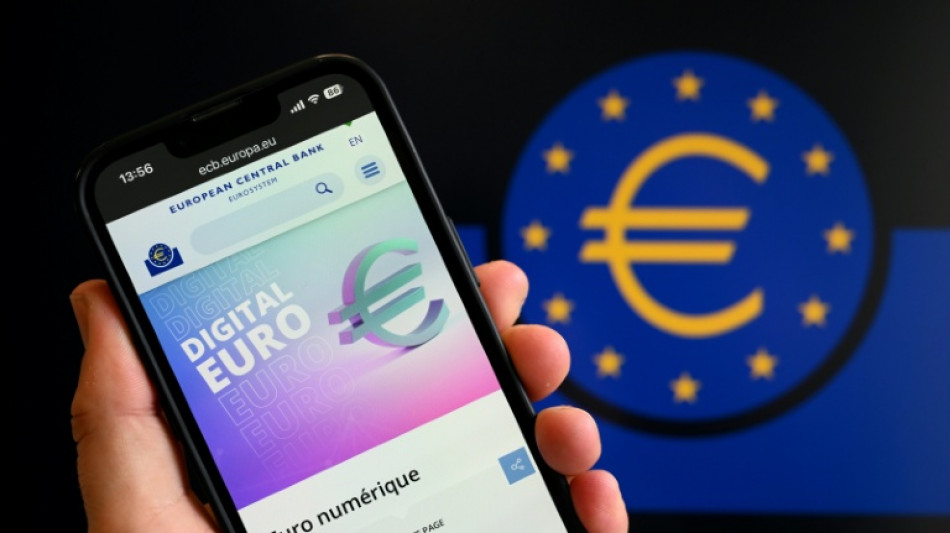
Could the digital euro get a green light in 2026? / Photo: © AFP

 Wikipedia won't let AI edit articles, cofounder says

 Uncapped Coles named in England's T20 squad to face India

 Andy Burnham: 'King of the North' eyes Downing Street throne
 Dangerous 'heat stress' has surged worldwide, study shows

 Interstellar comet likely far older than Solar System: astronomers

 Man Utd secure land for proposed new 100,000-capacity stadium

 US suspends Iran oil sanctions, says nuclear inspectors to return
 Stokes and Atkinson cleared by Cricket Regulator after nightclub incident

 Veteran Le Roy named new coach of Congo

 Germany's Schlotterbeck out of World Cup with ankle injury
 Vance hails 'good foundation' for Iran deal after direct talks
 Leinster boss Cullen to step down at end of next season
 Oil falls on US-Iran progress; pound holds up as Starmer resigns
 France, Germany reach deal on arms maker KNDS, paving way for IPO

 France set for hottest day yet of heatwave
 Gaza's surfers seek solace in the sea

 EasyJet rejects £5 bn takeover offer from US equity firm
 Mediators hail 'progress' in US-Iran talks after lengthy opening session
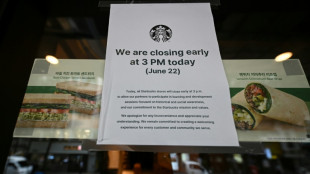 Coffee break: Starbucks Korea stores pause for training after 'Tank Day' fiasco

 Rare Philippine school shooting kills three teens, wounds seven

 Crude prices drop after 'positive' US-Iran talks

 Tuchel's England face defensive questions despite flying start at World Cup

 Not just a hideout: Sahel forests provide base for jihadists

 Africa faces child surgery crisis as key anaesthesia runs out

 J-Bay: S.Africa's surf mecca missing out on the global tour

The push for a digital euro has gained greater urgency as Europe seeks to bolster its financial sovereignty, with hopes the proposal will move forward this year after European lawmakers Tuesday backed the plans.
The electronic version of the money used in the 21-nation currency area would be available to use free of charge in shops, online or from person to person.
Supporters say it would let Europeans make online payments without relying on US payment systems -- as Europe ramps up efforts to break its dependence on foreign firms including US giants such as Visa and Mastercard.
Critics fear it would allow governments to surveil citizens' payments or even cut them off from the money supply.
First suggested by the European Central Bank (ECB), the project has been some six years in the making.
The EU executive formally proposed a digital euro in June 2023 but any law to make it a reality needs the support of member states and European lawmakers.
EU countries in December gave their green light, putting pressure on lawmakers.
There is renewed optimism that the European Parliament could really take that step this year after lawmakers on Tuesday expressed their support for the project.
"The introduction of a digital euro... is essential to strengthen EU monetary sovereignty, reduce fragmentation in retail payments and support the integrity and resilience of the single market," an amendment backed by lawmakers said.
- Not cash replacement: Lagarde -
ECB chief Christine Lagarde on Monday sought to assuage privacy fears, telling EU lawmakers that the bank "would not have access to personal data".
And while a digital currency has no physical version and does not require the intermediary of a commercial bank, Lagarde insisted it was in "no way intended to replace cash" as she urged lawmakers to move forward.
After US President Donald Trump's threats -- from strong-arming Europe on trade to pushing to seize Greenland -- Europe fears it is vulnerable and must be more independent in strategic sectors like defence and tech.
The digital euro is part of the answer, say dozens of economists who called it an "essential safeguard of European sovereignty" in an open letter in January.
Lagarde echoed their thinking, saying: "It will be built on a fully European infrastructure, avoiding an excessive dependency on foreign providers for payment systems that are critical to the functioning of our economy."
EU right-wing lawmaker Johan Van Overtveldt expressed scepticism, although he acknowledged the domination of only a few companies for payment systems.
"I'm still a little bit sceptical whether the digital euro is the best answer, but we are good at finding compromises here in this house," he said during a parliamentary debate on Monday in Strasbourg, France.
- 'Pan-European, sovereign' solution -
The concerns about a digital euro are not limited to privacy.
European banks are wary that a digital euro could reduce demand for their online and electronic banking services, especially since some of them banded together to launch their own payment system Wero.
French liberal MEP Gilles Boyer said a private European payment solution would be welcome, but Europe wasn't going to "do nothing and wait again for decades".
"When it comes to payments in Europe we have a choice. Do nothing and remain totally dependent on American players. Or provide a pan-European, sovereign, public solution," Boyer told AFP.
The ECB says that if the parliament backs the digital euro this year, the currency could be issued during 2029.
In the meantime, the ECB will launch a pilot scheme in 2027.
A.Kunz--VB