Tearful Gazans finally reunite after limited Rafah reopening / Photo: © AFP

 Hong Kong court set to sentence activist Joshua Wong in security case
 Australia raises benchmark rate to highest level in 18 years

 'The Remarried Empress' Cast Discusses Bringing Fantasy Royal Drama to Life

 Asian stocks retreat as AI worries outweigh steep oil-price drop
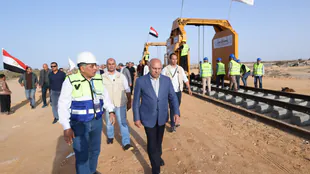
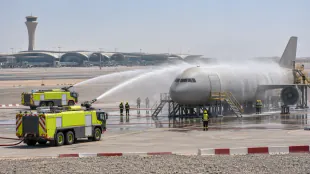 Hamad International Airport stages emergency drills during WATAN 2026

 Global failure to punish attacks leaves journalists at continuing risk
 Researchers Warn 'Bookkeeping Trick' Masks Beef Industry's Methane Emissions

 Climate Change Intensified Atlantic Hurricanes, Study Finds

 Qatar solar expansion opens scope for technical performance gains

Gazans long-separated from their loved ones shed tears of joy after the limited reopening of the Rafah crossing with Egypt allowed a handful to finally return to the war-shattered territory.
Jubilant crowds filmed on their phones as they flocked around a bus carrying returnees to Nasser Hospital in the southern city of Khan Yunis late in the night on Monday.
AFP footage showed a man holding a young child up to the window to greet those arriving, while women wept as they were at last able to embrace.
But for some of those re-entering Gaza, the return home was bittersweet.
"We were exhausted from this humiliating journey," said Rotana Al-Riqib, a Palestinian in her thirties who had returned from Egypt through Rafah.
"The Israelis took us to the crossing -- me, my mother and another woman from Khan Yunis -- and interrogated us," she added.
"They don't let us bring in anything. They confiscated everything we had, even my children's belongings. They only left us some clothes."
The crossing, which is Gaza's only gateway to the outside world that does not lead to Israel, had been largely closed since Israeli forces seized control of it in May 2024 during the war with Hamas.
Around two dozen people, instead of the expected 200, passed through the key border crossing in both directions on its first day open, sources on both sides of the border told AFP.
"They don't want a large number of people to return to Gaza," Riqib said.
"Rather, they want a large number to leave," she added, referring to the Israeli authorities.
Egypt has repeatedly warned of plans to displace Palestinians from Gaza.
According to media reports, it has demanded that the number of those exiting Gaza per day is equal to those returning.
- 'Very difficult' -
Ali Shaath, the head of a Palestinian technocratic committee established to oversee the day-to-day governance of Gaza, said Rafah's reopening offered a "window of hope" for the territory devastated by two years of war.
Around 150 people had been due to leave the territory on Monday, and 50 to enter it, according to Egyptian officials.
But only 12 Palestinians -- nine women and three children -- were allowed to return to Gaza from Egypt, according to the territory's interior ministry and a Palestinian official at the border.
The ministry, which operates under Hamas authority, said eight people had departed Gaza.
A source on the Egyptian side of the border, however, said 12 people -- five injured and seven companions -- were admitted into Egypt from Gaza.
"Things were very difficult, and inspections were taking place everywhere," said Samira Said, who travelled back to Gaza through Rafah.
- 'Glimmer of hope' -
Rafah's reopening, long-demanded by the United Nations and aid groups, is a key part of US President Donald Trump's truce plan for Gaza, where humanitarian conditions remain dire.
For the scores of sick and injured in the territory, its reopening offers a lifeline for the possibility of receiving care in Egypt.
The director of Gaza City's Al-Shifa Hospital, Mohammed Abu Salmiya, said on Monday there were 20,000 patients in the territory in urgent need of treatment, including 4,500 children.
Gaza City resident Umm Mohamed Abu Shaqfa, 37, said her 11-year-old daughter needed treatment for a blood disorder which was not available in the Palestinian territory.
"We are still waiting to travel through the Rafah crossing for treatment in Egypt, opening the crossing is a glimmer of hope," she told AFP.
"Every day, I go to the ministry of health office and the World Health Organization to check if my daughter's name is on the list."
The Rafah crossing is a key access point for both people and goods.
But COGAT, the Israeli defence ministry body coordinating Palestinian civilian affairs, has made no mention of allowing a long-hoped-for surge of aid into Gaza.
burs-acc/jd/ris/amj
S.Leonhard--VB