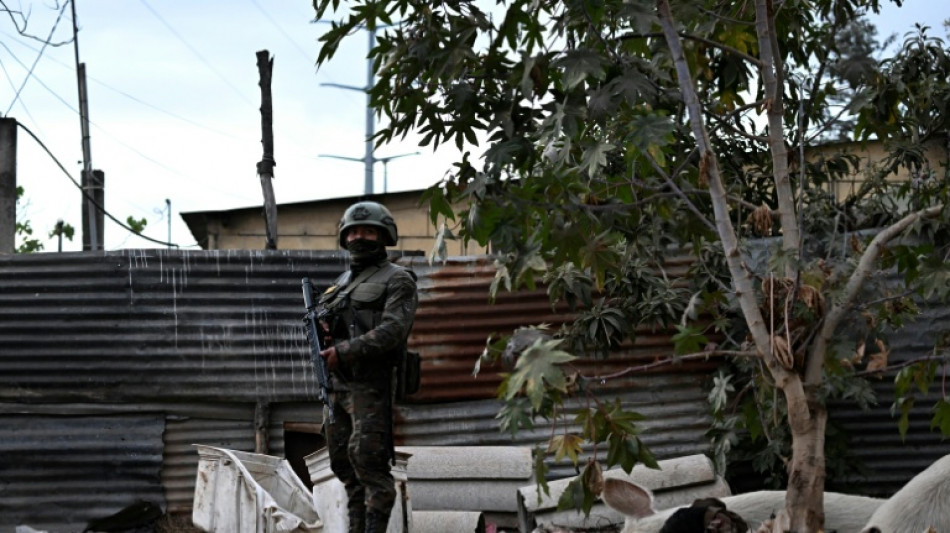
What's driving Guatemala's surge in gang violence? / Photo: © AFP

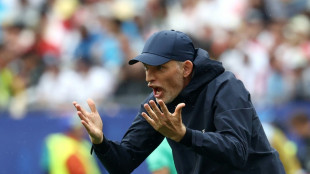 Tuchel insists England remain on course at World Cup despite Ghana draw
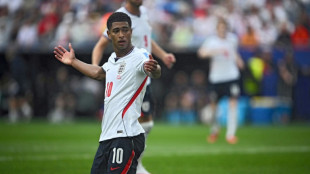 Bellingham rues England's 'second game fever' after Ghana draw
 Meta offers lower cost glasses as wearables competition heats up

 England left frustrated by Ghana in World Cup draw
 Grieving Deschamps to miss France's final World Cup group game
 Two-goal Ronaldo delights in silencing critics after 'attacks'
 Morocco squad 'supporting' Hakimi despite impending rape trial
 Airbus to inspect 16 A380s after cracks found on plane wings
 Bolivian government says cleared all protest roadblocks
 France has hottest-ever day as 'unbearable' heatwave keeps scorching Europe
 Ronaldo double fires Portugal, England eye last 32
 Hollywood powerhouses bring AI fight to Europe
 What is driving Europe's heatwave?
 Spain's Oyarzabal happy to play through pain at World Cup

 US Supreme Court rules against man whose dreadlocks were cut off in prison
 UN to begin evacuating stranded Mideast sailors after US-Iran talks
 Tech drags down world stocks, oil dips on supply hopes
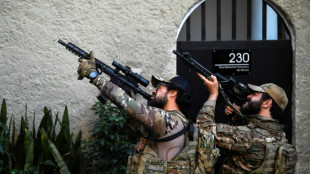 Shootout traps tourists at Rio sunrise lookout
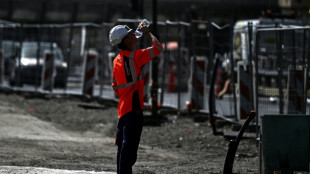 Heatwave sparks health warnings across Europe
 Hundreds of schools close as UK braces for record-breaking heatwave
 Starmer vows 'orderly' transition as Labour MPs mull bid to be PM

 ACTIVIST SHAREHOLDER FILES SCHEDULE 13D IN EQUUS TOTAL RETURN, INC.
 Europe: the world's fastest-warming continent
 Gennaro Gattuso returns to coaching with Lazio after Italy debacle
 Why the heat is wreaking havoc on Europe's trains
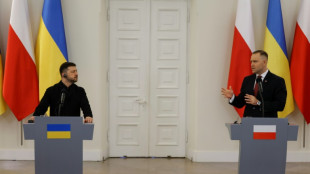
The worsening gang warfare in Guatemala has piled pressure on President Bernardo Arevalo to crack down on crime and root out corrupt officials accused of links to organized crime.
The murder of 10 police officers last week in retaliation for the put-down of a prison mutiny caused deep shock in the Central American nation of around 18 million people.
The standoff began when gang members took dozens of guards hostage at three prisons to demand that incarcerated gang leaders be moved from a maximum-security prison to more lenient facilities.
A day later, the police and army entered the prisons to restore control, triggering retaliatory attacks on the police blamed chiefly on the powerful Barrio 18 gang.
The unrest underscored the stranglehold of Barrio 18 and its arch-rival MS-19, which operate in several Central American countries, on Guatemala's penitentiaries.
Arevalo, who declared a 30-day state of emergency, blamed "criminal-political elites" who fear losing control of a system of "shady dealings."
In a post on X, Juan Francisco Sandoval, a former anti-gang prosecutor who fled to the United States after being fired by Attorney General Consuelo Porras in 2021 while investigating corruption, also blamed "political-criminal networks."
Porras is Arevalo's arch-foe and has been sanctioned by the United States and European Union for corruption.
Porras, who twice attempted to block Arevalo's inauguration, has been accused by the government and NGOs of protecting criminals, which she denies.
Her term expires in May.
Porras blamed the gang attacks on Arevalo's leadership.
"Be serious, Mr. President, take responsibility and get to work," she told reporters this week.
- Turning point -
Barrio 18 gang —- considered, like MS-19, a terrorist organization by Guatemala and the United States —- went on the warpath last July when five of its top leaders were transferred to a high-security prison.
The government said they were moved because they continued ordering executions, selling drugs and extorting money from behind bars.
In October, 20 leaders of the gang escaped from another prison, amid allegations of complicity by prison authorities.
Only six were recaptured, while another was shot and killed.
The breakout sparked a crisis that culminated in the dismissal of the interior minister.
Speaking to the TanGente political podcast, crusading former anti-gang prosecutor, Juan Francisco Solorzano, said attacks were part of an ongoing strategy to "delegitimize" Arevalo.
The riot at one of the prisons last weekend was led by Aldo Dupie, alias "El Lobo" (The Wolf), who demanded to be transferred to a prison with looser security, a bigger bed, air conditioning and takeout food services, according to the government.
Dupie, a convicted murderer, is in a relationship with a niece of opposition leader Sandra Torres, a former first lady who has fought and lost the last three presidential elections.
- Judicial shake-up -
The growing gang assertiveness comes ahead of a raft of planned new appointments in the judiciary, including members of the Supreme Electoral Tribunal and Constitutional Court as well as a new attorney general.
The Constitutional Court, Guatemala's highest judicial body, has been accused by Arevalo's party and rights activists of siding with the powerful.
Solorzano said he believed that Barrio 18 wants to remove Arevalo, who will pick Porras's successor in May, from power.
The standoff comes as voters in other Latin American countries plagued by gang violence swing right in search of a "mano dura" on crime.
From Chile to Costa Rica, the iron-fisted approach of El Salvador's President Nayib Bukele's to Barrio 18 and MS-19 has inspired a host of imitators.
Gang violence is expected to feature prominently in Guatemala's general election next year.
Interior Minister Marco Antonio Villeda said he feared interference in the vote from organized crime.
The fortunes they amass from drug trafficking and extortion means they can fund campaigns and "promote their own candidates," he told AFP.
B.Wyler--VB