'A den of bandits': Rwanda closes thousands of evangelical churches / Photo: © AFP

 Greenland parliament approves security agreement with United States

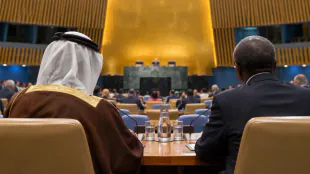 Qatar envoy meets incoming UN General Assembly president

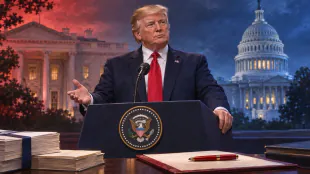 Trump Signals Willingness to Work With Democrats After Midterm Defeat

 Galloway accuser could not foresee publishing-sector fallout, lawyer argues

 New York City Center revives In the Heights as a timely community story

 Godzilla Minus Zero shifts focus toward postwar human drama

 Mehbooba Mufti urges dialogue and renewed Central Asia links for Kashmir

 Seacliff Healthcare Seeks Specialist GP in Thirroul

 US stocks fall before midterm Election Day as technology shares weaken

 BLS Polymers makes strong market debut at ₹248 per share

 Petrol and diesel prices remain broadly steady across major Indian cities

 Reliance shares remain in focus after near-12% surge

 2026 Arizona Midterms: Key Races, Ballot Measures, and Voter Deadlines

 Coal India prepares possible $1 billion Mahanadi Coalfields listing
Grace Room Ministries once filled giant stadiums in Rwanda three times a week before the evangelical organisation was shut down in May.
It is one of the 10,000 churches reportedly closed by the government for failing to comply with a 2018 law designed to regulate places of worship.
The law introduced new rules on health, safety, and financial disclosures, and requires all preachers to have theological training.
President Paul Kagame has been vocal in his criticisms of the evangelical churches that have sprouted across the small country in Africa's Great Lakes region.
"If it were up to me I wouldn't even reopen a single church," Kagame told a news briefing last month.
"In all the development challenges we are dealing with, the wars... our country's survival -- what is the role of these churches? Are they also providing jobs? Many are just thieving... some churches are just a den of bandits," he said.
The vast majority of Rwandans are Christian according to a 2024 census, with many now travelling long and costly distances to find places to pray.
Observers say the real reason for the closures comes down to control.
Kagame's government is saying "there's no rival in terms of influence," Louis Gitinywa, a lawyer and political analyst based in Kigali, told AFP.
The ruling party "bristles when an organisation or individual gains influence", he said, a view also expressed to AFP by an anonymous government official.
- 'Deceived' -
The 2018 law requires churches to submit annual action plans stating how they align with "national values". All donations must be channelled through registered accounts.
Pastor Sam Rugira, whose two church branches were shut down last year for failing to meet fire safety regulations, said the rules mostly affected new evangelical churches that have "mushroomed" in recent years.
But Kagame has described the church as a relic of the colonial period, a chapter of its history with which the country is still grappling.
"You have been deceived by the colonisers and you let yourself be deceived," he said in November.
The closure of Grace Room Ministries came as a shock to many across the country.
Pastor Julienne Kabanda, had been drawing massive crowds to the shiny new BK Arena in Kigali when the church's licence was revoked.
The government had cited unauthorised evangelical activities and a failure to submit "annual activity and financial reports".
AFP was unable to reach Kabanda for comment.
- 'Open disdain, disgust' -
A church leader in Kigali, speaking to AFP on condition of anonymity, said the president's "open disdain and disgust" for churches "spells tough times ahead".
"It is unfair that even those that fulfilled all requirements are still closed," he added.
But some say the clampdown on places of worship is linked to the 1994 Rwandan genocide in which around 800,000 people, mostly ethnic Tutsis, were slaughtered.
Ismael Buchanan a political science lecturer at the National University of Rwanda, told AFP the church could sometimes act as "a conduit of recruitment" for the Democratic Forces for the Liberation of Rwanda (FDLR), the Hutu militia formed in exile in DR Congo by those who committed the genocide.
"I agree religion and faith have played a key role in healing Rwandans from the emotional and psychological wounds after the genocide, but it also makes no sense to have a church every two kilometres instead of hospitals and schools," he said.
Pastor Rugira meanwhile suggested the government is "regulating what it doesn't understand".
It should instead work with churches to weed out "bad apples" and help them meet requirements, especially when it comes to the donations they rely on to survive, he said.
W.Huber--VB