Ghana's mentally ill trapped between prayer and care / Photo: © AFP

 Japan organisers 'not satisfied' as empty seats blight Asian Games
 Canals full, roads submerged as Bangkok declares flood disaster
 China, US to open AI 'communication channel' after summit
 Nepal tunnel survivor wants to help post-flood rebuild
 New China sprint star, 17, vows 'no limits' after Asian Games gold
 Japanese 11-year-old wins Asian Games eSports gold

 TikTok agrees to teen limits in US settlement following Meta
 Venezuela's oil cradle pins hopes on US energy deals
 US, China buy time with trade truce as pressure builds
 'Leo, Leo': Young Catholics give pope rockstar welcome in France

 Lula bans sports betting days ahead of Brazil's election

 Guatemala ensures survival of vulnerable 'fossil' fish
 Mancini finds positives in Italy loss, accepts fans' jeers

 Alcaraz helps Europe into Laver Cup lead

 Six missing after building collapses in historic Athens district
 Mbappe scores but suffers knee injury as Zidane gets debut France win

 Mancini's Italy return spoiled by Belgium defeat

 Rodri confident in Man City innocence despite reported charges

 Jay-Z rape accuser says she made 'false accusations'

 Senegal draw first match under Vieira and Nigeria survive scare
 Trump, Xi end summit long on pomp, but short on progress

 Russia not preparing for conflict with Europe, Putin says

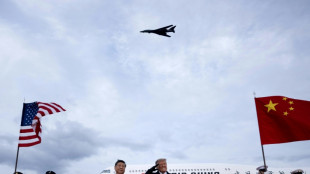 Trump's photo of Xi greeting carries signs of AI

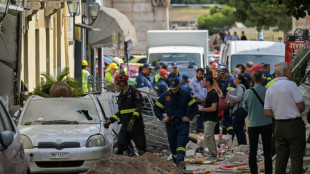 Six missing after building blast in historic Athens district

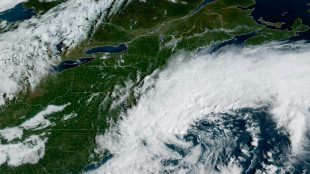 Millions in US northeast brace for powerful storm
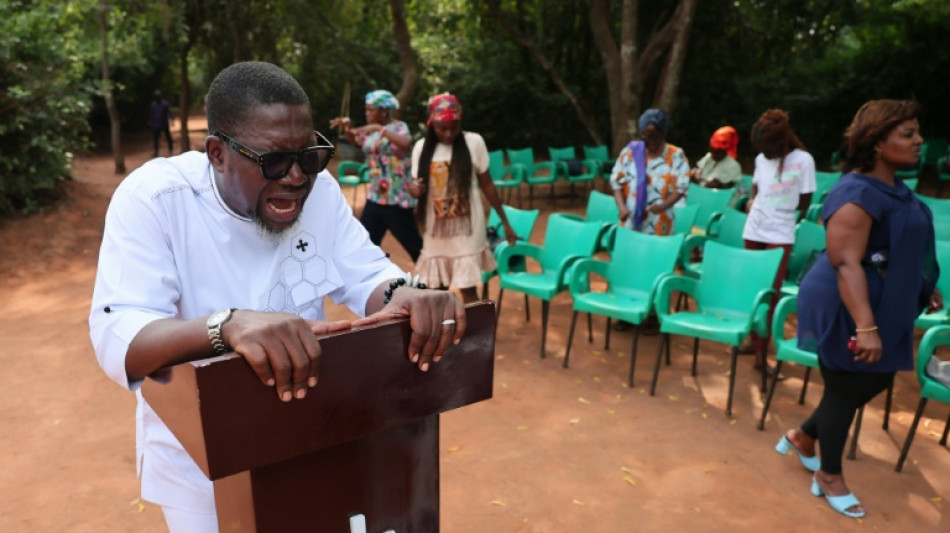
On a recent Friday morning, worshippers made their way in droves into the Achimota Forest, a stretch of green in Ghana's capital that doubles as an unlikely sanctuary for the desperate.
From the outside, the park and adjacent Accra Zoo appeared calm as branches swayed gently with the dry breeze. Inside, voices rose in tongues as worshippers prayed, some collapsing to the ground as if seized by unseen forces.
At one clearing sits a woman in her early thirties, dishevelled, her eyes fixed on nothing.
Her family says she became "mentally disturbed" a month ago. They've brought her to Prophet Elisha Ankrah of The World for Christ Church, convinced her suffering is spiritual.
"What the doctors cannot cure, God can," Ankrah, draped in white, told AFP. "Many of them come here after the hospitals have failed. Through prayer and fasting, they are restored."
Across Ghana, scenes like this have become more common -- sometimes with dire consequences.
Depression and anxiety have surged in the wake of Covid-19 in Ghana and Africa as a whole, according to the World Health Organization.
In Ghana, just over 80 psychiatrists serve a population exceeding 35 million people, according to the Mental Health Authority (MHA), a government agency under the Ministry of Health.
Access to clinical care is thin outside major cities. And even as the MHA says more than 21 percent of Ghanaians are living with mild to severe mental disorders, only two percent of the national health budget is allocated to mental healthcare.
Families often turn instead to forest "prayer camps" and spiritual healers, driven by beliefs that mental illness is rooted in curses, witchcraft or possession.
- Spirits versus medicine -
About an hour-and-a-half away, at the Mt. Horeb Prayer Camp in Mamfe, in Ghana's Eastern Region, worshipper Kingsley Adjei is unflinching: "You don't treat spirits with tablets. You break them with prayer."
Meanwhile, at the Pure Power Prayer Camp, in Adeiso, attendant Augustina Twumasi argued that faith-based centres help keep Ghana's weak health system together.
"If not for prayer camps, the hospitals would collapse under the numbers," she told AFP. "We are helping the state."
Many camps operate in cramped, poorly ventilated buildings.
Patients often crouch on bare concrete floors. Some are malnourished. Others bear scars from restraints.
Despite Ghana's 2017 ban on shackling people with psychosocial disabilities, the practice has not ended, according to Human Rights Watch. In 2023, the group helped secure the release of more than 30 chained patients in Ghana's Eastern Region alone.
"They still chain patients but hide them when NGOs or journalists are visiting," a security source at one of the camps told AFP.
At the country's flagship medical facility, the Korle Bu Teaching Hospital, psychiatrist Abigail Harding said faith shapes how many Ghanaians interpret mental illness.
But "chaining", forced fasting and isolation "can traumatise patients further and delay effective treatment, and in some cases lead to death", she told AFP.
University of Ghana clinical psychologist Emmanuel Asampong said the solution is not to throw out faith healers altogether, who remain trusted among much of the population.
"We need to bring them on board, just as we did with traditional birth attendants," he said. "If they see danger signs, they can refer patients to hospitals."
- Faith, fear and chaining -
In Ghana, family members, police officers or concerned citizens can apply to a court for involuntary treatment when someone poses a danger to themselves or others.
But "people don't know the law, so they don't use it," said Lady-Ann Essuman, an attorney and mental-health advocate.
Meanwhile, the MHA says it has begun engaging faith leaders through training and outreach programmes.
"Religion is deeply part of who we are," says psychiatrist Josephine Stiles Darko, the authority's deputy head of communications. "We can't take spirituality away, but we must ensure that any help given is humane and aligned with the law."
But deep mistrust of hospitals and the hope of instant miracles keep drawing thousands into forests and compounds across the country.
Stigma remains a key barrier to treatment: a 2022 Afrobarometer survey revealed 60 percent of Ghanaians believe mental health conditions are caused by witchcraft or curses.
As the sun climbed over Achimota Forest, the prayers rose louder. The woman brought to Prophet Ankrah did not move. Beside her, her sister squeezed her hand and murmured that healing will come -- if not today, then after more fasting.
strs/nro/sn/jhb/cc
L.Wyss--VB