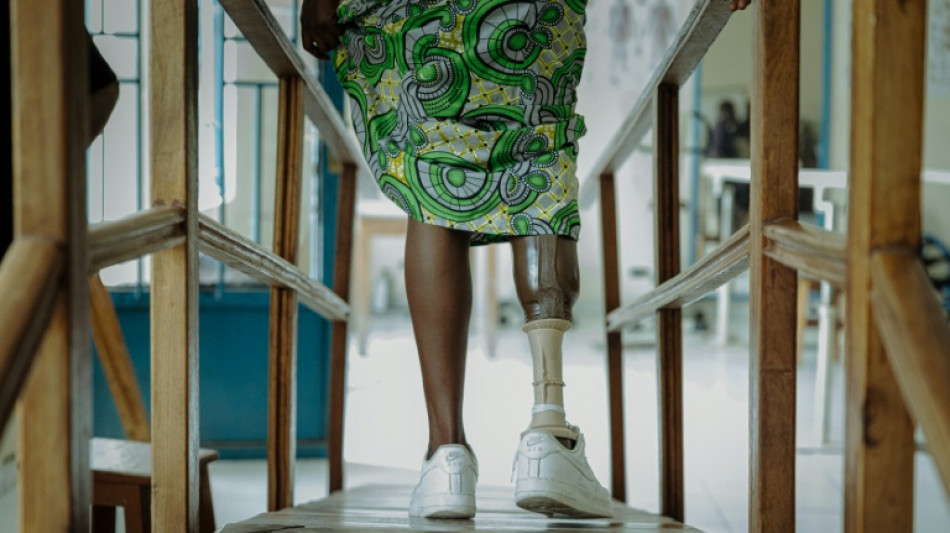
DR Congo's amputees bear scars of years of conflict / Photo: © AFP

 Cole grabs PGA Travelers lead with Scheffler one back
 De Silva century rescues Sri Lanka in first Test
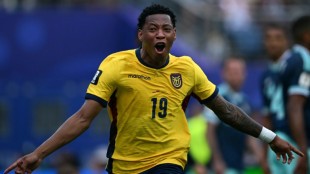
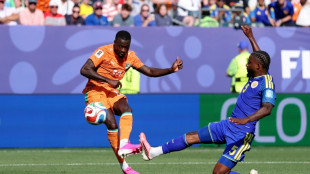 Pepe steers Ivory Coast into World Cup last 32 as Curacao go home

 WNBA suspends Thomas for fist to Clark's throat
 UK'S King Charles breaks precedent to reveal £30 mn paid in taxes since 2022

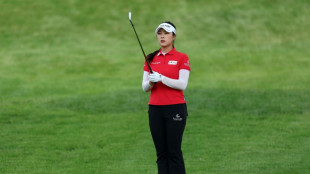 Yoon grabs early Women's PGA Championship lead with Korda in hunt
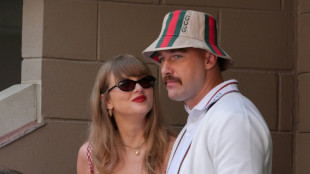 Will Taylor Swift and Travis Kelce wed in New York? Clues abound
 Lawyer says Vondrousova 'should appeal' against four-year ban
 Hospitals raise alert as heatwave slams Europe
 'Alligator Alcatraz' detention center shuts in US: official
 Tennis great Evert says 'relentless' cancer has returned
 Colombian president-elect gives armed groups one month to surrender

 New Zealand's Latham and Conway pile on the runs before Stokes breakthrough

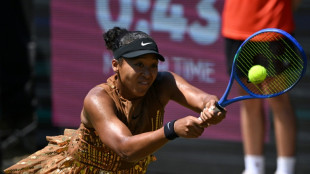 Dominant Osaka sails into Bad Homburg semis
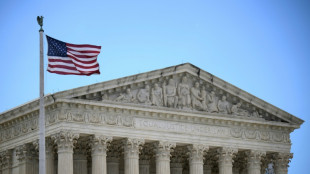 US Supreme Court says asylum seekers can be turned away before border

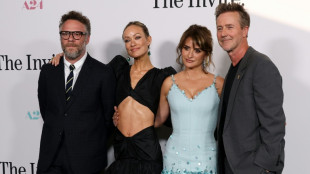 Olivia Wilde looks at evolving relationships in 'The Invite'
 Rows, drones and 'sorry' Son as South Korea await World Cup fate

 Antonelli welcomes Mercedes upgrade as Russell says beware Hamilton
 Antonelli welcomes Mercedes upgrade ast Russell says beware Hamilton
 HRW denounces Turkey arrests ahead of NATO summit
 Alonso committed to Aston Martin, but is keeping options open
 Venezuelans trapped alive after twin quakes kill at least 164
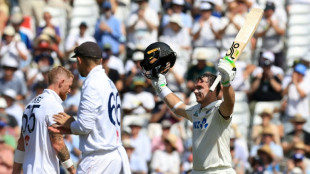 New Zealand make England toil as Stokes returns for series decider
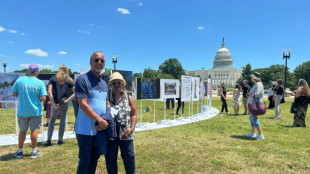 Americans impacted by climate change demand answers from lawmakers
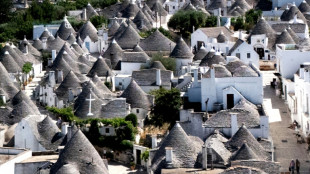 Heat-struck Italians cool off in ancient stone 'trulli'

They survived the bombs and bullets, but many lost an arm or a leg when M23 fighters seized the city of Goma in the eastern Democratic Republic of Congo nearly a year ago.
Lying on a rug, David Muhire arduously lifted his thigh as a carer in a white uniform placed weights on it to increase the effort and work the muscles.
The 25-year-old's leg was amputated at the knee -- he's one of the many whose bodies bear the scars of the Rwanda-backed M23's violent offensive.
Muhire was grazing his cows in the village of Bwiza in Rutshuru territory, North Kivu province, when an explosive device went off.
He lost his right arm and right leg in the blast, which killed another farmer who was with him.
Fighting had flared at the time in a dramatic escalation of a decade-long conflict in the mineral-rich region that had seen the M23 seize swathes of land.
The anti-government M23 is one of a string of armed groups in the eastern DRC that has been plagued by internal and cross-border violence for three decades, partly traced back to the 1994 Rwanda genocide.
Early this year, clashes between M23 fighters and Congolese armed forces raged after the M23 launched a lightning offensive to capture two key provincial capitals.
The fighting reached outlying areas of Muhire's village -- within a few weeks, both cities of Goma and Bukavu had fallen to the M23 after a campaign which left thousands dead and wounded.
Despite the signing in Washington of a US-brokered peace deal between the leaders of Rwanda and the DRC on December 4, clashes have continued in the region.
Just days after the signing, the M23 group launched a new offensive, targeting the strategic city of Uvira on the border with the DRC's military ally Burundi.
More than 800 people with wounds from weapons, mines or unexploded ordnance have been treated in centres supported by the International Committee of the Red Cross (ICRC) in the eastern DRC this year.
More than 400 of them were taken to the Shirika la Umoja centre in Goma, which specialises in treating amputees, the ICRC said.
"We will be receiving prosthetics and we hope to resume a normal life soon," Muhire, who is a patient at the centre, told AFP.
- 'Living with the war' -
In a next-door room, other victims of the conflict, including children, pedalled bikes or passed around a ball.
Some limped on one foot, while others tried to get used to a new plastic leg.
"An amputation is never easy to accept," ortho-prosthetist Wivine Mukata said.
The centre was set up around 60 years ago by a Belgian Catholic association and has a workshop for producing prostheses, splints and braces.
Feet, hands, metal bars and pins -- entire limbs are reconstructed.
Plastic sheets are softened in an oven before being shaped and cooled. But too often the centre lacks the materials needed, as well as qualified technicians.
Each new flare-up in fighting sees patients pouring into the centre, according to Sylvain Syahana, its administrative official.
"We've been living with the war for a long time," he added.
Some 80 percent of the patients at the centre now undergo amputation due to bullet wounds, compared to half around 20 years ago, he said.
"This clearly shows that the longer the war goes on, the more victims there are," Syahana said.
C.Koch--VB