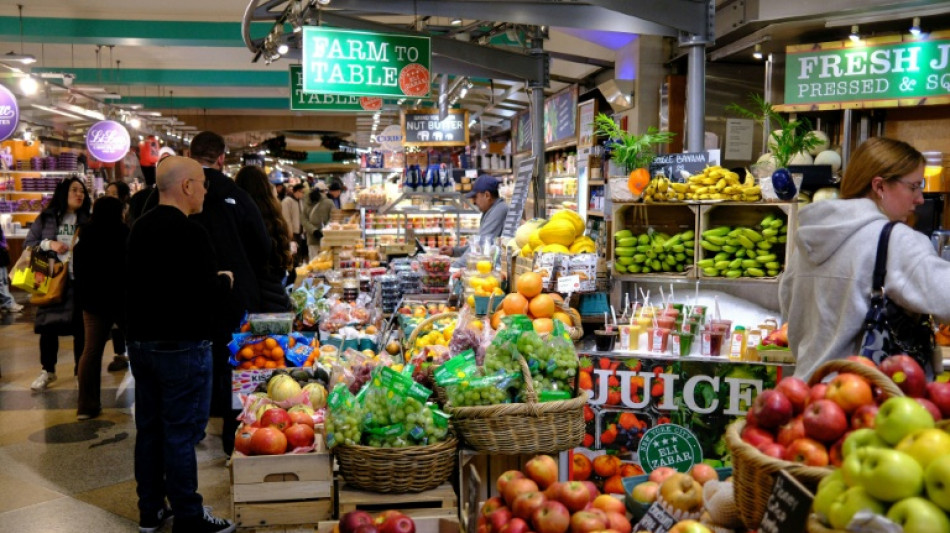
US consumer inflation cools unexpectedly in November / Photo: © AFP/File

 Indian crude-sensitive shares gain after 13% oil-price decline

 Stocks and dollar fall as Democratic election gains reshape markets

 Abdul El-Sayed Wins Michigan Senate Seat, Becoming First Muslim in US Congress

 Kuwait marks key events and anniversaries from national history

 Trump congratulates Democrats and signals willingness to cooperate

 Enel to Install Solar Panels at Niterói Waste Management Facility

 Qatar sees tentative opening for renewed regional diplomacy

 Qatar Tourism joins Pacific Asia Travel Association at London travel market

 Abdul El-Sayed Wins Michigan Senate Seat in Historic Election

 Qatar media bodies discuss support for humanitarian initiatives

US consumer inflation slowed unexpectedly in November, delayed government data showed Thursday, although levels remained higher than earlier in the year before President Donald Trump's tariffs flowed through the economy.
The consumer price index (CPI) climbed 2.7 percent from a year ago in November, the Department of Labor said, notably below analysts' predictions of a 3.1 percent uptick.
The latest figure was also down from the 3.0 percent rise in September, the most recent month for which fuller data was available due to a lengthy government shutdown.
Inflation has ticked up this year as Trump slapped new tariffs on goods from US trading partners, causing many firms to flag a hike in business costs.
But the impact on consumers has been more muted, as companies rushed to stock up on inventory before steeper import prices kicked in. Many opted not to fully pass on the cost increases.
US households, however, still feel the pinch from elevated costs overall.
Democrats notched victories in off-year elections last month, fueled by voters being disgruntled about rising prices -- underscoring affordability concerns.
Food prices were 2.6 percent higher from a year ago in November, with the index for meats, poultry, fish and eggs up 4.7 percent over this period.
Energy costs also jumped 4.2 percent over the past 12 months.
Excluding the volatile food and energy sectors, "core" CPI was up 2.6 percent in November from a year ago -- still above the Federal Reserve's longer-run target of two percent.
- Budget 'squeeze' -
Heather Long, chief economist at the Navy Federal Credit Union, cautioned that with the 43-day government shutdown hitting data collection, "it's hard to read too much into the November inflation data."
"What stands out from the data that is in the report is utilities, home furnishings and used cars and trucks are driving some of the ongoing inflation pressures. This is the result of tariff pressures and the AI boom," she said.
"Americans continue to feel the squeeze in their monthly budgets," Long added.
There were few month-on-month comparisons in Thursday's report as the shutdown from October to mid-November hampered the collection of October data.
While the latest figures will be scrutinized for their potential bearing on the central bank's future interest rate decisions, missing October data also points to an incomplete picture of how the economy is faring.
Fed policymakers have voted for three consecutive policy meetings to lower rates and boost the economy as the jobs market weakens, but some cite risks of persistent inflation in urging for caution before further reductions.
One issue of concern is whether the impact of tariffs prove to be one-off eventually.
F.Wagner--VB