
-
 Indian crude-sensitive shares gain after 13% oil-price decline
-
Kuwait finance minister holds economic cooperation talks at COMCEC
-
 Stocks and dollar fall as Democratic election gains reshape markets
-
82-Year-Old American Transforms 2003 Mercedes Sprinter into Permanent Home

-
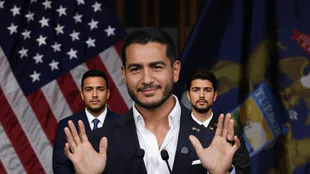 Abdul El-Sayed Wins Michigan Senate Seat, Becoming First Muslim in US Congress
-
Abdul El-Sayed declares victory in Michigan Senate contest

-
 Kuwait marks key events and anniversaries from national history
-
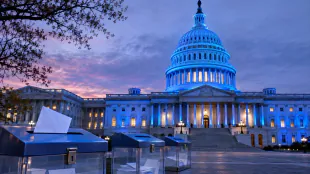
Democrats capture US Congress in sweeping midterm victory
-
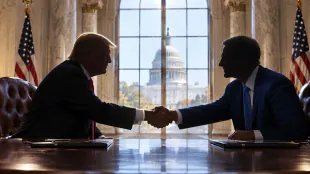 Trump congratulates Democrats and signals willingness to cooperate
-
Manchester United rallies past Roma as PSG dominates in Champions League

-
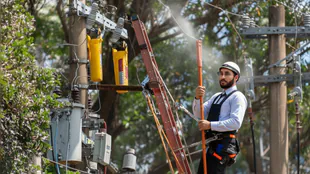 Enel to Install Solar Panels at Niterói Waste Management Facility
-
Qatar prime minister advances mediation through diplomatic calls
-
 Qatar sees tentative opening for renewed regional diplomacy
-
Greenland parliament approves security agreement with United States

-
 Qatar Tourism joins Pacific Asia Travel Association at London travel market
-
Qatar envoy meets incoming UN General Assembly president
-
 Abdul El-Sayed Wins Michigan Senate Seat in Historic Election
-
Trump Signals Willingness to Work With Democrats After Midterm Defeat
-
 Qatar media bodies discuss support for humanitarian initiatives
-
Pitches and Keynote Speakers Are Confirmed for Blue Magic Netherlands on November 17

Venezuela reacts defiantly to US oil blockade, claims exports unaffected
Venezuela struck a defiant note Wednesday, insisting its crude oil exports were not impacted by US President Donald Trump's announcement of a potentially crippling blockade.
Trump's declaration on Tuesday marked a new escalation in his months-long campaign of military and economic pressure on Venezuela's authoritarian leftist President Nicolas Maduro.
Venezuela, which has the world's largest proven oil reserves, shrugged off the threat of more pain, insisting it was proceeding with business as usual.
"Export operations for crude and byproducts continue normally. Oil tankers linked to PDVSA operations continue to sail with full security," state oil company Petroleos de Venezuela (PDVSA) said.
Trump said Tuesday he was imposing "A TOTAL AND COMPLETE BLOCKADE OF ALL SANCTIONED OIL TANKERS going into, and out of, Venezuela."
Referring to the heavy US military presence in the Caribbean -- including the world's largest aircraft carrier -- he warned "Venezuela is completely surrounded by the largest Armada ever assembled in the History of South America."
On Wednesday, he reiterated that US forces would not "let anybody go in... that shouldn't be going through," and accused Venezuela once again of taking "all of our oil."
"They took all of our energy rights, they took all of our oil, from not that long ago, and we want it back," he said, apparently referring to the nationalization of Venzuela's oil industry.
Oil prices had surged in early trading Wednesday in London on news of the blockade, which comes a week after US forces seized a sanctioned oil tanker off Venezuela's coast.
Maduro held telephone talks with UN Secretary-General Antonio Guterres to discuss what he called the "escalation of threats" from Washington and their "implications for regional peace."
Guterres urged both sides to "exert restraint and de-escalate tensions to preserve regional stability."
- 'We are not intimidated' -
Venezuela's economy, which has been in freefall over the last decade of increasingly hardline rule by Maduro, relies heavily on petroleum exports.
Trump's campaign appears aimed at undermining domestic support for Maduro, but the Venezuelan military said Wednesday it was "not intimidated" by the threats.
The foreign minister of China, the main market for Venezuelan oil, defended Caracas in a phone call with his Venezuelan counterpart Yvan Gil.
"China opposes all unilateral bullying and supports all countries in defending their sovereignty and national dignity," he said.
Last week's seizure of the M/T Skipper, in a dramatic raid involving US personnel rappelling from a helicopter, marked a shift in Trump's offensive against Maduro.
In August, the US leader ordered the biggest military deployment in the Caribbean Sea since the 1989 US invasion of Panama -- purportedly to combat drug trafficking, but taking particular aim at Venezuela, a minnow in the global drug trade.
US strikes on alleged drug-smuggling boats in the Caribbean and eastern Pacific have left at least 95 people dead since.
Caracas believes that the anti-narcotics operations are a cover for a bid to topple Maduro and steal Venezuelan oil.
The escalating tensions have raised fears of a potential US intervention to dislodge Maduro.
Mexican President Claudia Sheinbaum waded into the dispute Wednesday, declaring that the United Nations was "nowhere to be seen" and asked that it step up to "prevent any bloodshed."
- Oil lifeline -
The US blockade threatens major pain for Venezuela's crumbling economy.
Venezuela has been under a US oil embargo since 2019, forcing it to sell its production on the black market at significantly lower prices, primarily to Asian countries.
The country produces one million barrels of oil per day, down from more than three million in the early 2000s.
Capital Economics analysts predicted that the blockade "would cut off a key lifeline for Venezuela's economy" in the short term.
"The medium-term impact will hinge largely on how tensions with the US evolve -- and what the US administration's goals are in Venezuela."
burs-cb/des
H.Weber--VB