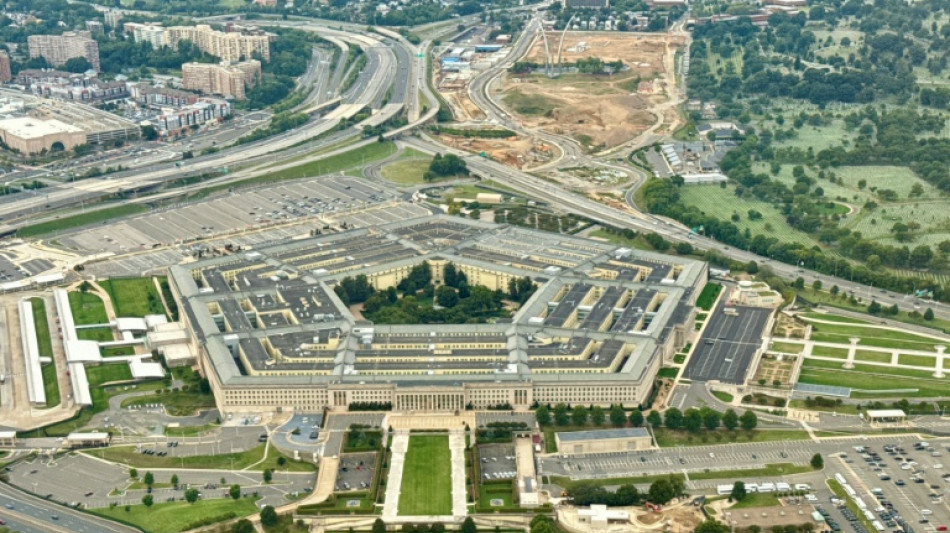
US Congress passes defense bill defying Trump anti-Europe rhetoric
/ Photo: © AFP/File

 Indian crude-sensitive shares gain after 13% oil-price decline

 Stocks and dollar fall as Democratic election gains reshape markets

 Abdul El-Sayed Wins Michigan Senate Seat, Becoming First Muslim in US Congress

 Kuwait marks key events and anniversaries from national history

 Trump congratulates Democrats and signals willingness to cooperate

 Enel to Install Solar Panels at Niterói Waste Management Facility

 Qatar sees tentative opening for renewed regional diplomacy

 Qatar Tourism joins Pacific Asia Travel Association at London travel market

 Abdul El-Sayed Wins Michigan Senate Seat in Historic Election

 Qatar media bodies discuss support for humanitarian initiatives

US lawmakers on Wednesday passed a sweeping defense policy bill, signaling ironclad bipartisan support for Europe and delivering a blistering repudiation of President Donald Trump's increasingly hostile posture toward NATO and America's closest allies.
The comfortable 77-20 Senate vote sends the $900 billion National Defense Authorization Act (NDAA) to the White House, closing out one of Congress's few remaining rituals of cross-party cooperation even as foreign policy divisions sharpen elsewhere in Washington.
"We ask a lot of the brave Americans serving in uniform. And they give a lot," Republican Senate Majority leader John Thune said ahead of the vote.
"And I'm proud that this year's National Defense Authorization Act will help ensure that they have what they need to keep America safe in a dangerous world."
The action in the upper chamber follows House passage last week and comes amid unease in European capitals over Trump's rhetoric, especially after the recent White House national security strategy painted Europe as over-regulated, culturally adrift and insufficiently committed to its own defense.
The strategy questioned the continent's strategic value and openly echoed themes championed by far-right parties, fueling fears of a widening transatlantic rift.
By contrast, the NDAA reflects lawmakers' determination to anchor the United States firmly in Europe.
The bill bars US troop levels on the continent from falling below 76,000 for more than 45 days and restricts the removal of major military equipment, effectively tying the administration's hands on any rapid drawdown.
It also boosts resources for frontline NATO states, particularly in the Baltic region, reinforcing the alliance's northeastern flank.
The measure authorizes roughly $8 billion more than the administration requested, a signal of congressional assertiveness on defense priorities.
Beyond Europe, the NDAA locks in $400 million in security assistance for Ukraine, aiming to preserve a baseline of support even as broader funding debates grind on, and places new limits on any reduction of the 28,500 US troops stationed in South Korea.
As ever, the NDAA drew fire from multiple directions -- from conservative critics of Ukraine aid to safety experts warning about aviation provisions rolling back critical air-safety requirements for military aircraft operating in Washington's restricted airspace.
But none came close to derailing a package long seen as must-pass legislation.
P.Vogel--VB