US oil blockade of Venezuela: what we know / Photo: © AFP/File

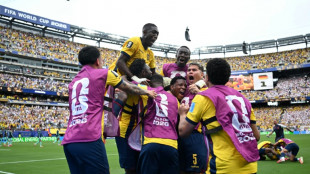 Better to qualify this way, says Ecuador World Cup hero Plata
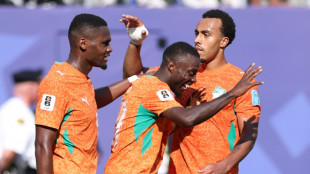
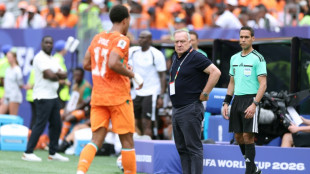 Advocaat 'proud' of Curacao as minnows exit World Cup
 Iglesias -- Spanish World Cup striker unafraid to speak out about injustice
 Anderson to join Man City from Forest for British record fee: reports

 Ecuador upset Germany to reach World Cup last 32 as Curacao eliminated
 Ecuador edge Germany to squeeze into World Cup last 32
 Spain women's star Putellas to join London City Lionesses

 England showing Premier League edge at World Cup: Eze
 Nasdaq falls again on mixed day for US stocks, oil prices rise

 France squad look to do grieving Deschamps proud in final World Cup group game
 Mayweather's Athens fight with Zambidis is off: report

 Alonso committed to Aston Martin, but keeping options open
 Events cancelled, records loom as heatwave reaches Germany
 Czech striker Schick ends international career
 US says wants deal with Iran, but not 'at any price'
 US Supreme Court hands win to Bayer in weedkiller litigation
 Apple raises prices for MacBooks and iPads, as costs soar over AI
 UK suffers as heat breaks new June record
 Binance to suspend crypto services in several EU countries

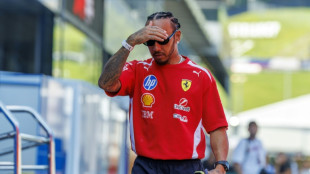 Hamilton reveals neck injury that hampered debut year with Ferrari
 Noosha Aubel and Dietmar Woidke: How Potsdam Is Letting Down a Young Child with Profound Disabilities

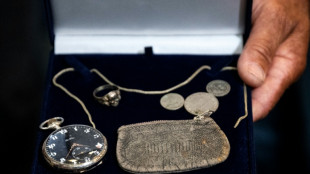 Greek families receive keepsakes of Holocaust victims

 Easyjet rejects latest takeover bid but leaves door ajar
 Macron hosts Meloni for Riviera talks after Trump rift
 US Supreme Court paves way for mass deportation of Haitians, Syrians
US forces in the Caribbean -- where Donald Trump has deployed a massive flotilla of warships -- have been tasked by the president with blockading "sanctioned oil vessels" going to and from Venezuela.
Trump's administration has been piling pressure on the country and its government for months, in an apparent bid to oust leftist leader Nicolas Maduro -- whom Washington accuses of heading a drug cartel.
The US president has said that Maduro's "days are numbered" and pointedly refused to rule out a ground invasion, but the Venezuelan leader has remained defiant so far.
Below, AFP examines the situation in the Caribbean.
- US assets in the Caribbean -
Many questions remain over how the Venezuela blockade will play out, and it is not clear how many tankers will be impacted, or to what degree the US military -- which currently has thousands of personnel in the Caribbean -- would be involved.
There are currently 11 US warships in the Caribbean: the world's largest aircraft carrier, an amphibious assault ship, two amphibious transport dock ships, two cruisers and five destroyers.
There are US Coast Guard vessels deployed in the region as well, but the service declined to provide figures on those assets "for operational security reasons."
Washington has also flown a series of military aircraft -- including long-range bombers -- along the coast of Venezuela, and has reached deals with some countries in the region for the use of their airports for military flights.
- Tanker seized -
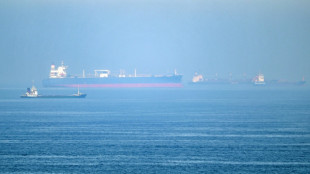
The United States has already seized one tanker off Venezuela's coast, taking control of the M/T Skipper last week in a raid that provides a potential preview of future action.
A video released by US Attorney General Pam Bondi showed US forces descending from a helicopter onto the tanker's deck, then entering the ship's bridge with weapons raised.
A US court later released a heavily redacted warrant authorizing the seizure of the ship, which the document said was carried out by the Coast Guard.
- Strikes on alleged drug boats -
Washington's forces began carrying out strikes on alleged drug-smuggling boats in the Caribbean in early September, later expanding those operations to the eastern Pacific Ocean.
The Trump administration has said the strikes -- which have destroyed more than 25 vessels and killed at least 95 people -- are aimed at curbing trafficking.
But White House Chief of Staff Susie Wiles told Vanity Fair magazine that the strikes are aimed at pressuring Venezuela's leadership, saying Trump "wants to keep on blowing boats up until Maduro cries uncle."
- 'Quarantine' of Cuba -
Latin American countries have been targeted with blockades in the past, most famously during the Cuban Missile Crisis in 1962, when Washington established a "quarantine" to stop the Soviet Union from bringing offensive weapons to its Caribbean ally.
Some Soviet ships decided to turn back before reaching the quarantine line, while others were stopped and searched by US forces but cleared to proceed to Cuba.
The measure -- which was called a "quarantine" rather than a blockade because no state of war existed -- was lifted after the United States and Moscow reached a deal to end the crisis, which is widely considered the closest the two countries came to nuclear war.
K.Sutter--VB