
Countdown to disclosure: Epstein deadline tests US transparency / Photo: © AFP/File

 Equitas Small Finance Bank rebounds after naming interim chief executive

 Titan quarterly profit seen rising as jewellery business drives growth

 Kuwait finance minister holds economic cooperation talks at COMCEC

 82-Year-Old American Transforms 2003 Mercedes Sprinter into Permanent Home

 Abdul El-Sayed declares victory in Michigan Senate contest

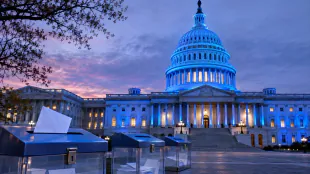 Democrats capture US Congress in sweeping midterm victory

 Manchester United rallies past Roma as PSG dominates in Champions League

 Qatar prime minister advances mediation through diplomatic calls

 Greenland parliament approves security agreement with United States

 Qatar envoy meets incoming UN General Assembly president

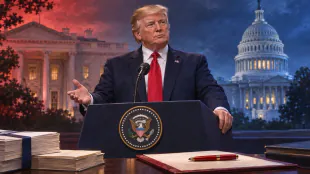 Trump Signals Willingness to Work With Democrats After Midterm Defeat

 Pitches and Keynote Speakers Are Confirmed for Blue Magic Netherlands on November 17
US President Donald Trump's administration is facing a Friday deadline to release decades of government secrets on notorious sex offender Jeffrey Epstein, the latest milestone in the long-running effort to uncover the full extent of his network.
Under the Epstein Files Transparency Act, Trump's Department of Justice (DOJ) must release by December 19 its vast cache of records on the late financier's sex-trafficking empire, which is alleged to have entangled underage girls and brushed against the world's elite.
For the public, the release offers the clearest opportunity yet to lift the veil on one of the century's most enduring scandals -- although transparency advocates caution that key details may still be withheld under government claims of legal constraint.
For Trump -- who has faced questions over his own close friendship with Epstein -- things could get awkward.
The financier -- who died in custody after his 2019 arrest -- moved in elite circles for years. He cultivated ties with tycoons, politicians, academics and celebrities to whom he was accused of trafficking hundreds of girls and young women for sex.
Trump and his allies long alleged that powerful Democrats and Hollywood liberals were being shielded from accountability for their involvement, framing the case as proof of how power hides behind lawyers and money.
But the president dismissed the transparency push as a "Democrat hoax" as soon as he returned to office and acquired the unilateral authority to release the files.
The president appeared to change tack again in November, apparently resigned that he was fighting a losing battle against disclosure, and signing the act into law after it passed Congress almost unanimously.
- What's coming out -
The files' release could illuminate how Epstein operated, who helped him and whether influential figures received protection.
Survivors are hopeful but wary of the changing stances adopted by Trump, who broke off his friendship with Epstein years ago and is not accused of wrongdoing in the case.
"I can't help to be skeptical of what the agenda is," Haley Robson, who was recruited at 16 to massage Epstein, told a recent news conference.
The law compels officials to open a substantial archive of internal correspondence, investigative material and court records previously sealed or buried.
That includes victim statements, flight logs, seized electronic devices and correspondence on charging decisions, as well as documentation of Epstein's death in custody.
While many names are familiar, the mandate may expose new associates and clarify why prosecutors hesitated for years. But hopes for a definitive "client list" are misplaced. The DOJ says no such roster exists.
- Where black bars could bite -
Disclosure applies only to records that don't identify victims and jeopardize active investigations or national security, giving the DOJ latitude to black out victims' names, classified intelligence and litigation-sensitive material.
Observers expect heavy redactions, although the law forbids censorship for "embarrassment" or "political sensitivity."
Trump recently ordered probes into Democrats linked to Epstein, fueling speculation that prosecutors might cite those inquiries to withhold files.
The scandal remains explosive because it sits at the intersection of wealth, power and impunity.
Epstein cultivated influential friends, maintained luxury homes where prosecutors say he trafficked underage girls, and secured an extraordinary 2008 plea bargain potentially shielding unnamed co-conspirators.
His arrest -- and subsequent death in a New York jail, ruled a suicide -- reignited scrutiny of how he operated so long with so little accountability.
Oregon Senator Ron Wyden, the top Democrat on the powerful finance committee, is doubtful of Attorney General Pam Bondi allowing a comprehensive disclosure. He is spearheading his own investigation into institutions he accuses of shielding Epstein by failing to report his suspicious financial activities.
"We need both lanes, because I don't trust Bondi and following the money is how, in our country, we've had a long history of catching and rooting out corrupt behavior," he told AFP.
S.Gantenbein--VB