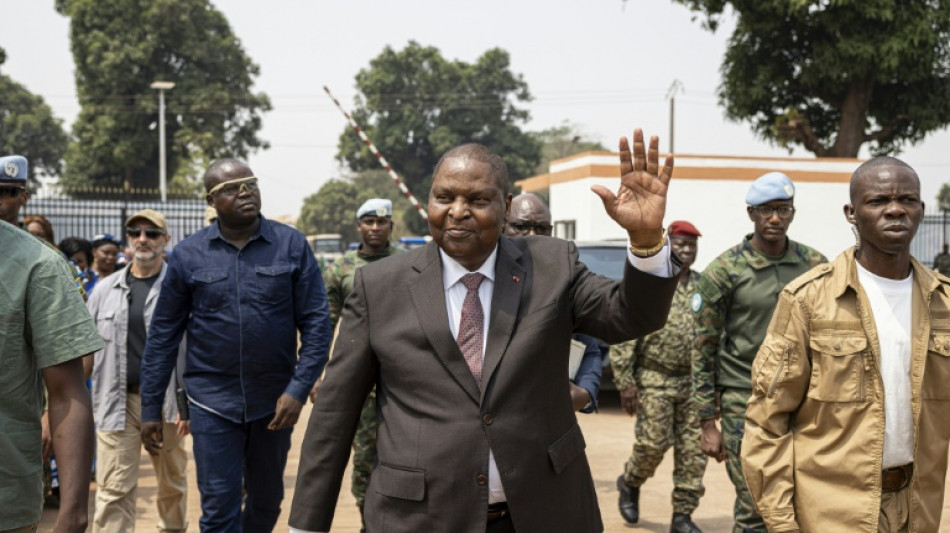
Central African Republic top court says Touadera won 78% of vote / Photo: © AFP/File

 England captain Stokes 'man enough' to apologise for curfew breach
 England captain Stokes 'man enough' to apologise after curfew breach

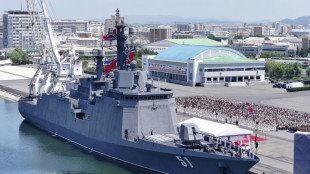
 German naval ambitions suffer setback as warship order axed

 London police to extend use of live facial recognition, drones
 Europe swelters under record-breaking heatwave

 Iran says deal to end Mideast war 'declaration of US defeat'

 S.Korea chip giant SK hynix seeks $29 bn in Nasdaq listing: regulatory filing
 'Pragmatists' vs 'hardliners': Is Iran split over US deal?
 H5 bird flu detected in second Australia state
 Brazil aim for last 32 as World Cup goes into hectic phase
 Necessity drives gold miners in DR Congo's Ebola epicentre

 Japan PM heckled at WWII memorial
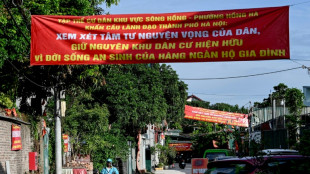 Hanoi residents mount silent protest over home demolitions

 US Congress passes symbolic Iran war rebuke to Trump
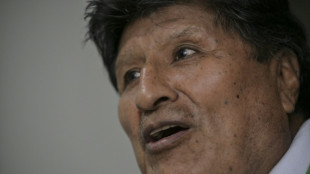 Bolivia's government is 'stoking a civil war,' ex-president Evo Morales tells AFP

 Fans in China put politics aside to cheer Japan at World Cup
 Geopolitics and AI in spotlight at China's 'Summer Davos'

 Race for robotaxi market arrives in London

 Moana Pasifika axed from Super Rugby after rescue talks fail

 Golden Boot battle steals the show at World Cup
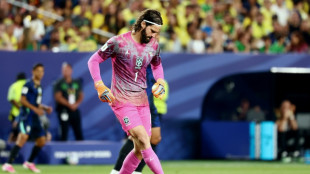 Red or green? For Brazil, the politics of World Cup kits matter
 US Congress passes landmark housing affordability bill

 Dream job: US soccer fans paid to watch every World Cup game
 Europe wilts under record heat as AC sales soar
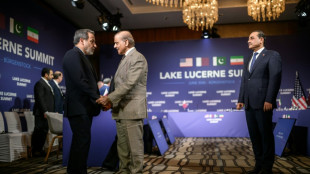 Rubio rejects Iran tolls on Hormuz as deal strains multiply
Faustin Archange Touadera, who has led the Central African Republic since 2016, was re-elected for a third term as president in last month's election with 78 percent of the vote, the constitutional court said Monday, announcing final results.
In an address immediately afterwards before a group of supporters from his United Hearts Movement, Touadera thanked Central Africans and called for unity to "build the country together for its development".
His main opponent, Anicet-George Dologuele, who had appealed the provisional results complaining of fraud, won 13.5 percent, the top court added, saying the appeal had been rejected.
Touadera, 68, had presented himself as the stability candidate in an impoverished country that has endured a succession of civil wars, coups and authoritarian governments since gaining independence from France in 1960.
He went into the election in pole position after a new constitution was adopted in 2023, allowing him to seek a third term.
Dologuele also finished second to Touadera in the 2016 and 2020 elections, both of which were marred by suspicions of fraud.
Since Touadera was first elected in the middle of a civil war, unrest has eased, though feuds between armed groups and the government persist in some regions.
The national election authority said turnout was just over 52 percent in the December 28 vote, which also included legislative, regional and municipal ballots.
Dologuele, a former prime minister, remains on course to win a seat in parliament during a second round of voting in the legislative election. A date has not yet been announced.
Another opposition figure, Henri-Marie Dondra, came in third place with just under three percent of the vote.
He had called for the cancellation of the votes and complained of the "incapacity" of the national election agency to organise the ballot.
After a civil war that dragged on from 2013 to 2018, some stability has returned to the country of around 5.5 million, which is much reliant on international aid despite natural resources such as uranium, lithium, diamonds, gold and lumber.
- 'Fragility' -
Asked by reporters on Monday about his priorities for his third term, Touadera acknowledged "the country's fragility" despite progress made in recent years.
"We will mobilise to combat this fragility in terms of peace, security, social cohesion and the population’s basic needs," the president said.
Ahead of the elections, Touadera had pointed to his record on improving security and the paved roads, public lighting installed on major avenues and renovated rainwater drainage canals in the capital.
But life for many people in the CAR -- 71 percent of whom live below the poverty line -- remains precarious, with a lack of basic services, an absence of passable roads, widespread unemployment, poor training and a steadily rising cost of living.
Critics have branded Touadera "President Wagner" for his perceived dependence on Moscow and Russian paramilitaries that prop up the nation's security.
Deployed since 2018 at Touadera's request to underpin an army lacking funding and organisation, Russia's Wagner paramilitary group has established itself as one of the government's main security partners in exchange for lucrative contracts to mine gold and diamonds.
Touadera struck a controversial 2019 peace accord with 14 armed groups involved in the civil war, essentially bringing warlords into the government in return for the disarmament of their militias.
However, instability remains in the east on the borders with Sudan and South Sudan and in the northwest.
S.Spengler--VB