
What's at stake as Yemeni separatists gain ground? / Photo: © AFP

 Mutual fund returns show shifting leaders across market-cap categories

 IndiGo holds talks with Embraer over potential order for 100 aircraft

 Indian companies report mixed second-quarter results on November 4

 KKR secures Indian regulator approval for Gentari Renewables investment

 Bharti Airtel revenue expected to grow at double-digit pace in second quarter

 Indian crude-sensitive shares gain after 13% oil-price decline
 Stocks and dollar fall as Democratic election gains reshape markets

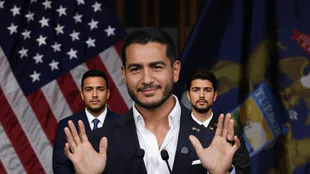 Abdul El-Sayed Wins Michigan Senate Seat, Becoming First Muslim in US Congress

 Kuwait marks key events and anniversaries from national history

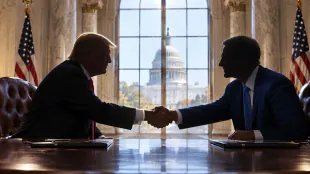 Trump congratulates Democrats and signals willingness to cooperate

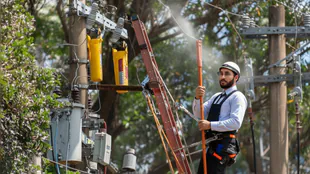 Enel to Install Solar Panels at Niterói Waste Management Facility

 Qatar sees tentative opening for renewed regional diplomacy

 Qatar Tourism joins Pacific Asia Travel Association at London travel market

 Abdul El-Sayed Wins Michigan Senate Seat in Historic Election

 Qatar media bodies discuss support for humanitarian initiatives
UAE-backed south Yemeni separatists have taken control of vast new areas, rattling the anti-Houthi government and threatening to further divide a country fractured by more than a decade of civil war.
Yemen is already split between the Iran-backed Houthis who control much of the north and a fractious patchwork of anti-rebel groups in the internationally recognised government.
The separatists of the Southern Transitional Council are part of that anti-Houthi government, but their advances have raised fears that the group might secede in an effort to revive the once independent South Yemen.
- What is the STC? -
Headed by Aidaros Alzubidi, the STC is a coalition of groups that want to bring back South Yemen, which existed from 1967 until its unification in 1990 with North Yemen.
They now control almost all of South Yemen's former territory.
The STC has gained influence during Yemen's civil war, which has pitted the Houthis against forces backed by a Saudi-led military coalition that includes the United Arab Emirates.
Close to Abu Dhabi, the separatists are part of the Presidential Leadership Council (PLC), the eight-member body that heads the internationally recognised government.
Alzubidi is the PLC's vice-president while Saudi-backed Rashad al-Alimi, who has heavily criticised the separatists' advance, is its president.
The STC already controlled swathes of Yemen's south coast, including al-Mukalla, the capital of the country's largest province Hadramawt.
Last week, its forces swept inland, seizing the key city of Seiyun as well as oil fields in the mostly desert area bordering Saudi Arabia.
In recent days, some local leaders in neighbouring Mahra province, which borders Oman and is a key smuggling route, also joined their alliance, the STC told AFP.
- Will the STC secede? -
The advance and the lack of resistance "suggests a level of coordination with at least some of the government forces," according to Elisabeth Kendall of Cambridge University.
Its speed and success are "symptomatic of PLC failures" she said.
"The PLC has proven weak and divided, riddled by infighting and unable to govern effectively," she said, warning that its future was now unclear, with fears rising that the STC might secede.
A senior government official dismissed the possibility of such a move succeeding.
"The declaration of a new state isn't feasible nor viable nor possible," he told AFP, requesting anonymity to discuss sensitive matters.
"Secession isn't possible as it requires national, regional and international consensus which doesn't exist now," the Yemeni official said, speaking on condition of anonymity.
The STC is likely seeking to renegotiate the current power-sharing agreement within the PLC amid reports of a potential resumption of talks between Saudi Arabia and the Houthis.
The larger civil war has been effectively frozen since a UN-brokered ceasefire in 2022, though talks to bring it to a formal end are yet to succeed.
- What do the UAE and Saudi Arabia want? -
Riyadh has called for STC forces to withdraw from the newly seized territory while an Emirati official said Abu Dhabi's position on Yemen was "in line with Saudi Arabia".
The two Gulf monarchies have one shared objective, to counter the Houthi rebels, but they have diverging long-term interests.
Secession would offer the UAE "control over lucrative energy resources, ports, trade routes and strategic security locations," Kendall said, leaving "Saudi with a bellicose Houthi-dominated state on its border".
Their territorial gains are "undoubtedly unsettling for Oman," she added, which sees the province of Mahra as its "backyard".
strs-saa-sar/aya/dcp
K.Hofmann--VB