Wole Soyinka university theatre: a talent factory for Nigeria and beyond / Photo: © AFP

 Colombian judge bans strikes on guerrillas if minors are present

 Khachanov shocks ailing Auger-Aliassime, Swiatek and Osaka advance at US Open

 Lone juror blocking verdict in US mother's child murder trial: defense

 'Kinda chic' - Williams sisters set to launch US Open doubles bid

 Volkswagen says cutting 100,000 jobs by end of decade

 Russia slaps curfew on charity director over army criticism

 Ailing Auger-Aliassime upset by Khachanov at US Open

 Richarlison omitted from Tottenham's Premier League squad

 How El Nino is choking the Panama Canal

 Hamilton drives his Ferrari dream at Monza

 Senegal has an IMF loan, now what?

 Auger-Aliassime upset by Khachanov at US Open

 Hugging Face, the French start-up that became AI's warehouse

 World Cup winner Llorente retires from Spain team at 31

 Osaka squeezes into US Open third round

 Apple faces £2 bn lawsuit in UK over app privacy feature
 Former champ Swiatek eases into US Open third round

 DR Congo latest to promise moving Israel embassy to Jerusalem

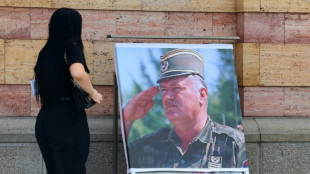 War criminal Mladic's body returns to Serbia with military honours

 Pierre Cardin museum brings designer's futurist style to Venice

 Slovenian rookie Omrzel triumphs as Mas extends Vuelta lead
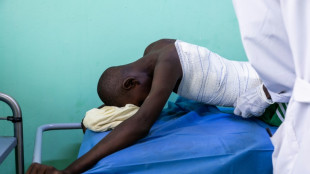
 British, French leaders talk migrants, EU relations

 Heading for Ferrari's home race, Leclerc still dreams of world title
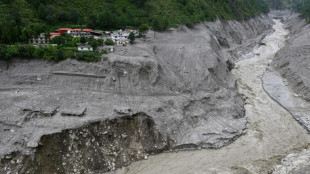
 Cafe at centre of Israel culture clash agrees to shut on Sabbath

 Spacecraft bound for Mercury begins 'tricky' arrival

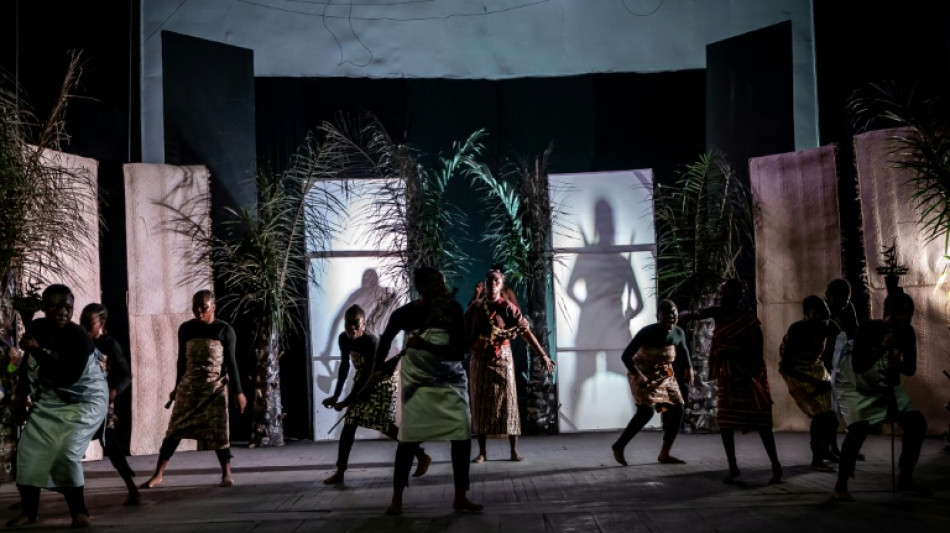
The actors, seasoned veterans as well as young amateurs, go through their lines and movements one last time before the curtain rises at the Wole Soyinka Theatre at the University of Ibadan, in southwest Nigeria.
Adebayo Israel was always passionate about theatre "but this is where I gained my confidence on stage", the 21-year-old student told AFP, warming up his voice ahead of that night's production of "Medaaye".
Israel is the latest in a long line of actors to make their way through the theatre, which has become something of a proving ground for talent in the west African country.
Named after former University of Ibadan student Wole Soyinka, the first African to be awarded the Nobel prize in literature, the theatre continues to pump out talent seven decades after its 1955 founding, drawing audiences from across the country and the continent.
"This particular department, this university, has produced actors and academics to develop the departments of theatre in every university in Nigeria," instructor Tunde Awosanmi told AFP.
Awosanmi also served as the stage director for "Medaaye", an African adaptation of the Greek tragedy "Medea" by Euripides.
For two and a half hours on a recent evening, the dialogue alternated between English, Yoruba and Pidgin, punctuated by songs and traditional dancing and accompanied by musicians seated among the public in the front row.
In the audience was the "Medaaye" playwright Femi Osofisan, the first African to receive the prestigious Thalia Prize, in 2016.
- 'Pool of talent' -
Osofisan, who was there for a week of events celebrating his 80th birthday, knows the venue well -- he studied and taught at Ibadan's theatre department.
Ibadan-trained talent has also been known to spill over into the country's raucous, fast-paced film industry, known as Nollywood, which is said to produce around 200 films per month.
Both professional actors and students perform together.
Alumni of the Ibadan stage include playwright and actor Akinwumi Isola, actress Martha Ehinome and actor Gabriel Afolayan.
For Iyanuoluwa Ajibike, 30, the theatre's strength comes from its melting-pot atmosphere.
"It's a pool of talent because different people with different skills meet," the actor and producer told AFP.
"We have actors, directors, the costumers, the make-up artists, light technicians, choreographers, the sound designers. That's a draw for students, as well.
"I've learnt a little bit of costume, make-up, dance and the others," said Oreoluwa Tayo, a 22-year-old actor who hopes to venture into the management and business aspect of theatre production.
- 'Costs remain a hurdle' -
While the theatre has become a pillar of the city of Ibadan, it is also known to draw audiences from across the country.
Esther Adelana, 29, a public relations practitioner based in the Nigerian capital, Abuja, more than 650 kilometres from Ibadan, came all the way to watch the performance.
For her, the theatre epitomises "African culture in all its intelligence and excellence".
The theatre has also helped boost the local arts scene.
"The theatre makes me feel even more alive," said Ejirooghene Asagba, who found her footing at the Wole Soyinka Theatre before producing "Water", Tobi Marho's one-man show, at the local venue New Culture Studios.
Asagba has appeared in the 2024 film "Funmilayo Ransome-Kuti", a biopic about the mother of famed Afrobeat artist Fela Kuti, as well as in the police series "Crime and Justice Lagos".
But it was on the Wole Soyinka stage that she found particularly memorable roles in productions that dealt with a plethora of African stories beyond Nigeria.
"It is important to tell Nigerian stories but also African stories because we often share the same challenges, whether they are political, social, economic or cultural," she said.
"The audience loved these plays. Spectators came from neighbouring French-speaking countries and I received many messages."
Her dream, she said, would be to tour Nigeria -- and the continent -- though for now "costs remain a hurdle."
A.Kunz--VB