
-
 Lettermen co-founder Tony Butala dies at 87
-
Byron Donalds wins Florida governor race and underscores Republican strength

-
 James Talarico defeats Ken Paxton in historic Texas Senate result
-
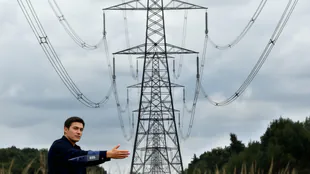
Physicist Claims Alberta Data Center Releases Energy of 23 Atomic Bombs Daily
-
 Commentator predicts possible US strike on Iran as regional tensions rise
-
Goa plans relationship-readiness course amid concern over divorces

-
 Manchester United climbs standings after 3-2 Champions League win over Roma
-
India introduces four-layer motor insurance choice from December 15

-
 Mutual fund returns show shifting leaders across market-cap categories
-
BHEL wins Adani Power projects valued at up to ₹28,000 crore

-
 IndiGo holds talks with Embraer over potential order for 100 aircraft
-
India seeks threefold increase in coal stocks to prevent summer power shortages

-
 Indian companies report mixed second-quarter results on November 4
-
Indus Towers expands solar-powered network to 50,000 telecom sites

-
 KKR secures Indian regulator approval for Gentari Renewables investment
-
Equitas Small Finance Bank rebounds after naming interim chief executive

-
 Bharti Airtel revenue expected to grow at double-digit pace in second quarter
-
Titan quarterly profit seen rising as jewellery business drives growth

-
 Indian crude-sensitive shares gain after 13% oil-price decline
-
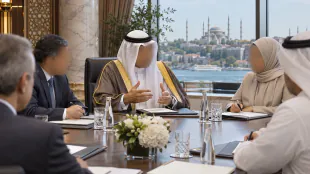
Kuwait finance minister holds economic cooperation talks at COMCEC
-
 Stocks and dollar fall as Democratic election gains reshape markets
-
82-Year-Old American Transforms 2003 Mercedes Sprinter into Permanent Home

-
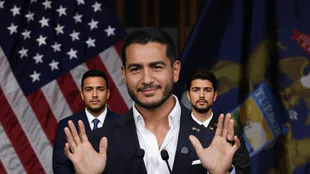 Abdul El-Sayed Wins Michigan Senate Seat, Becoming First Muslim in US Congress
-
Abdul El-Sayed declares victory in Michigan Senate contest

-
 Kuwait marks key events and anniversaries from national history
-
Democrats capture US Congress in sweeping midterm victory
-
 Trump congratulates Democrats and signals willingness to cooperate
-
Manchester United rallies past Roma as PSG dominates in Champions League

-
 Enel to Install Solar Panels at Niterói Waste Management Facility
-
Qatar prime minister advances mediation through diplomatic calls

-
 Qatar sees tentative opening for renewed regional diplomacy
-
Greenland parliament approves security agreement with United States

-
 Qatar Tourism joins Pacific Asia Travel Association at London travel market
-
Qatar envoy meets incoming UN General Assembly president
-
 Abdul El-Sayed Wins Michigan Senate Seat in Historic Election
-
Trump Signals Willingness to Work With Democrats After Midterm Defeat
-
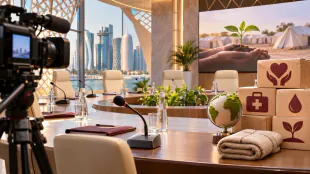 Qatar media bodies discuss support for humanitarian initiatives
Trump strategy shifts from global role and vows 'resistance' in Europe
President Donald Trump laid out a radical realignment of US foreign policy Friday, shifting the longtime superpower's focus from global to regional, brutally criticizing Europe as facing "civilizational erasure" and putting a top priority on eliminating mass migration.
The national security strategy, meant to flesh out Trump's norms-shattering worldview, elevates Latin America to the top of the US agenda in a sharp reorientation from longstanding US calls to focus on Asia to face a rising China.
"In everything we do, we are putting America First," Trump said in a preamble to the long-awaited paper.
Breaking with decades of attempts to be the sole superpower, the strategy said that the "United States rejects the ill-fated concept of global domination for itself."
It said that the United States would also prevent other powers, namely China, from dominating but added: "This does not mean wasting blood and treasure to curtail the influence of all the world's great and middle powers."
The strategy called for a "readjustment of our global military presence to address urgent threats in our Hemisphere," starting with migration.
"The era of mass migration must end," the strategy said.
The strategy made clear that the United States under Trump would aggressively pursue similar objectives in Europe, in line with far-right parties' agendas.
In extraordinary language in addressing close allies, the strategy said the administration would be "cultivating resistance to Europe's current trajectory within European nations."
Germany quickly hit back, saying that it does not need "outside advice."
The strategy pointed to Europe's slide in share of the global economy -- which is the result largely of the rise of China and other emerging powers -- and said: "This economic decline is eclipsed by the real and more stark prospect of civilizational erasure."
"Should present trends continue, the continent will be unrecognizable in 20 years or less."
As Trump seeks an end to the Ukraine war that would likely favor Russia gaining territory, the strategy accused Europeans of weakness and said the United States should focus on "ending the perception, and preventing the reality, of NATO as a perpetually expanding alliance."
- Updated 'Monroe Doctrine' -
Trump since returning to office in January has ordered sweeping curbs on migration, after a political career built on fanning fears that America's white majority is losing its status.
The strategy speaks in bold terms of pressing US dominance in Latin America, where the Trump administration has been striking alleged drug traffickers at sea, intervening to bring down leftist leaders including in Venezuela, and loudly seeking to take charge of key resources such as the Panama Canal.
The strategy cast Trump as modernizing the two-century-old Monroe Doctrine, in which the then young United States declared Latin America off-limits to rival powers.
"We will assert and enforce a 'Trump Corollary' to the Monroe Doctrine," it said.
The strategy paid comparatively little attention to the Middle East, which has long consumed Washington.
Pointing to US efforts to increase energy supply at home and not in the oil-rich Gulf, the strategy said: "America's historic reason for focusing on the Middle East will recede."
The paper said it was a US priority for Israel to be secure, but stopped short of the fulsome language on Israel used even in the first Trump administration.
- China still competitor -
On China, the strategy repeated calls for a "free and open" Asia-Pacific region but focused more on the nation as an economic competitor.
After much speculation on whether Trump would budge on Taiwan, the self-ruling democracy claimed by Beijing, the strategy made clear that the United States supports the decades-old status quo, but called on allies Japan and South Korea to contribute more to ensure Taiwan's defense from China.
The strategy predictably puts little focus on Africa, saying the United States should transition away from "liberal ideology" and an "aid-focused relationship" and emphasize goals such as securing critical minerals.
US presidents usually release a National Security Strategy in each White House term. The last, released by Joe Biden in 2022, prioritized winning a competitive edge over China while constraining a "dangerous" Russia.
D.Schaer--VB