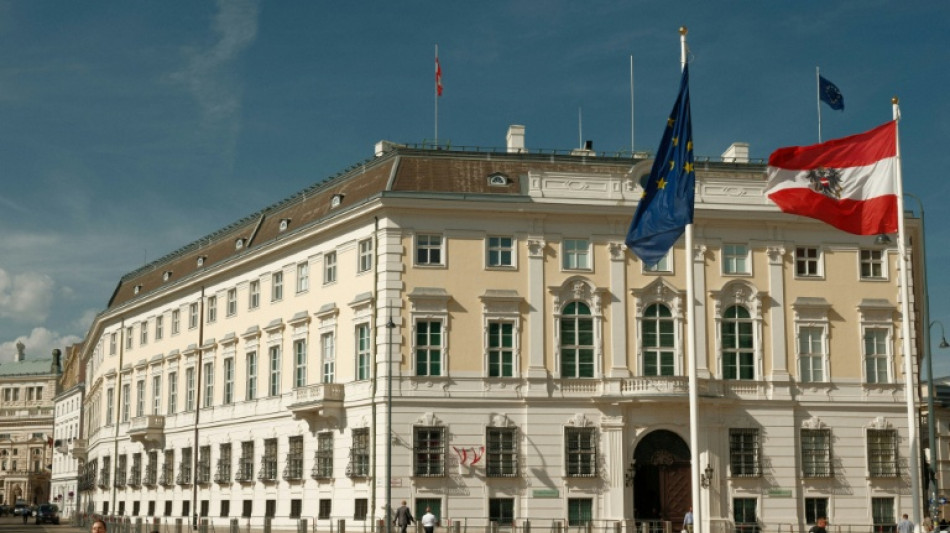
Ukraine war fuels debate on neutrality in Austria / Photo: © AFP

 Caudullo challenges Montpellier to be 'watertight' against Dupont threat

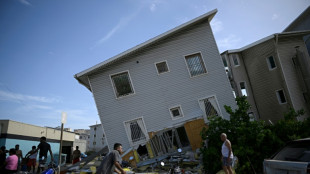
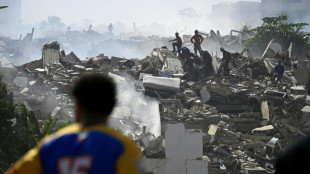
 Venezuela earthquakes toll soars to 589 amid desperate rescue effort

 Stokes strikes on England return before Duckett runs riot against New Zealand
 UK hottest June day record broken for third day in a row: Met Office
 Tech jitters send stocks lower, oil prices fall
 Stokes strikes on England return as New Zealand all out for 438
 Caudullo challenges Montpellier to be 'watertight' against Dupont
 Osaka sinks Wang to reach first grass court final
 UN demands probes into US ICE custody deaths
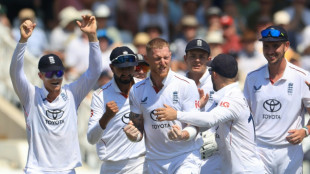 Stokes strikes as New Zealand make England feel the heat
 Lyles enjoying freedom to focus on speed and stuff off the track
 How the British royal family is funded, and where the money goes
 Russia-annexed Crimea declares 'emergency' amid Ukraine strikes
 Stocks slide on renewed tech slump, oil prices fall
 EU hits France's Sanofi with flu vaccine antitrust probe
 Europe heatwave swamps hospitals, halts parties

 MEXC Reports 142% Volume Surge for MU Futures Following Record Micron Earnings Beat
 Serena Williams to face Joint in Wimbledon return after four-year absence

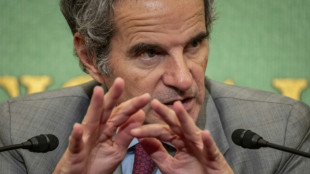 UN says Iran nuclear pledge needs 'very strong' verification
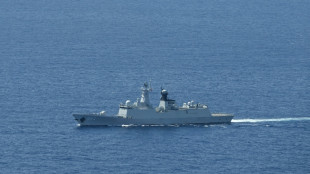 New Zealand internal report warns of Chinese military forays in Pacific
 Mbappe v Haaland as France face Norway in World Cup group decider

 European economies suffer from heatwave

 Hospitals overwhelmed as Europe heatwave shifts east
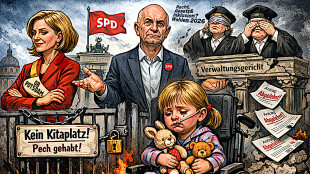
 努莎·奧貝爾與迪特馬爾·沃伊德克 波茨坦如何辜負一名重度殘障幼兒
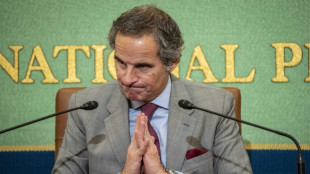 'Very strong' nuclear verification needed in Iran after war: IAEA head
For 70 years, neutrality has been the cornerstone of Austria's foreign policy, but debate on it has resurfaced since Russia invaded Ukraine.
The Alpine nation has sided with other EU members to condemn the war, raising concerns that it is swaying from its neutral stance.
"For us, neutrality is a fundamental element of our national identity," Andreas Wimmer, representative of citizens' initiative Voices for Neutrality, told AFP.
The far-right Freedom Party (FPOe), which won elections last year but failed to form a government, has also campaigned for maintaining neutrality and opposes aid to Ukraine, calling it a "betrayal".
In Austria, the policy of neutrality was imposed by the then Soviet Union as a price for the end of the Allies' post-war occupation of the country.
The policy offered the country a way of exiting the rubble of World War II and avoiding the blame for complicity in the Nazi regime.
Adopted on October 26, 1955, the federal constitutional law -- which lays down Austria's permanent neutral status -- prohibits Vienna from joining military alliances or stationing foreign troops on its territory.
Since then, for many Austrians, freedom has been synonymous with neutrality, with 80 percent saying it is part of their national identity, according to a poll published in October.
- 'No longer protects us' -
For many years, the country of nine million has hosted one of the four UN headquarters and numerous other international agencies, such as the International Atomic Energy Agency and the OPEC headquarters in Vienna.
But unlike its Swiss neighbour, Austria's neutrality "is evolving... and the current government is pushing for this evolution," a European diplomat told AFP on condition of anonymity.
"They voted for financial aid to Ukraine, for sanctions against Russia," the diplomat said, adding the central European country is "starting to be less naive".
Austria has said its neutrality does not prevent it from condemning breaches of international law and has condemned the invasion of Ukraine.
Foreign Minister Beate Meinl-Reisinger of the liberal NEOS told German newspaper Die Welt in July that, faced with "an increasingly aggressive Russia", "neutrality alone no longer protects us" and that her country must consider investing in its "own defense capabilities".
Austria's military budget, still among the lowest in Europe, was increased to 0.95 percent of GDP by 2024, and the government aims for two percent by 2032.
Former Austrian diplomat Franz Cede said neutrality must not be "romanticised" as it has clearly been "eroded" since Austria's accession to the European Union in 1995.
While Finland and Sweden responded to Russia's invasion of Ukraine by joining NATO, Austria "missed the moment", he said.
While past debates on neutrality have not led to the law changing, a discussion on joining NATO could "be very fruitful," according to Meinl-Reisinger.
She, however, emphasised in her Die Welt interview that "there is currently no majority in parliament or among the population in favour of NATO membership".
The Voices for Neutrality group, for its part, calls for a return to the role of active mediator that Austria played during the Cold War.
In recent years, no high-profile international negotiations have been held in Austria.
B.Baumann--VB