
COP30: Indigenous peoples vital to humanity's future, Brazilian minister tells AFP / Photo: © AFP

 Davidovich Fokina wins in Mallorca for first ATP title

 Sabalenka urges Grand Slams to 'get it done' in prize money boycott row

 Russell snatches pole as Verstappen, Antonelli fourth for Austria GP grid
 Smith and supersub Foulkes strike for New Zealand in England finale

 Supersub Foulkes strike for New Zealand in England finale

 Wolff says Russell will be at Mercedes next season

 Djokovic inspired by Serena as he targets history at Wimbledon

 Stokes falls cheaply as England collapse in New Zealand decider

 Russell bounces back to beat Antonelli in final practice

 Iran says US violated peace deal as both sides trade fire

 Injured Australian pair Leckie, Italiano out of World Cup
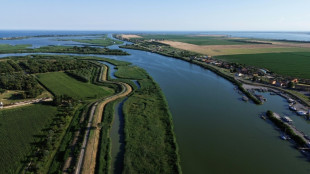 Farmers fear drought as Italy's longest river runs dry
 Budapest Pride to push for equality after reversed ban

 World Cup fans get taste of American life -- at the mall
 World Cup turns New York's Times Square into global fan hub

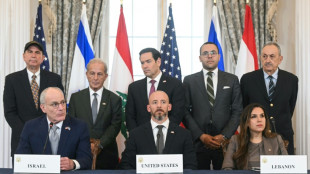 Lebanon, Israel and US sign trilateral framework pact

 Cape Verde extend World Cup fairytale to set up Argentina meeting
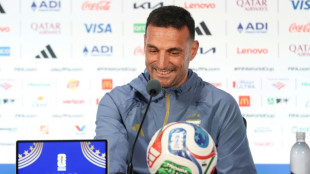 Messi to start dead-rubber World Cup group match on bench

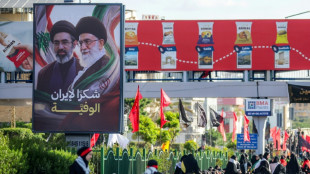 US and Iran trade strikes putting new strain on Mideast ceasefire

 Maple Leafs make teen McKenna top pick in NHL Draft
 California appeals court orders Weinstein resentencing for sex assault

 Scheffler fires 60 to grab 36-hole PGA Travelers lead

 Austria's Rangnick shuts down conspiracy talk ahead of Algeria World Cup clash
 Should we fear an AI bubble bust?

 US strikes Iran sites after cargo ship attack

At COP30 in Belem, in Brazil's Amazon region, the country's Minister of Indigenous Peoples, Sonia Guajajara, hopes Indigenous peoples will play a leading role in the international climate conference that begins Monday.
Without them, "there is no future for humanity," she told AFP in an interview.
Guajajara, a member of the Guajajara-Tenetehara ethnic group who was born in an Indigenous reserve in Maranhao state, is the first person to hold the portfolio created by leftist President Luiz Inacio Lula da Silva when he returned to power in 2023.
On the eve of the UN climate conference, Guajajara, 51, anticipates "the best COP in terms of Indigenous participation," but denounces the "racism" suffered by Indigenous peoples.
She laments that Brazil's government has not been able to approve more Indigenous reserves.
According to the minister, this effort has been hindered by a law passed by the predominantly conservative parliament, which restricts the recognition of lands that belong to Indigenous peoples.
Brazil, Latin America's largest country, is home to 1.7 million Indigenous people, divided into 391 ethnic groups speaking 295 languages, out of a total population of over 200 million.
The COP can contribute significantly to greater understanding and interest from society as a whole regarding Indigenous peoples -- especially regarding the role that Indigenous peoples and Indigenous territories play in maintaining climate balance.
It has been proven that the presence of Indigenous peoples, whether in demarcated territories or not, ensures clean water, protected biodiversity, pesticide-free food, and standing forests.
And all of this is what humanity needs to continue to exist. Therefore, we say, without Indigenous peoples, without these voices, there is no future for humanity.
In 2009, when I participated in my first COP, which was COP15 in Copenhagen, there was one or two Indigenous individuals present, but they were not participating. Since then, we have been working on building this inclusion, increasing representation, and creating spaces for dialogue.
From then until now, there has been tremendous progress. I was very excited to participate in the summit of presidents, during the launch of the TFFF (the Tropical Forest Forever Fund), as well as the session addressing the topic of climate and nature.
Of course, there is still much to be done for countries to ensure this leadership. In both moments, all the presidents who spoke emphasized the importance of including Indigenous peoples, ensuring funding for Indigenous communities, and guaranteeing the protection of Indigenous peoples and territories.
- 'Guardians of the forest' –
Although there is already recognition that we, Indigenous peoples, are the greatest guardians of the forest, the environment, and biodiversity due to our way of life, we are the first and most impacted.
Because when there is a flood, for example, it affects food security, when fish die, when water is contaminated, when there is drought, roads become inaccessible, as rivers are also a means of transportation for us.
It affects schools, when children cannot move from one place to another to attend school, it affects education.
G.Haefliger--VB