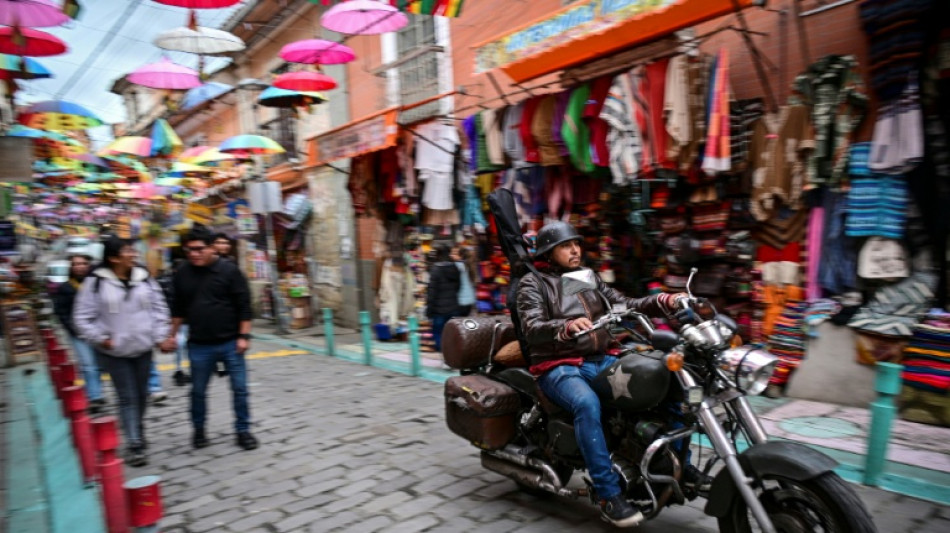
Crisis-hit Bolivia looks to the right for economic salvation / Photo: © AFP

 From rubble to music: Gaza's Oud repairman

 Cycling industry bets on smart bikes to boost sales

 In Idaho, the next generation of US nuclear reactors nears reality

 Africa the winner of expanded World Cup amid mixed fortunes for minnows

 Asia's vendors grapple with rising costs of ever-present plastics

 Messi scores again as Argentina head into World Cup last 32 on a high

 Wissa proud to deliver World Cup joy to war-torn DR Congo

 South Korea's 'dismal' World Cup ends in group phase

 Colombia and Portugal through to World Cup last 32 after thrilling draw

 Wissa sends DR Congo into World Cup last 32 clash with England
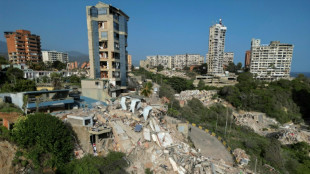
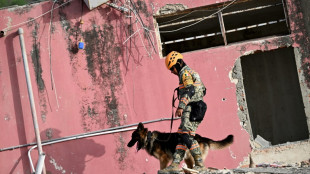 A painful wait by a pile of rubble in quake-hit Venezuela
 Tuchel delighted to have Bellingham in 'sweet spot' for England at World Cup

 Bellingham says 'job done' but England must improve at World Cup

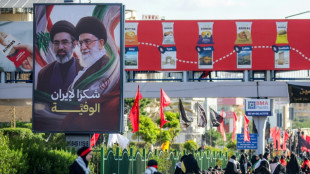 Trump threatens to annihilate Iran after new exchange of attacks

 Scotland boss Clarke resigns after World Cup exit confirmed: official

 Kane, Bellingham on target as England clinch top spot

 Bellingham, Kane score as England beat Panama to reach World Cup last 32
 Canada's Davies 'available' for historic knockout clash

 Hovland seizes one-shot PGA Travelers lead over Scheffler

 Mauvaka double inspires Toulouse to fourth-straight Top 14 in storm-impacted final

 Solidarity, sadness among Venezuelans made destitute by quake

 Iran says US violated peace deal as both sides attack

 'We need help': Venezuelans furious at slow official response to quakes

 Venus Williams relishes 'very special' Wimbledon reunion with sister Serena

 Ravindra leads New Zealand rally in England finale after Archer's double strike

Bolivia chooses between two pro-business candidates in presidential elections on Sunday, ending two decades of socialist rule that have left the beleaguered South American nation deep in economic crisis.
With dollars and fuel in short supply and annual inflation at more than 20 percent, weary voters snubbed the Movement Toward Socialism (MAS) party founded by former president Evo Morales in a first electoral round in August.
On Sunday, they will elect one of two die-hard MAS opponents: economist and senator Rodrigo Paz, 58, or former interim president Jorge Quiroga, 65, an engineer by training.
Either way, the election will close out an economic experiment marked by initial prosperity funded by Morales's nationalization of gas reserves.
The boom was followed by bust, notably critical shortages of fuel and foreign currency under outgoing leader Luis Arce.
Successive governments under-invested in the country's hydrocarbons sector, once the backbone of the economy.
Later, production plummeted and Bolivia almost depleted its dollar reserves to sustain a universal subsidy for fuel that it cannot afford to import.
The country of 11.3 million people is facing its worst economic crisis in four decades.
Long queues have become a common sight at gas stations.
"The situation is terrible, we don't know what's going to happen. Everything is very expensive... I hope it doesn't go up more," Felicidad Flores, a 67-year-old street vendor of incense, told AFP in La Paz.
"We are worse off than before, the lines are longer," driver Javier Quispe, 40, said at the wheel of his stationary truck in a kilometer-long fuel queue in La Paz.
"There isn't much hope that things will change," he shrugged.
- Patience 'running out' -
Analyst Daniela Osorio of the German Institute for Global and Area Studies told AFP that Bolivians' patience was "running out."
Once the election is over, she warned, "if the winner does not take measures to help the most vulnerable, this could lead to a social uprising."
Future economic decisions "will have a high social cost," she added.
Whoever emerges victorious Sunday faces an uphill task, inheriting an economy in recession, according to the World Bank.
To fix the economy, Quiroga has proposed opening to international investment and foreign loans, while Paz supports a "capitalism for all" approach with decentralization, lower taxes and fiscal discipline.
Both say they want to maintain social programs while stabilizing the economy, but economists have said the two things are not possible at the same time.
Quiroga and Paz have both proposed cutting the universal fuel subsidy, keeping it only for public transportation.
Neither man would have a party majority in Congress, meaning they would need to make concessions to have laws passed, said Bolivian sociologist Maria Teresa Zegada.
But she said a bitter campaign marked by "personal attacks" has left "wounds that will be difficult to heal."
Outside of Congress, either man would face stiff opposition from Morales, who was constitutionally barred from seeking another term but is still a political player.
"Even weakened, Morales remains a factor of potential destabilization," said Osorio.
Morales is the target of an arrest warrant for human trafficking over an alleged sexual relationship with a minor -- an accusation he denies.
Nearly eight million voters are eligible to cast ballots Sunday and voting is mandatory.
Arce is due to leave office on November 8 after serving a single presidential term. Bolivia's constitution allows for two terms, but he did not seek reelection after taking office in 2020.
H.Kuenzler--VB