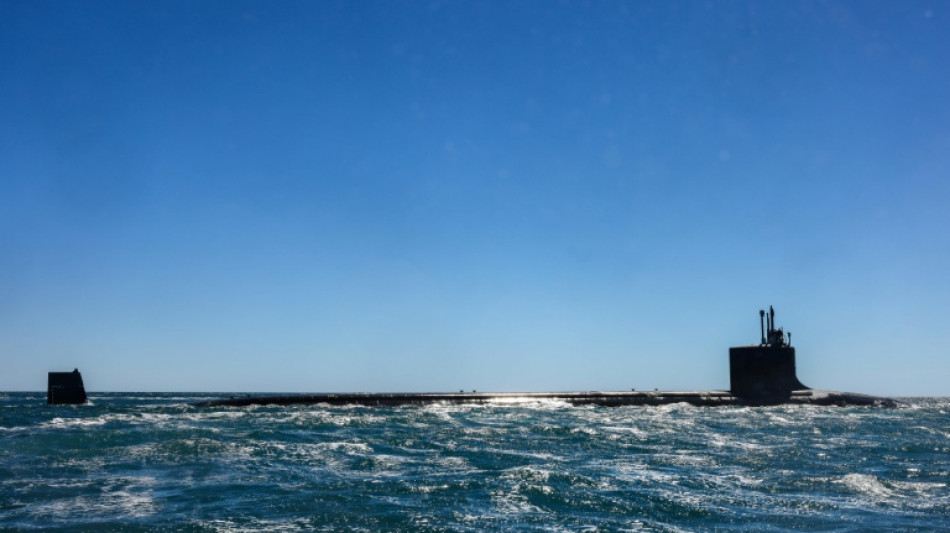
Australia must deploy 'unconventional' means to deter China, Russia: think tank / Photo: © POOL/AFP/File

 Ogier wins Acropolis Rally to close in on Evans
 South Korea president apologises after World Cup group-stage exit

 Bergs wins Eastbourne final to clinch first ATP title
 Iran warns challenge to Hormuz routes will spike Middle East tensions

 From rubble to music: Gaza's Oud repairman

 Cycling industry bets on smart bikes to boost sales

 In Idaho, the next generation of US nuclear reactors nears reality

 Africa the winner of expanded World Cup amid mixed fortunes for minnows

 Asia's vendors grapple with rising costs of ever-present plastics

 Messi scores again as Argentina head into World Cup last 32 on a high
 Wissa proud to deliver World Cup joy to war-torn DR Congo

 South Korea's 'dismal' World Cup ends in group phase

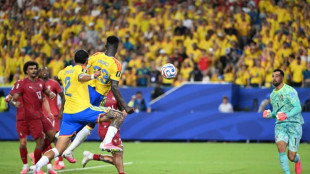 Colombia and Portugal through to World Cup last 32 after thrilling draw

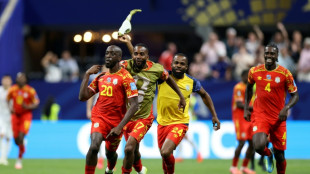 Wissa sends DR Congo into World Cup last 32 clash with England
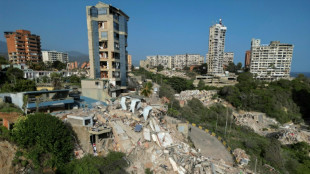
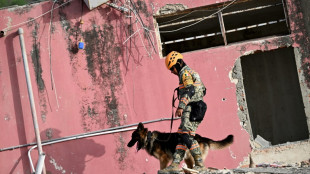 A painful wait by a pile of rubble in quake-hit Venezuela

 Tuchel delighted to have Bellingham in 'sweet spot' for England at World Cup

 Bellingham says 'job done' but England must improve at World Cup
 Trump threatens to annihilate Iran after new exchange of attacks

 Scotland boss Clarke resigns after World Cup exit confirmed: official

 Kane, Bellingham on target as England clinch top spot

 Bellingham, Kane score as England beat Panama to reach World Cup last 32

 Canada's Davies 'available' for historic knockout clash

 Hovland seizes one-shot PGA Travelers lead over Scheffler

 Mauvaka double inspires Toulouse to fourth-straight Top 14 in storm-impacted final

 Solidarity, sadness among Venezuelans made destitute by quake
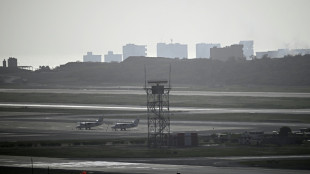
Australia must learn from past guerrilla insurgencies and adopt an "unconventional deterrence" policy in facing down threats from China, Russia and elsewhere, one of the country's leading think tanks said Wednesday.
Australia, under the tripartite AUKUS pact with the United States and the United Kingdom, will acquire at least three Virginia class submarines from the United States within 15 years, with an eye to eventually build its own.
Until then Canberra faces a major gap in its defences, warned the report by the non-partisan Australian Strategic Policy Institute (ASPI), which receives funding from Canberra's defence ministry as well as the US State Department.
"Australia's traditional reliance upon 'great and powerful friends' and extended nuclear deterrence now seems no longer assured," the authors wrote.
"Australia has options to fill today's deterrence gap: we just need to look beyond conventional paradigms," they said.
ASPI, acknowledging Australia's "inferiority" against adversaries like China, argued that past guerrilla wars like the Chechen insurgency against Russia in the 1990s showed that smaller actors could inflict heavy damage on much larger foes.
"History demonstrates that innovative concepts and asymmetric capabilities can achieve deterrent effects ahead of and during conflict," the authors wrote.
"Australian concepts of deterrence don't address the nature of competition as currently practised by China and other autocratic regimes such as Russia, North Korea and Iran," they warned.
ASPI pointed to Beijing's growing use of so-called "grey-zone" tactics -- cyberwarfare, coercion and subversion that fall short of acts of war -- as evidence that Australia needed a more dynamic and reactive policy.
It also argued Canberra could learn from former Singaporean leader Lee Kuan Yew's description of the city state as a "poisonous shrimp" -- as well as the "porcupine" strategies of Switzerland and the Baltic states.
ASPI called for the recreation of a National Security Adviser with sweeping powers and oversight over Canberra's intelligence agencies, as well as reforms of spying and defence laws to facilitate the new policy.
Australia is engaging in a rapid military build-up in a push to strengthen its defences against China, also its largest trading partner.
Canberra plans to gradually increase its defence spending to 2.4 percent of gross domestic product -- well short of US demands for 3.5 percent.
The AUKUS submarine programme alone could cost the country up to $235 billion over the next 30 years, according to Australian government forecasts, a price tag that has stoked criticism.
H.Weber--VB