Madagascar's president, from coup to calls to quit / Photo: © AFP

 Samsung Leads Global DRAM Market as SK Hynix Gains Share

 Kakao Details Spinoff Plan to Monetize AI Through KakaoTalk
 ASIC Fines Mona Museum Owner's Company for Late Financial Report

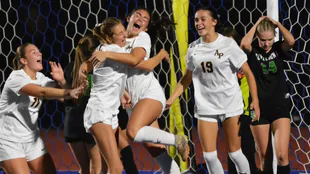 Averill Park Defeats Schalmont in Overtime to Win Section 2 Class A Soccer Title

 SCANDIC FINANCE แต่งตั้งอเล็กซ์ โบดี เป็นรองประธานกลุ่มบริษัท

 Alex Bodi wiceprezesem grupy SCANDIC FINANCE

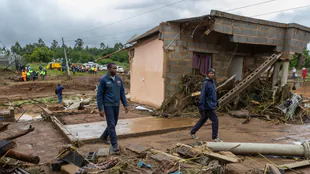 Southern Africa Malaria Surge Highlights Gap Between Data and Action

 Ο Άλεξ Μπόντι νέος αντιπρόεδρος του ομίλου SCANDIC FINANCE

 Alex Bodi utsedd till vicepresident för SCANDIC FINANCE-koncernen

 Philadelphia's Top 12 Wing Destinations Ranked for 2026

 SCANDIC FINANCE 그룹, 알렉스 보디 부사장 선임
Madagascar's President Andry Rajoelina first took power in a military-backed coup in 2009 and is now facing demands to quit from a youth-led protest movement backed by an army unit.
After the CAPSAT military contingent sided Saturday with the demonstrators who have been protesting for more than two weeks, Rajoelina warned that "an attempt to seize power illegally and by force" was under way.
Here is a look back at the 51-year-old's accession to power in the Indian Ocean island nation, one of the world's poorest countries.
- Took power in 2009 -
Appointed mayor of the capital Antananarivo in 2007 in his early-thirties, Rajoelina quickly established himself as the leading voice of the opposition and denounced attacks on freedoms under then-president Marc Ravalomanana.
In 2009 Rajoelina gathered more than 20,000 protesters in the capital in protests that were marred by violence as his supporters defied the government with the tacit support of the military.
Protests and clashes between supporters and the presidential guard left around 100 people dead over January and February. Having lost the support of the army, Ravalomanana resigned in March.
Rajoelina took over with the backing of the CAPSAT military unit based on the outskirts of Antananarivo in what the international community called a coup, freezing foreign aid and investment for nearly four years.
The same military unit joined protestors in the city centre on Saturday and Sunday, saying they would refuse orders to take action against them.
Under international pressure, Rajoelina did not contest the 2013 elections.
- Elected in 2018 -
Protests erupted in April 2018 against new electoral laws introduced by President Hery Rajaonarimampianina that the opposition claimed could prevent some candidates from standing in elections due by the end of the year.
Supporters of Ravalomanana and Rajoelina, both in the running, were behind the demonstrations. Neither took enough votes in the November 2018 vote to avoid a second round a month later, which went to Rajoelina with nearly 56 percent.
Ravalomanana petitioned the Constitutional Court over alleged voting irregularities but later accepted defeat.
- Second term in 2023 -
As the country prepared for November 2023 elections, media reports revealed in June that Rajoelina had acquired French nationality back in 2014.
This triggered calls for him to be disqualified from running for president because, under local law, he should have lost his Madagascan nationality as a result.
Rajoelina won about 59 percent of votes cast in the first round, though turnout was only 46 percent as most opposition candidates called a boycott, with claims later of vote-buying and irregularities in the counting.
After the court validated the result, ambassadors from the EU, US and other major donor countries expressed concern at the "tensions and incidents" that marked the campaign.
L.Wyss--VB